Plastic lumber decking is an outdoor decking material made partly or entirely from plastic-based materials. It is commonly considered an alternative to traditional timber because it requires less maintenance and does not behave like natural wood when exposed to moisture.
However, the term plastic lumber decking can cause some confusion.
Pure plastic lumber, wood-plastic composite decking, PVC decking, and composite decking are sometimes grouped together in everyday searches. In reality, these materials have different compositions, appearances, manufacturing processes, and applications.
For buyers, distributors, and outdoor project contractors, understanding these differences makes it easier to select the right decking material.
This guide explains what plastic lumber decking is, how it differs from WPC composite decking, and what you should consider before choosing decking boards for an outdoor project.
What Does Plastic Lumber Decking Mean?
Plastic lumber generally refers to lumber-shaped profiles manufactured primarily from plastic materials instead of solid wood.
Depending on the product, manufacturers may use materials such as:
- Recycled polyethylene
- High-density polyethylene (HDPE)
- Polypropylene
- Other recycled or virgin plastics
Manufacturers process these materials into boards, profiles, posts, or other shapes that can replace conventional timber in certain outdoor applications.
When these profiles are designed for flooring or deck construction, people may refer to them as plastic lumber decking or plastic decking boards.
However, not every board that contains plastic should be classified as pure plastic lumber.
Wood-plastic composite decking, for example, combines plastic with wood fiber. Therefore, its material structure is different from that of traditional recycled plastic lumber.
What Is Plastic Lumber Made Of?
Plastic lumber is usually manufactured from thermoplastic materials.
Many products use recycled HDPE because it offers good moisture resistance and can be processed into durable outdoor profiles.
Some manufacturers also combine different recycled plastics or add pigments, UV stabilizers, and other additives to improve outdoor performance.
The exact formula depends on the manufacturer and intended application.
Unlike wood-plastic composite materials, conventional plastic lumber usually contains little or no wood fiber.
This is one of the most important differences between plastic lumber and WPC decking.
What Is Wood-Plastic Composite Decking?
Wood-plastic composite decking, commonly called WPC decking, is manufactured from a mixture of wood fiber, thermoplastic materials, and additives.
A typical WPC formulation may contain:
- Wood fiber or wood powder
- PE, HDPE, or another thermoplastic
- Color pigments
- UV stabilizers
- Processing additives
- Other functional additives
These materials are mixed and extruded into decking profiles.
Because WPC contains wood fiber, its surface and overall appearance can resemble natural timber more closely than many pure plastic lumber products.
Manufacturers can also produce different surface designs, including:
- Straight grain
- Wood-grain embossing
- 3D embossed surfaces
- Brushed finishes
- Co-extruded surfaces
As a result, wood plastic composite decking has become widely used for residential and commercial outdoor flooring.
Is Plastic Lumber the Same as Composite Decking?
No. Plastic lumber and composite decking are related product categories, but they are not exactly the same.
The biggest difference is their material composition.
Pure plastic lumber consists primarily of plastic, while WPC composite decking contains both plastic and wood fiber.
Here is a simple comparison.
| Feature | Plastic Lumber | WPC Composite Decking |
|---|---|---|
| Main material | Primarily plastic | Wood fiber + plastic |
| Wood fiber | Usually little or none | Yes |
| Appearance | More plastic-like in many products | More natural wood-like finish |
| Moisture resistance | High | High |
| Maintenance | Low | Low |
| Surface options | Depends on manufacturer | Many wood-grain options |
| Outdoor use | Yes | Yes |
| Decking applications | Available | Very common |
Therefore, buyers should not assume that every product marketed as “plastic decking” uses the same material.
The product specification should always be checked before purchasing.
What Is Plastic Wood Decking Called?
People use several names when searching for alternatives to traditional wood decking.
Common terms include:
- Plastic decking
- Plastic wood decking
- Composite decking
- WPC decking
- Wood-plastic composite decking
- Plastic lumber decking
- Plastic wood boards
However, these terms are not always technically interchangeable.
For example, plastic lumber decking may refer to boards made mainly from recycled plastic, while wood-plastic composite decking specifically contains both wood fiber and plastic.
Therefore, when requesting a quotation from a manufacturer, buyers should specify the material they actually need rather than relying only on general terms such as “plastic wood.”
Plastic Lumber vs WPC Composite Decking
Both materials can work in outdoor environments, but their characteristics are different.
Material Composition
Plastic lumber consists mainly of plastic polymers.
WPC decking combines wood fiber with thermoplastic materials.
This difference affects the board’s appearance, weight, surface texture, and overall behavior.
Appearance
Pure plastic lumber often has a more uniform or synthetic appearance.
In contrast, WPC decking can be manufactured with realistic wood-grain patterns and different embossed surfaces.
For outdoor spaces where a timber-style appearance is important, WPC often provides more design options.
Moisture Resistance
Both plastic lumber and WPC decking are commonly selected for outdoor applications because they handle moisture differently from untreated natural timber.
They do not require the same regular painting or staining routines as traditional wood decking.
However, installation and drainage still matter.
Even moisture-resistant decking should have proper gaps and substructure ventilation.
Maintenance
Plastic-based decking materials generally require relatively little routine maintenance.
Cleaning usually involves removing dirt, leaves, stains, and other surface contaminants.
This makes both plastic lumber and composite decking attractive for projects where reducing long-term maintenance is important.
Surface Texture
WPC decking can be manufactured with different textures, including straight grain, embossed wood grain, and co-extruded finishes.
These surface options can improve appearance and provide different levels of grip.
Plastic lumber products may offer fewer wood-like textures, depending on the manufacturer.
Is Plastic Lumber Good for Decking?
Plastic lumber can be suitable for decking when the board is specifically engineered for flooring applications.
However, buyers should not choose a product based only on the material name.
Several factors matter.
Board Structure
Decking profiles may be solid or hollow.
Solid boards usually contain more material, while hollow profiles can reduce product weight and material consumption.
The correct structure depends on the project requirements.
Surface Design
Outdoor decking should have a surface suitable for walking areas.
A textured or grooved surface can provide better grip than a completely smooth board.
Expansion and Installation
Plastic-based materials expand and contract when temperatures change.
Therefore, installers must leave the correct spacing between boards and follow the manufacturer’s installation guidelines.
Substructure
The decking surface is only one part of the system.
Joists, clips, screws, spacing, drainage, and ventilation can all affect the finished deck.
For this reason, buyers should evaluate the complete decking system instead of comparing only board prices.
Where Is Plastic Lumber Decking Used?
Plastic and composite decking materials are used in many outdoor environments.
Common applications include:
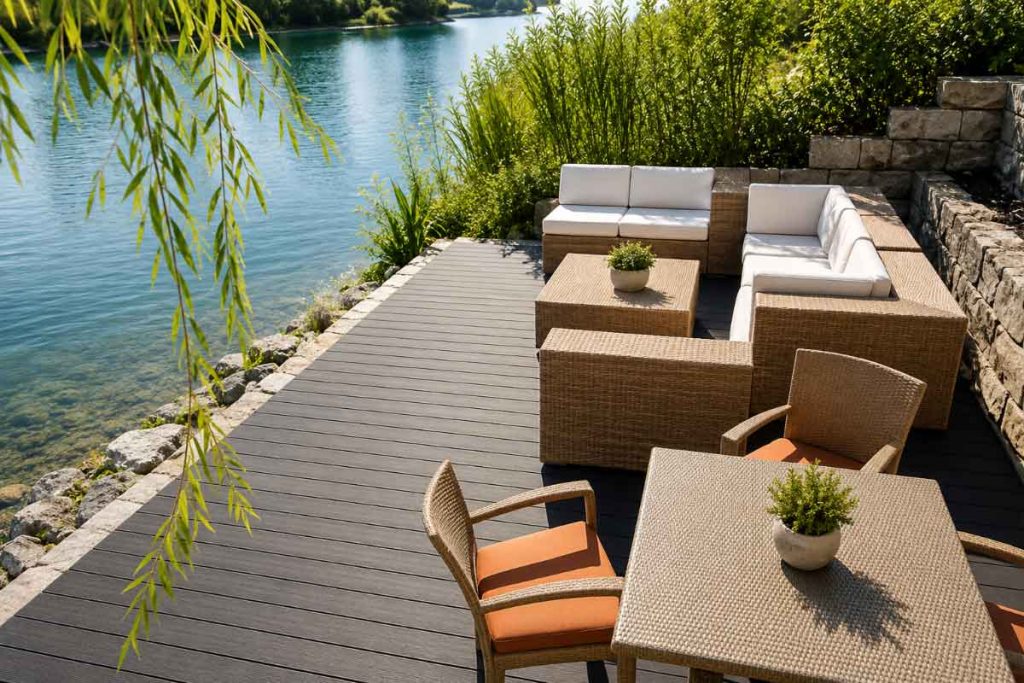
Gardens and Patios
Low-maintenance decking can create outdoor seating and entertainment areas around homes, villas, and gardens.
Balconies and Terraces
Composite decking can provide a wood-look flooring surface without the same maintenance requirements as natural timber.
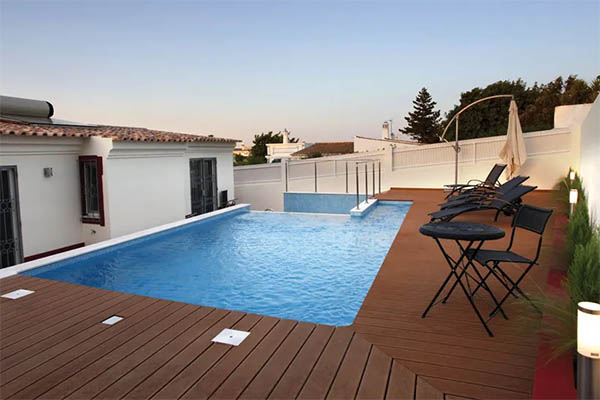
Poolside Areas
Moisture-resistant decking is often considered for swimming pool surroundings and other frequently wet outdoor spaces.
For these projects, drainage and surface slip resistance should receive particular attention.
Resorts and Hotels
Outdoor decks are frequently installed around restaurants, guest areas, pathways, and leisure spaces.
Commercial projects may focus more heavily on maintenance requirements, appearance consistency, and replacement availability.
Commercial Outdoor Projects
Composite decking can also be used for cafés, outdoor platforms, public landscaping projects, and other commercial spaces.
For large projects, buyers should confirm board specifications, installation systems, packaging, production capacity, and project requirements before placing an order.
Plastic Lumber Decking vs Traditional Wood
One reason buyers search for plastic decking is that they are comparing it with natural timber.
Traditional wood has an authentic appearance, but it generally needs more maintenance.
Depending on the wood species and environment, maintenance can include:
- Sealing
- Staining
- Painting
- Periodic treatment
- Replacement of damaged boards
Plastic lumber and composite decking are designed to reduce many of these routine maintenance requirements.
However, natural wood and composite materials have different visual characteristics.
Therefore, the better option depends on the project’s priorities.
If natural timber appearance and traditional material are the main priorities, solid wood may remain suitable.
If low maintenance, moisture resistance, consistent production, and multiple color options matter more, composite decking can be a practical alternative.
Plastic Lumber Decking vs Composite Decking: Which Should You Choose?
The answer depends on what the project requires.
Pure plastic lumber may be suitable when high plastic content and recycled plastic construction are important.
WPC composite decking may be more suitable when buyers want a combination of outdoor performance and natural wood-style appearance.
Before making a decision, compare:
- Material composition
- Board dimensions
- Solid or hollow structure
- Surface finish
- Color options
- Weight
- Installation system
- Joist spacing
- Expansion requirements
- Maintenance
- Packaging
- Project quantity
- Manufacturer support
For distributors and commercial buyers, availability of samples and consistent production are also important.
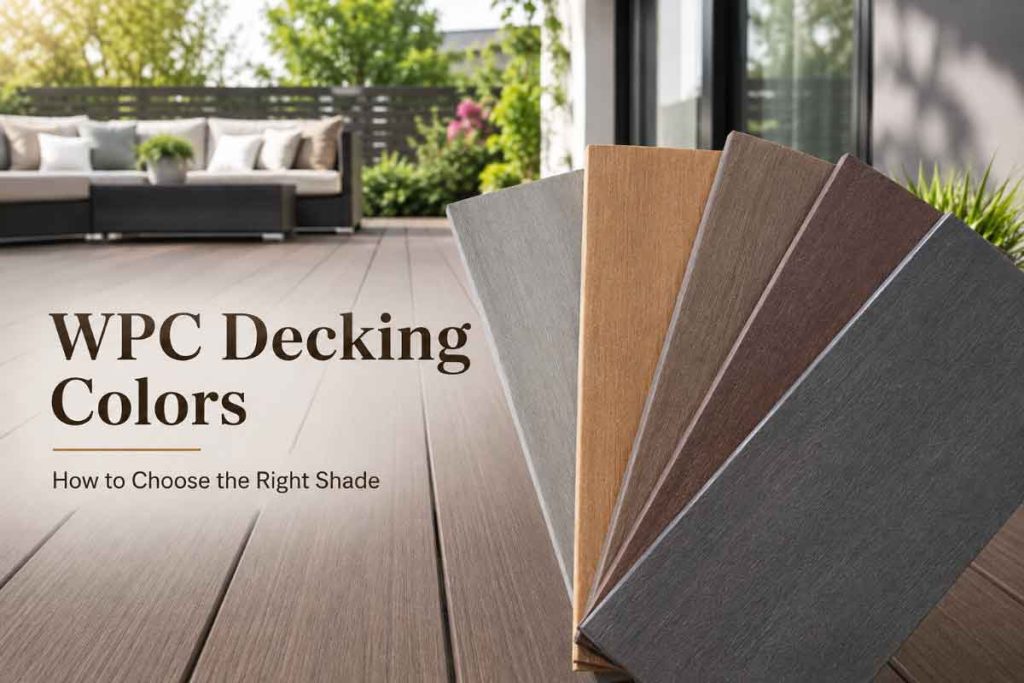
Evaluating a physical sample before bulk purchasing can help confirm the color, surface texture, profile, and overall appearance.
Why WPC Decking Is Commonly Used as an Alternative to Wood
WPC decking combines characteristics of both wood and plastic materials.
The wood component helps create a more natural appearance, while the polymer component improves moisture resistance and reduces some of the maintenance associated with solid timber.
Modern WPC decking is also available in a wide range of profiles and surfaces.
For example, buyers may choose between:
- Hollow composite decking
- Solid composite decking
- Traditional WPC decking
- Co-extrusion decking
- Straight-grain decking
- Embossed wood-grain decking
This flexibility makes WPC suitable for different markets, project budgets, and design requirements.
What Should Buyers Check Before Ordering Composite Decking?
For wholesale or project orders, buyers should look beyond the product photos.
A supplier should be able to provide clear information about the decking system.
Important details include:
1. Board Dimensions
Confirm width, thickness, and standard available lengths.
2. Material and Structure
Check whether the product is hollow, solid, capped, or uncapped.
3. Surface Finish
Compare wood grain, straight grain, embossed, brushed, and co-extruded surfaces.
4. Color
Request color samples when appearance consistency is important.
5. Accessories
Ask whether the supplier can provide matching joists, clips, screws, trims, or installation accessories.
6. Packaging
For international orders, packaging affects loading, transportation, storage, and unloading.
7. Samples
Samples allow distributors and project buyers to inspect the actual surface and color before confirming a bulk order.
These details are often more important than comparing the price per board alone.
Frequently Asked Questions About Plastic Lumber Decking
1. What is plastic wood decking called?
Plastic wood decking may refer to composite decking, WPC decking, wood-plastic composite decking, or plastic lumber decking. However, the exact terms depend on the material composition. WPC decking contains both wood fiber and plastic, while pure plastic lumber generally consists mainly of plastic.
2. Is plastic decking better than wood?
Plastic or composite decking can offer lower maintenance and better moisture resistance than many natural wood products. However, wood may provide a more traditional appearance. The better option depends on the project, budget, maintenance requirements, and desired design.
3. What is plastic lumber used for?
Plastic lumber can be used for decking, outdoor furniture, landscaping profiles, fencing, marine applications, and other outdoor products. The intended application depends on the profile design and material specification.
4. What is wood-plastic composite decking?
Wood-plastic composite decking is an outdoor decking material made by combining wood fiber with thermoplastic and additives. Manufacturers extrude the mixture into decking boards with different colors, profiles, and surface finishes.
5. Is plastic lumber waterproof?
Plastic itself does not absorb water in the same way as natural timber. However, the performance of a finished decking product depends on its complete material formulation, board design, installation, drainage, and outdoor environment.
6. Is WPC decking the same as plastic lumber?
No. WPC decking contains wood fiber and plastic, while traditional plastic lumber is made primarily from plastic. Although both can be used outdoors, their material composition and appearance are different.
Conclusion
Plastic lumber decking is one of several alternatives to traditional timber decking. However, buyers should understand that pure plastic lumber and wood-plastic composite decking are not the same material.
Plastic lumber is generally manufactured primarily from plastic, while WPC decking combines wood fiber, thermoplastic materials, and additives.
Both can provide low-maintenance solutions for outdoor projects. However, WPC decking often offers more wood-style surface finishes, colors, and profile options.
For distributors, contractors, and project buyers, the best approach is to compare the actual board specification, structure, surface, installation system, and samples before choosing a decking material.
For outdoor projects that require a natural wood appearance together with low maintenance, WPC composite decking remains an option worth considering.