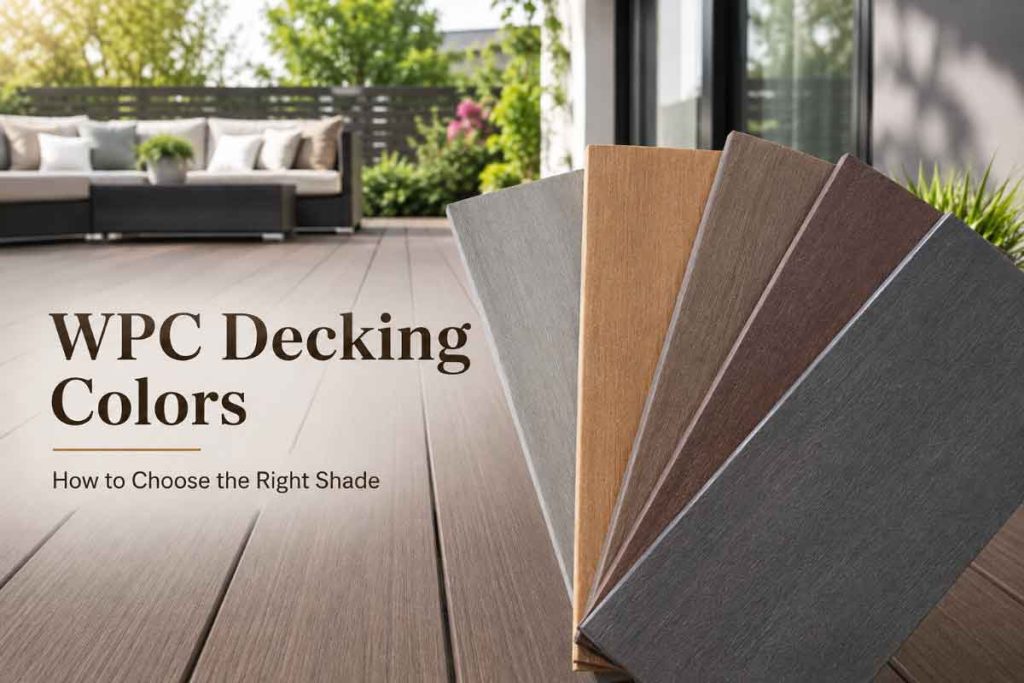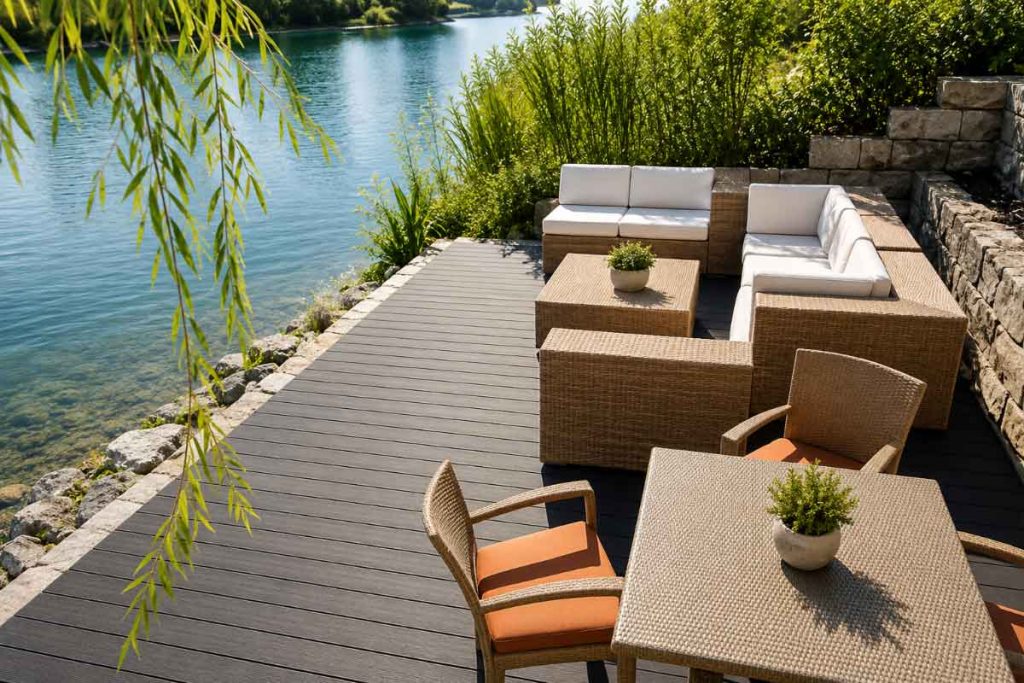
Plastic lumber and composite decking are both widely used as alternatives to traditional wood in outdoor projects.
At first glance, the two materials can look similar. Both are available as boards or profiles, both can be used outdoors, and both generally require less maintenance than natural timber.
However, plastic lumber and composite decking are not the same material.
Plastic lumber is manufactured primarily from plastic, while composite decking, particularly wood plastic composite decking, combines wood fiber with thermoplastic materials and additives.
This difference affects the appearance, surface texture, weight, installation, application and overall characteristics of the finished boards.
For distributors, contractors and project buyers, understanding the difference between plastic lumber vs composite decking can help prevent purchasing the wrong material for an outdoor project.
What Is Plastic Lumber?
Plastic lumber is a manufactured material designed to replace traditional wood in certain applications.
Unlike natural timber, it is made primarily from plastic materials.
Common raw materials may include:
• Recycled polyethylene
• High density polyethylene (HDPE)
• Polypropylene
• Recycled plastic mixtures
• Virgin thermoplastic materials
• Pigments and UV stabilizers
Manufacturers process these materials through extrusion or molding to create profiles similar in shape to conventional wood boards.
Plastic lumber can be produced in different sizes and shapes, including:
• Boards
• Posts
• Beams
• Decking profiles
• Landscaping profiles
• Outdoor furniture components
Because the material contains little or no natural wood fiber, many plastic lumber products have a more uniform appearance than wood or wood plastic composite materials.
What Is Composite Decking?
Composite decking is a broader category of manufactured outdoor decking.
One of the most common types is wood plastic composite decking, also known as WPC decking.
WPC composite decking normally combines:
• Wood fiber or wood powder
• PE, HDPE or another thermoplastic
• Pigments
• UV stabilizers
• Processing additives
• Other functional additives
The materials are blended and extruded into decking boards.
Unlike pure plastic lumber, WPC contains wood fiber. This allows manufacturers to produce surfaces that more closely resemble natural timber.
Different surface treatments may include:
• Straight grain
• Brushed finishes
• Wood grain embossing
• 3D embossed wood grain
• Co extrusion surfaces
For this reason, composite decking is commonly selected for outdoor flooring projects where buyers want both low maintenance and a more natural wood style appearance.
Plastic Lumber vs Composite Decking at a Glance
| Feature | Plastic Lumber | WPC Composite Decking |
|---|---|---|
| Main material | Primarily plastic | Wood fiber + plastic |
| Wood content | Usually little or none | Yes |
| Appearance | More uniform or plastic like | More wood like |
| Wood grain options | Usually more limited | Wide range |
| Moisture resistance | High | High |
| Maintenance | Low | Low |
| Outdoor applications | Wide range | Especially common for decking |
| Surface textures | Depends on manufacturer | Straight grain, embossed, co extrusion, etc. |
| Hollow profiles | Available depending on product | Very common |
| Solid profiles | Available | Available |
| Color options | Available | Wide range |
| Decking systems | Depends on supplier | Often supplied with clips, joists and accessories |
Neither material is automatically better in every application.
The right choice depends on the project requirements.
1. Material Composition
Material composition is the biggest difference between plastic lumber and composite decking.
Plastic Lumber
Plastic lumber is generally made mainly from thermoplastic polymers.
Recycled HDPE is frequently used because it offers moisture resistance and can be processed into durable profiles.
Some products may contain fillers or reinforcing materials, but plastic remains the primary component.
Composite Decking
WPC composite decking combines wood fiber with plastic.
The wood fiber affects the board’s texture, appearance and physical characteristics, while the polymer helps improve resistance to moisture compared with untreated timber.
Different manufacturers use different formulations.
Therefore, buyers should check actual technical specifications rather than assuming that all composite decking products have identical compositions.
2. Appearance
Appearance is another major difference.
Plastic Lumber Appearance
Plastic lumber often has:
• Consistent colors
• Uniform surfaces
• Less visible natural grain
• A more synthetic appearance
Some manufacturers add molded textures or surface patterns, but the final appearance generally depends on the production technology.
Composite Decking Appearance
Composite decking can imitate natural timber more closely.
Modern WPC decking is available with:
• Deep wood grain
• 3D embossing
• Straight grain
• Brushed textures
• Two tone finishes
• Co extrusion surfaces
For patios, gardens, villas, pool areas and commercial outdoor flooring, this wider range of surface finishes can be an important design advantage.
3. Water and Moisture Resistance
Both materials are often chosen for outdoor use because they offer better moisture resistance than untreated natural wood.
However, buyers should avoid assuming that water resistant means installation conditions do not matter.
Plastic Lumber
Because plastic lumber is primarily plastic, it does not absorb moisture in the same way as natural timber.
This makes it suitable for many wet or humid environments.
Composite Decking
WPC decking also provides good moisture resistance because wood fibers are combined with plastic materials.
However, the performance of a finished deck also depends on:
• Product formulation
• Board design
• Drainage
• Ventilation
• Installation spacing
• Substructure
• Local climate
Even a moisture resistant decking board should not be installed without proper drainage and expansion gaps.
4. Maintenance Requirements
One of the main reasons buyers consider plastic decking or composite decking is lower maintenance.
Traditional timber may require:
• Painting
• Staining
• Sealing
• Sanding
• Periodic treatment
Plastic lumber and WPC decking normally require much less routine maintenance.
Basic maintenance generally includes:
• Removing leaves and debris
• Washing surface dirt
• Cleaning stains
• Keeping drainage gaps clear
• Inspecting the substructure periodically
Neither material is completely maintenance free, but both can reduce ongoing maintenance compared with many natural wood decking systems.
5. Surface Texture and Slip Resistance
Surface design matters especially when boards are used as outdoor flooring.
Plastic Lumber
Some plastic lumber boards have relatively smooth surfaces, although manufacturers may add grooves or molded textures.
Composite Decking
WPC decking is often manufactured specifically for walking surfaces.
Possible designs include:
• Grooved surfaces
• Straight grain textures
• Brushed finishes
• Embossed wood grain
• Co extrusion wood grain surfaces
A textured surface may provide better grip than a completely smooth board.
However, slip performance depends on the exact product and surface condition.
For poolside or frequently wet projects, buyers should review the product specification and test data rather than relying only on appearance.
6. Hollow vs Solid Board Structure
Both plastic lumber and composite products may be manufactured as solid profiles.
However, hollow structures are especially common in WPC decking.
Hollow Composite Decking
Hollow boards use internal chambers to reduce:
• Product weight
• Material consumption
• Transportation weight
Different hollow structures may use rectangular, round or other internal cavities.
Solid Composite Decking
Solid decking contains more material throughout the profile.
It is often selected for projects where buyers prefer a heavier board or where project specifications require a particular structure.
The choice between hollow and solid decking should depend on the actual application rather than simply assuming that one is always superior.
7. Expansion and Contraction
Both plastic lumber and WPC decking can expand and contract when temperatures change.
This is important during installation.
If boards are installed without sufficient spacing, thermal movement may cause problems later.
Installers should follow the manufacturer’s recommendations for:
• End gaps
• Side gaps
• Joist spacing
• Fastening
• Ventilation
• Distance from walls and fixed structures
Temperature during installation can also affect the required expansion space.
This is why commercial buyers should ask suppliers for installation guidelines before the project begins.
8. Installation Systems
Composite decking is often sold as part of a complete decking system.
A typical WPC decking system may include:
• Decking boards
• WPC joists
• Aluminum joists
• Starter clips
• Intermediate clips
• Stainless steel screws
• Edge trims
• Fascia boards
Hidden clip systems are particularly common because they create a cleaner surface without visible screws through the face of every board.
Plastic lumber products may use different fastening systems depending on the board design.
When comparing suppliers, buyers should therefore ask about the complete installation system, not just the decking board.
9. Outdoor Applications
Plastic lumber and composite decking overlap in some applications, but their typical uses can differ.
Common Plastic Lumber Applications
Plastic lumber may be used for:
• Outdoor furniture
• Landscaping
• Park benches
• Posts
• Marine applications
• Fencing
• Walkways
• Decking
• Structural or semi structural profiles depending on specifications
Common Composite Decking Applications
WPC composite decking is frequently used for:
• Garden decks
• Patios
• Terraces
• Balconies
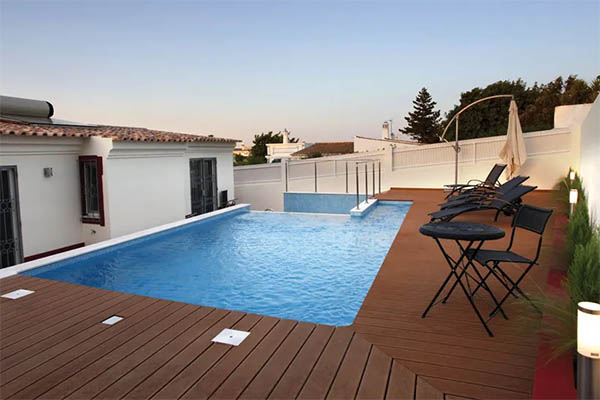
• Swimming pool surroundings
• Resorts
• Villas
• Hotels
• Restaurants
• Commercial outdoor flooring
• Landscaping projects
For a dedicated outdoor flooring project, composite decking usually offers more decking specific profiles and accessories.
Plastic Decking vs Composite Decking: Which Looks More Like Wood?
For buyers who prioritize a natural wood appearance, WPC composite decking generally provides more wood style design options.
Wood fibers within the composite material combined with modern embossing technologies allow manufacturers to create surfaces that resemble timber grain.
Co extrusion technology can also create more detailed color variation and surface patterns.
Plastic lumber can still be produced in attractive colors and textures, but its appearance may be more uniform.
For this reason, project designers often compare physical samples before choosing the final material.
Photos alone may not accurately show:
• Color variation
• Grain depth
• Surface texture
• Gloss level
• Board thickness
Requesting samples is especially useful for distributors and larger commercial projects.
Recycled Plastic Lumber vs Composite Decking
Another common comparison is recycled plastic lumber vs composite decking.
Recycled plastic lumber focuses heavily on using recovered plastic materials.
Its composition may consist predominantly of recycled HDPE or other recycled polymers.
WPC composite decking may also contain recycled materials, but it combines plastic with wood fiber.
Therefore, recycled content alone does not determine whether a board is plastic lumber or WPC.
Buyers who have environmental or recycled content requirements should ask manufacturers for specific information about:
• Raw material composition
• Recycled material percentage
• Production process
• Certifications
• Product documentation
Avoid assuming environmental claims based only on product names.
Is Plastic Lumber Stronger Than Composite Decking?
There is no universal answer.
Strength depends on much more than whether a board is classified as plastic lumber or composite decking.
Important factors include:
• Raw material formulation
• Profile dimensions
• Hollow or solid design
• Wall thickness
• Reinforcement
• Joist spacing
• Manufacturing quality
• Intended application
A thick solid plastic lumber profile may behave very differently from a hollow composite decking board.
Similarly, two WPC decking products with different internal structures may have different mechanical properties.
For commercial or structural applications, buyers should request relevant technical data instead of making decisions based only on material category.
Which Material Requires Less Maintenance?
Both are relatively low maintenance materials.
Plastic lumber may have an advantage in applications where buyers specifically want a product containing no wood fiber.
However, WPC decking also requires relatively little routine maintenance compared with natural wood.
For most outdoor decking projects, maintenance differences between the two may be less important than other factors such as:
• Surface appearance
• Installation system
• Profile options
• Price
• Availability
• Project design
• Manufacturer support
Which Material Is Better for Poolside Decking?
Both materials can potentially be used around pools if the selected product is designed for that environment.
However, several characteristics become especially important.
Slip Resistance
Wet surfaces can become slippery.
Choose a decking surface designed to provide appropriate grip.
Drainage
Water should not remain trapped underneath the decking.
Ventilation
Airflow under the decking can help the system perform correctly.
Fasteners
Outdoor fasteners should be suitable for humid conditions.
Surface Temperature
Dark decking colors can become warmer under strong sunlight.
For poolside projects, buyers should evaluate the complete decking system rather than choosing solely based on material composition.
What About Cost?
The price of plastic lumber vs composite decking cannot be compared with one fixed number.
Prices vary depending on:
• Material formulation
• Board dimensions
• Weight
• Hollow or solid structure
• Surface treatment
• Co extrusion technology
• Color
• Order quantity
• Packaging
• Accessories
• Shipping destination
For international buyers, comparing only the price per meter or square meter can be misleading.
A complete quotation should also consider:
• Clips
• Screws
• Joists
• Edge trims
• Packaging
• Container loading quantity
• Freight
For wholesale orders, loading efficiency can significantly affect the landed cost.
Plastic Lumber vs Composite Decking: Which Is Better?
Neither material is universally better.
The correct choice depends on your project.
Choose Plastic Lumber When:
Plastic lumber may be appropriate when:
• High plastic content is required
• Recycled plastic material is preferred
• A wood like appearance is not the main priority
• The application is not limited to decking
• A particular solid plastic profile is specified
Choose Composite Decking When:
WPC composite decking may be more suitable when:
• A wood style appearance is important
• The project is specifically for outdoor flooring
• Multiple wood grain surfaces are required
• Matching installation accessories are needed
• Hollow and solid board options are desirable
• Different colors and profiles are required
For distributors and project buyers, physical samples and technical specifications are usually more useful than choosing based on the material name alone.
What Should Wholesale Buyers Compare Before Ordering?
If you are sourcing decking from a manufacturer, compare more than the unit price.
1. Material Composition
Ask what raw materials are used.
2. Board Size
Confirm:
• Width
• Thickness
• Length
3. Weight Per Meter
Board weight can affect both cost and loading quantity.
4. Hollow or Solid Structure
Request a cross section drawing or physical sample.
5. Surface Finish
Compare:
• Straight grain
• Wood grain
• 3D embossing
• Brushed finish
• Co extrusion
6. Color Options
Color can vary between samples, screens and finished production.
Always confirm colors before mass production.
7. Installation Accessories
Confirm whether the supplier provides:
• Joists
• Clips
• Screws
• Starter clips
• Edge trims
8. MOQ
Minimum order quantities may differ between:
• Models
• Colors
• Surface finishes
9. Packaging
Ask how boards and accessories are packed for export.
10. Samples
A sample allows buyers to evaluate the actual:
• Surface
• Color
• Cross section
• Weight
• Texture
• Overall quality
This is particularly useful before placing a container order.
Frequently Asked Questions
1. Is plastic lumber the same as composite decking?
No. Plastic lumber is manufactured primarily from plastic materials, while WPC composite decking combines wood fiber with plastic and additives.
2. What is the difference between plastic decking and composite decking?
Plastic decking generally refers to boards made primarily from plastic. Composite decking contains a combination of materials, with WPC decking typically using wood fiber and thermoplastic.
3. Is composite decking plastic?
Composite decking contains plastic, but WPC composite decking is not pure plastic. It also contains wood fiber and other additives.
4. Is recycled plastic lumber better than composite decking?
Not necessarily. Recycled plastic lumber and composite decking are designed differently. The best material depends on appearance, application, board structure, installation requirements and project specifications.
5. Does composite decking look more like wood?
WPC composite decking generally offers more natural wood style surface options because manufacturers can use wood grain embossing, brushing and co extrusion technologies.
6. Can plastic lumber and composite decking be used outdoors?
Yes. Both materials can be designed for outdoor use. However, buyers should check the specific product specifications and follow the manufacturer’s installation requirements.
7. Which is better for decking, plastic lumber or WPC?
For projects focused specifically on outdoor flooring and a natural wood style appearance, WPC decking is often a practical option. Plastic lumber may be more suitable for projects where high plastic content or a specific plastic profile is required.
Conclusion
Although plastic lumber and composite decking are both alternatives to traditional timber, they should not be treated as the same product.
Plastic lumber is primarily made from plastic, while WPC composite decking combines wood fiber with thermoplastic materials.
This difference influences their appearance, surface options, applications and product structures.
Plastic lumber can be suitable for a wide range of outdoor products, while WPC composite decking is particularly common for patios, terraces, balconies, pool areas and other outdoor flooring projects.
When comparing plastic lumber vs composite decking, buyers should consider the complete product rather than focusing on material names alone.
Board dimensions, weight, hollow or solid structure, surface texture, installation accessories, packaging and project requirements can all affect the final choice.
For wholesale buyers and outdoor projects, reviewing technical specifications and physical samples before bulk ordering is one of the most reliable ways to select the right decking material.