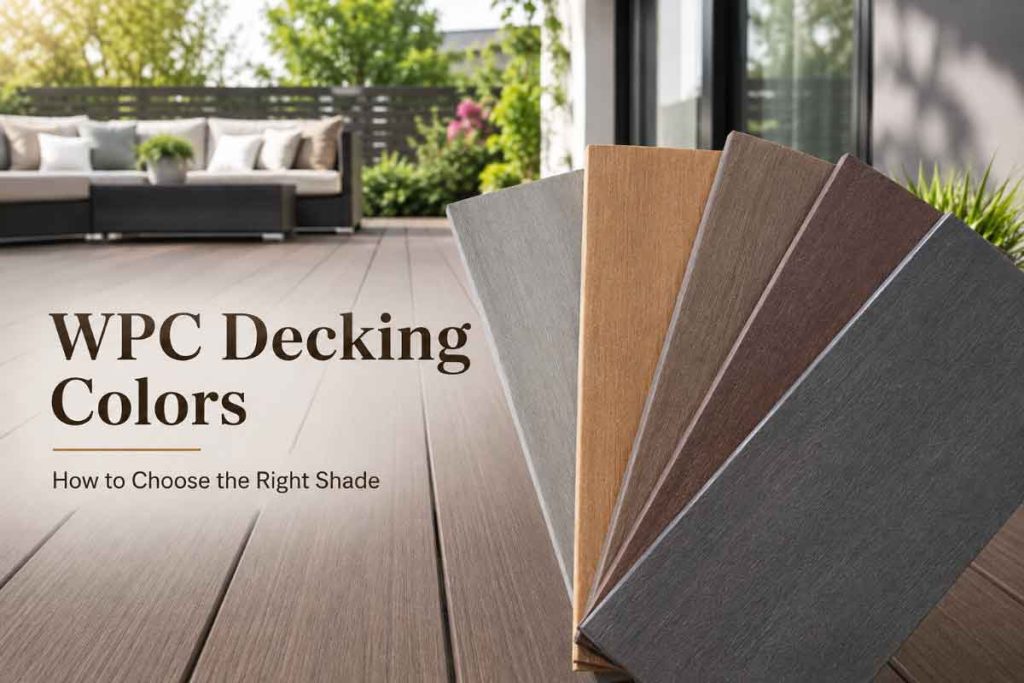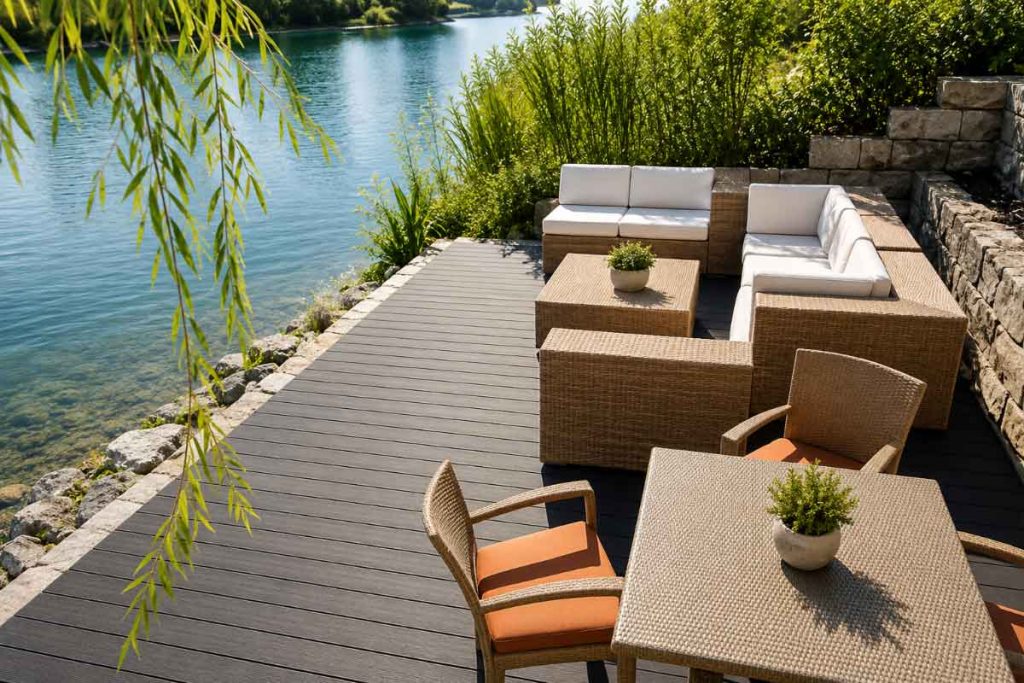
Composite decking has become one of the most popular alternatives to traditional wood decking because it offers low maintenance, moisture resistance and long outdoor performance.
Made from a combination of wood fibers and polymer materials, composite decking provides many advantages for residential and commercial outdoor projects.
However, like any building material, composite decking also has some limitations.
Understanding the negatives of composite decking helps homeowners, contractors, distributors and project buyers make better decisions before purchasing.
The goal is not to say composite decking is a bad choice, but to explain the potential challenges and what buyers should consider when selecting the right product and supplier.
1. Composite Decking Usually Has a Higher Initial Cost
One of the most common concerns about composite decking is the initial investment.
Compared with some traditional wood decking options, composite decking usually has a higher upfront cost.
The price difference comes from factors such as:
- Material composition
- Manufacturing technology
- Surface treatment
- UV protection
- Product structure
For buyers who only focus on the initial purchase price, composite decking may appear more expensive than untreated wood.
However, the total cost should be evaluated over the entire service life.
Traditional wood decking may require additional expenses for:
- Staining
- Painting
- Sealing
- Regular maintenance
- Replacement due to rot or damage
Composite decking usually requires much less maintenance, which can reduce long-term ownership costs.
Therefore, buyers should compare lifetime value instead of only the initial price.
2. Composite Decking Can Become Hot Under Direct Sunlight
Heat absorption is another concern that buyers often ask about.
Like many outdoor flooring materials, composite decking can become warm when exposed to direct sunlight.
This is especially noticeable in:
- Open outdoor spaces
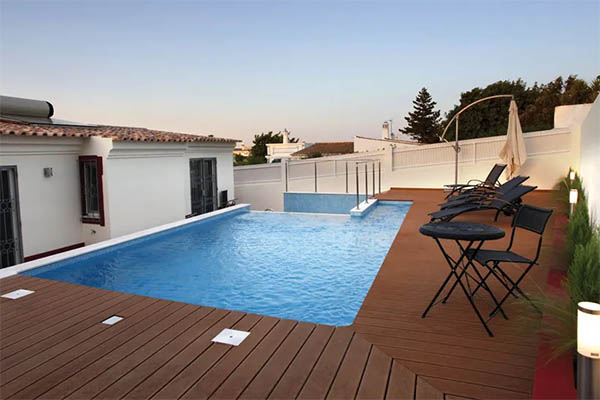
- Pool areas
- Hot climate regions
- Dark-colored decking installations
Darker composite decking colors usually absorb more solar heat compared with lighter colors.
This may affect comfort when walking barefoot.
To improve outdoor comfort, buyers can consider:
- Choosing lighter colors
- Adding shade structures
- Improving airflow under the deck
- Selecting suitable decking profiles
The actual surface temperature depends on many factors, including:
- Color
- Location
- Weather conditions
- Installation environment
3. Composite Decking Requires Proper Installation
Although composite decking is a low-maintenance material, correct installation is still important.
Improper installation may cause problems such as:
- Uneven boards
- Excessive gaps
- Board movement
- Poor drainage
- Reduced service life
Composite decking expands and contracts with temperature changes.
Therefore, installers need to consider:
- Expansion gaps
- Joist spacing
- Fastener selection
- Board direction
- Edge finishing
Many issues reported by users are related to incorrect installation rather than the decking material itself.
Working with an experienced supplier that provides installation guidance can help avoid these problems.
4. Composite Decking Cannot Be Easily Refinished Like Wood
Natural wood has an advantage when it comes to refinishing.
If wood decking becomes faded or scratched, some surface problems can sometimes be improved through:
- Sanding
- Staining
- Painting
Composite decking is different.
Because the color and surface texture are integrated during manufacturing, deep scratches or severe damage are usually more difficult to repair.
In some cases, damaged boards may need to be replaced.
For large commercial projects, buyers may consider keeping additional boards for future maintenance.
5. Color Changes Can Occur Over Time
Although composite decking has better color stability than traditional wood, some color change may still occur after years of outdoor exposure.
Factors affecting color performance include:
- UV exposure
- Product quality
- Climate conditions
- Surface technology
During the early outdoor aging period, some composite decking products may experience slight color adjustment as materials stabilize.
Higher-quality products usually use:
- UV stabilizers
- Protective surface layers
- Better pigment systems
These technologies help improve long-term appearance.
Buyers should ask suppliers about:
- Weathering performance
- UV protection
- Color stability testing
6. Quality Differences Between Composite Decking Manufacturers
Not all composite decking products provide the same performance.
The market includes products with significant differences in:
- Raw material quality
- Wood fiber content
- Polymer formula
- Production technology
- Quality control
Lower-quality composite decking may have issues such as:
- Poor color retention
- Surface defects
- Lower strength
- Reduced durability
For wholesale buyers and distributors, choosing the right manufacturer is critical.
Before purchasing, buyers should evaluate:
Material Quality
Check:
- Material composition
- Wood fiber and polymer ratio
- Additives used
Product Specifications
Review:
- Board size
- Thickness
- Weight
- Profile design
Factory Capability
Consider:
- Production capacity
- Quality inspection
- OEM experience
- Sample availability
A reliable manufacturer can significantly reduce potential quality risks.
7. Composite Decking May Not Have the Exact Feel of Natural Wood
Many composite decking products are designed to imitate natural wood.
Modern technologies can create:
- Wood grain textures
- Embossed surfaces
- Multiple color effects
However, composite decking is still an engineered material.
Some buyers who prefer the unique characteristics of natural timber may notice differences in:
- Texture
- Color variation
- Surface feeling
For projects where authentic wood appearance is the main priority, buyers should compare samples carefully.
8. Composite Decking Is Heavier Than Some Alternatives
Composite decking is generally heavier than some lightweight decking materials.
This can affect:
- Transportation costs
- Handling during installation
- Structural requirements
For large commercial projects, buyers should consider:
- Container loading
- Installation labor
- Supporting structure
However, the weight also contributes to product stability and solid performance.
The right balance depends on project requirements.
9. Composite Decking Requires Regular Cleaning
Although composite decking requires much less maintenance than wood, it is not completely maintenance-free.
Outdoor decks can still collect:
- Dirt
- Leaves
- Dust
- Food stains
- Organic debris
Regular cleaning helps maintain:
- Appearance
- Slip resistance
- Surface performance
Typical maintenance includes:
- Sweeping debris
- Washing with water
- Using suitable cleaners when necessary
Low maintenance does not mean no maintenance.
Composite Decking Negatives Compared With Wood Decking
| Factor | Composite Decking | Wood Decking |
|---|---|---|
| Initial Cost | Usually higher | Usually lower |
| Maintenance | Low | Higher |
| Moisture Resistance | Excellent | Depends on wood type |
| Repair Options | Limited | Easier to refinish |
| Appearance | Consistent wood look | Natural variation |
| Long-Term Stability | High | Depends on maintenance |
Both materials have advantages and limitations.
The best choice depends on:
- Project requirements
- Budget
- Climate
- Expected maintenance level
- Design preferences
How to Avoid Common Composite Decking Problems
Buyers can reduce potential issues by following these steps:
Choose an Experienced Manufacturer
A professional supplier should provide:
- Product specifications
- Samples
- Technical support
- Quality documentation
Check Samples Before Bulk Orders
Evaluate:
- Surface texture
- Color consistency
- Board strength
- Overall appearance
Select Suitable Products for the Environment
Consider:
- Climate
- Sun exposure
- Usage conditions
- Installation location
Follow Correct Installation Guidelines
Proper installation improves:
- Stability
- Appearance
- Service life
Frequently Asked Questions
What is the biggest disadvantage of composite decking?
The most common concerns are higher initial cost, heat absorption, installation requirements and limited repair options compared with wood.
Does composite decking fade?
Composite decking can experience some color change over time. High-quality products with UV protection usually provide better color stability.
Is composite decking hotter than wood?
Composite decking can become warm under direct sunlight. Surface temperature depends on color, climate and installation conditions.
Can damaged composite decking be repaired?
Minor issues may be difficult to repair. Severely damaged boards usually need replacement.
Is composite decking worth the extra cost?
For many projects, composite decking provides long-term value because of lower maintenance requirements and better moisture resistance.
Conclusion
Composite decking is a popular outdoor material because of its durability, low maintenance and resistance to common wood problems.
However, buyers should also understand its limitations, including higher upfront cost, heat absorption, installation requirements and repair considerations.
The key is choosing the right product from a reliable manufacturer.
By understanding the negatives of composite decking before purchasing, buyers can make better decisions and select a decking solution that matches their project needs, budget and long-term expectations.