Synthetic deck boards generally cost more upfront than basic pressure-treated wood. However, the initial board price does not show how much the complete deck will cost to build, maintain and eventually replace.
As a broad reference, synthetic deck boards may cost approximately $5 to $18 per square foot for the boards alone in some retail markets. A standard professionally installed synthetic deck may cost around $15 to $32 per square foot, although complex structures can cost considerably more.
These figures should only serve as planning references. Product type, project location, supporting structure, installation conditions and local labor rates can all change the final amount.
What Are Synthetic Deck Boards?
Synthetic deck boards are outdoor decking materials designed as alternatives to natural timber. The term may include wood plastic composite decking, capped composite boards, PVC decking and other polymer-based products.
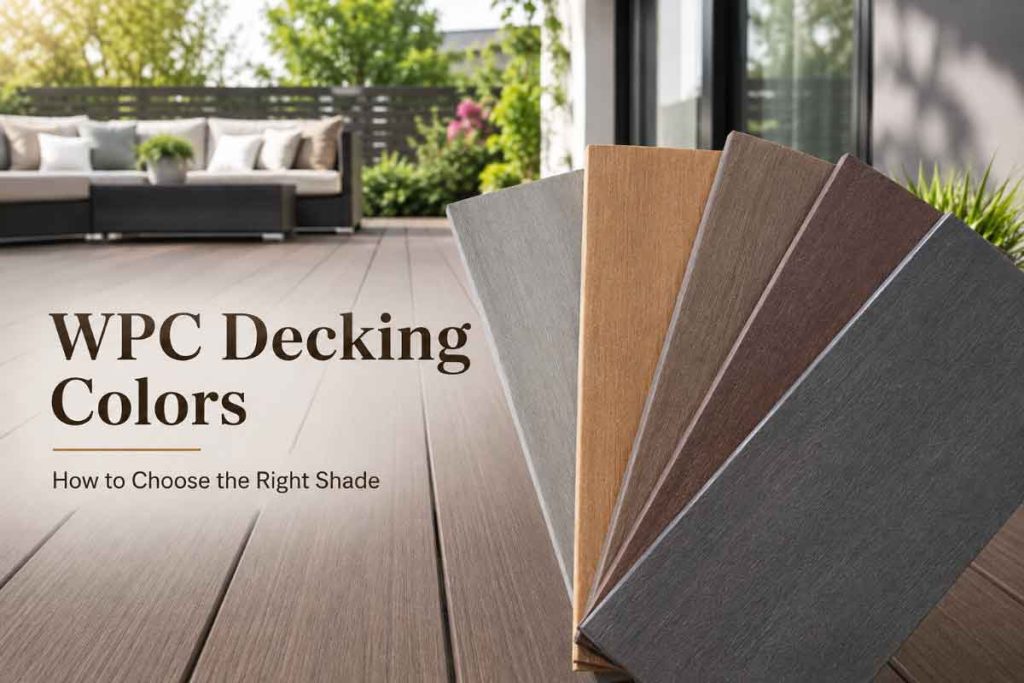
WPC decking combines wood fiber, thermoplastic material and selected additives. It provides a wood-like appearance while reducing many of the regular maintenance requirements associated with natural timber.
PVC decking, in contrast, normally contains no wood fiber. Therefore, buyers should not assume that every synthetic board has the same composition, weight, performance or cost.
This article focuses mainly on WPC and composite deck boards rather than one specific product quotation.
How Much Do Synthetic Deck Boards Cost?
For early budgeting, buyers should separate the board price from the complete project cost.
| Cost level | What it normally includes |
|---|---|
| Board cost | Synthetic deck boards only |
| Decking system cost | Boards, joists, clips, screws, trims and related accessories |
| Installation cost | Site preparation, cutting, framing and board installation |
| Complete project cost | Materials, labor, delivery, preparation and additional features |
| Long-term cost | Cleaning, repairs, maintenance and eventual replacement |
A low price for the deck boards does not necessarily mean a low project cost. For example, an inexpensive board may require more support, additional fasteners or more installation time.
Therefore, buyers should compare complete systems instead of comparing only the price of one board.
Board Price and Project Cost Are Not the Same
The deck boards form only the visible surface of a finished deck. A complete outdoor decking system may also require:
- A suitable supporting structure
- Joists or battens
- Starter clips and intermediate clips
- Screws and fixing accessories
- Edge boards or fascia
- Expansion gaps
- Drainage clearance
- Delivery to the project site
- Cutting and installation labor
In addition, an old deck may require removal before the new system can be installed. Uneven concrete, soft ground, slopes and elevated structures can also increase preparation costs.
For this reason, a material-only price should never be presented as the final installed cost.
How to Estimate the Initial Decking Budget
Start by measuring the usable deck area. Then add an allowance for cutting, trimming and possible material damage.
For a simple rectangular layout, buyers commonly add approximately 5% to 10% to the measured area. Diagonal patterns, steps, curves and complicated borders may require a higher allowance.
A basic calculation looks like this:
Required decking quantity = Measured area × 1.05 to 1.10
However, this calculation only estimates the deck board coverage. It does not include the substructure, fasteners, trims, delivery or installation.
The complete initial budget can be estimated as:
Initial decking cost = Boards + support system + fasteners + trims + delivery + installation + site preparation
Before comparing quotations, confirm whether each supplier or contractor includes the same items.
What Makes Installation More Expensive?
Installation cost often changes more than the price of the deck boards. Local labor rates have a major influence, but the site and design also matter.
1. The Condition of the Installation Area
A flat and prepared surface generally requires less work. In contrast, an uneven surface may need leveling, drainage improvements or a new supporting structure.
2. Deck Height
Ground-level platforms usually require a simpler structure. Elevated decks may need stronger framing, stairs, railings and additional safety measures.
3. Layout and Cutting
Straight board layouts usually create less waste and take less time to install. Diagonal patterns, decorative borders and curved edges require more cutting and planning.
4. Existing Structures
Replacing boards on a sound substructure may cost less than rebuilding the entire deck. However, the installer should inspect the existing structure before reusing it.
5. Access to the Project
Narrow entrances, upper-floor balconies and remote project locations can increase handling and labor requirements.
Therefore, two projects with the same floor area can have very different installed costs.
Why the Cheapest Synthetic Deck Board May Cost More
The lowest-priced board may look attractive during the purchasing stage. Nevertheless, it can create additional costs if the product does not match the project requirements.
A buyer should consider several questions:
- Does the board provide sufficient coverage?
- Which joist spacing does the installation require?
- Are compatible clips and screws available?
- Does the supplier provide clear installation instructions?
- Is the surface suitable for the intended environment?
- Can replacement boards be supplied later?
- Does the product have consistent dimensions and color?
- Are technical specifications available before ordering?
For example, incorrect joist spacing can affect the stability of the decking surface. Inadequate expansion gaps may also cause problems when outdoor temperatures change.
Proper product selection and installation can prevent avoidable repair and replacement costs.
Upfront Cost Versus Long-Term Cost
Natural wood may have a lower initial material cost in some markets. However, outdoor timber often requires regular painting, staining or sealing to maintain its appearance and improve its resistance to weather exposure.
WPC deck boards usually require routine cleaning rather than regular staining or painting. Consequently, the owner may spend less time and money on surface treatments during the service period.
A long-term cost comparison should include:
- Initial material cost
- Installation cost
- Cleaning products
- Surface treatments
- Regular labor
- Repairs
- Replacement boards
- Expected years of use
A useful calculation is:
Average annual decking cost = Initial cost + maintenance and repair costs ÷ expected years of use
This calculation does not predict the exact service life of a deck. Instead, it helps buyers compare products on the same basis.
Are Synthetic Deck Boards Cheaper Over Time?
Synthetic decking is not always the cheapest option at the time of purchase. However, it may provide better long-term value when maintenance requirements, labor and replacement risks are included.
The result depends on the project.
For a small temporary installation, the lowest initial cost may remain the main priority. In contrast, hotels, gardens, commercial areas, balconies and frequently used outdoor spaces may place greater value on predictable maintenance and long-term appearance.
Therefore, buyers should define the expected use period before selecting a product.
How to Compare Synthetic Decking Options Accurately
Do not compare deck boards only by unit price. Different board widths, lengths and profiles may cover different areas.
Instead, compare each option using the following information:
| Information to compare | Why it matters |
|---|---|
| Board dimensions | Determines coverage and required quantity |
| Product composition | Identifies the type of synthetic decking |
| Recommended joist spacing | Affects the supporting system |
| Fixing method | Determines clip and labor requirements |
| Surface and color | Helps match the project design |
| Installation instructions | Reduces installation mistakes |
| Technical data | Supports product evaluation |
| Sample availability | Allows buyers to inspect the board |
| Replacement availability | Helps with future maintenance |
For distributors and project buyers, the comparison should also use the same order quantity, accessory scope and delivery terms.
Otherwise, a quotation that appears cheaper may simply exclude necessary items.
How to Control the Total Decking Cost
Reducing the total cost does not always require choosing the cheapest board. Better planning can often produce greater savings.
Keep the Layout Simple
Straight layouts reduce cutting, waste and installation time. They also make it easier to calculate the required quantity.
Confirm the Complete System Early
Select compatible boards, joists, clips and screws before placing the order. This prevents buyers from sourcing missing accessories separately.
Prepare Accurate Measurements
Incorrect measurements can lead to excessive materials or a second order. Both situations increase the total cost.
Request a Sample
A sample helps buyers inspect the color, surface, profile and general product quality before ordering a larger quantity.
Follow the Installation Guide
Correct joist spacing, expansion gaps and ventilation help the deck perform as intended. They can also reduce future repair costs.
Keep Spare Boards
For larger or long-term projects, retaining a small quantity of boards can simplify future repairs. The same color batch may not always remain available several years later.
What Information Is Needed for an Accurate WPC Decking Estimate?
A synthetic decking supplier needs more than the total project area to prepare a useful estimate.
Before requesting a quotation, prepare:
- Project location
- Total deck area
- Project drawing or dimensions
- Preferred board color
- Preferred surface finish
- Required board length
- Installation environment
- Existing substructure information
- Required accessories
- Estimated order quantity
- Expected delivery schedule
Photos of the installation area can also help the supplier understand the project.
For commercial or distribution orders, buyers should explain whether they need a complete decking system, decking boards only or mixed products for inventory.
Is WPC Decking Suitable for Budget-Conscious Projects?
WPC decking can support different project budgets because manufacturers can provide various profiles, surfaces and system configurations.
However, the selected board should still match the installation environment and expected use. Choosing a lower-cost option that does not meet the project requirements can result in higher costs later.
A better approach is to define the required performance, appearance and installation conditions first. The supplier can then recommend a suitable option within the available budget.
Frequently Asked Questions
How much do synthetic deck boards cost per square foot?
Synthetic deck boards may cost approximately $5 to $18 per square foot for the boards alone in some retail markets. However, this range varies by product type, country, seller and specification.
How much does a fully installed synthetic deck cost?
A standard professionally installed project may cost around $15 to $32 per square foot in some markets. Elevated structures, stairs, railings, demolition and complicated designs can increase the total.
Are synthetic deck boards cheaper than wood?
Synthetic deck boards may cost more upfront than basic treated wood. However, their lower surface-maintenance requirements may reduce long-term spending on staining, painting and related labor.
Is WPC decking the same as synthetic decking?
WPC decking is one type of synthetic decking. The broader category can also include PVC and other polymer-based boards.
Should I compare synthetic decking by price per board?
Price per board alone can be misleading because board dimensions and coverage vary. Compare the cost per square foot or square meter and confirm what accessories the quotation includes.
How much extra decking should I order?
A simple layout may require approximately 5% to 10% extra material for cutting and waste. Complex layouts may need a larger allowance.
Does synthetic decking require maintenance?
Synthetic decking requires cleaning and routine inspection. Although WPC normally does not require regular painting or staining, it should not be described as completely maintenance-free.
Final Thoughts
The real cost of synthetic deck boards includes more than the visible decking surface. Buyers should consider the supporting system, accessories, installation, site preparation and long-term maintenance before comparing options.
A lower board price does not always create a lower total project cost. Accurate measurements, compatible components and correct installation can provide greater savings over the full service period.
Senlai supplies WPC decking boards and complete accessory systems for distributors, contractors and outdoor projects. Share your project area, preferred style and delivery location with our team to receive a suitable product recommendation and factory quotation.