A Complete Comparison for Outdoor Projects
When selecting 3D embossed WPC decking for outdoor use, understanding the difference between 1st generation and 2nd generation co-extruded decking is essential.
Although both feature realistic wood grain textures, their structure, performance, lifespan, and suitable applications are significantly different.
What Is 1st Generation 3D Embossed WPC Decking?
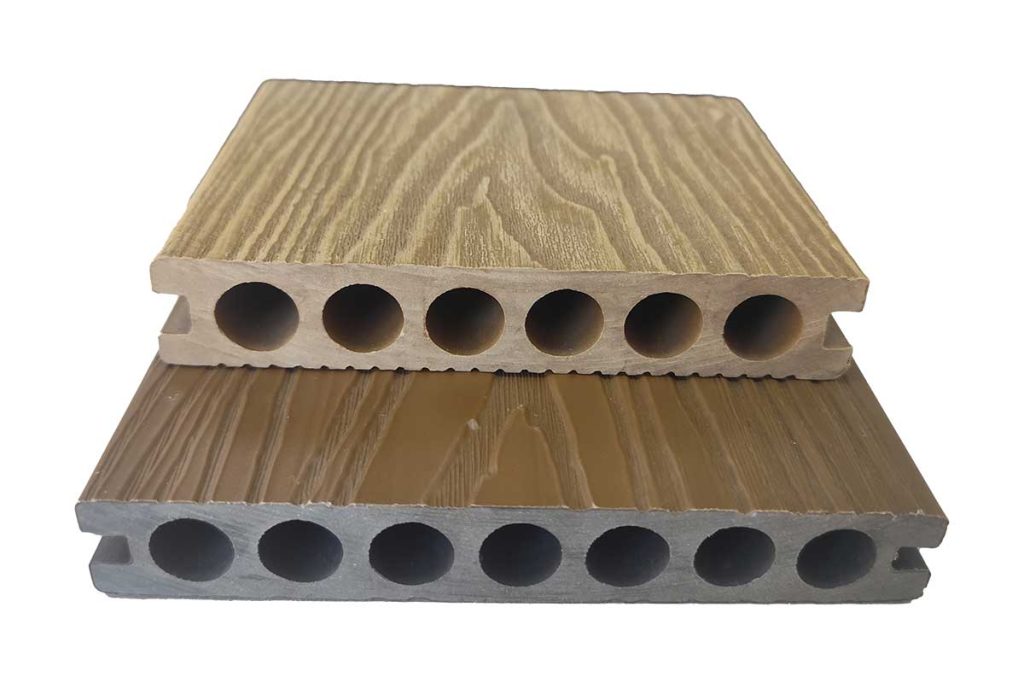
1st generation 3D embossed WPC decking is made from a single-layer wood plastic composite.
The 3D wood grain pattern is created by pressing an embossing mold directly onto the WPC surface during production.
Structure
- Solid or hollow WPC core
- No protective outer layer
- 3D embossed texture directly on WPC material
Key Characteristics
- Natural-looking wood grain
- Good anti-slip performance
- Stable outdoor performance under normal conditions
Advantages
- Realistic 3D wood texture
- Better grip compared to flat or brushed decking
- Lower material cost
- Widely used and proven in residential projects
Limitations
- Surface is directly exposed to UV, water, and stains
- Color fading may occur over long-term sun exposure
- Oil, food, and liquid stains can penetrate the surface
- Shorter service life compared to co-extruded decking
Typical Service Life:
8–15 years, depending on climate and usage intensity
What Is 2nd Generation 3D Embossed WPC Decking?
2nd generation 3D embossed WPC decking, also known as co-extruded WPC decking, features a protective outer capped layer co-extruded with the WPC core.
The 3D embossing is applied on the co-extruded surface, not on bare WPC.
Structure
- Inner core: WPC composite
- Outer layer: co-extruded polymer cap with UV and stain-resistant additives
- 3D embossed texture pressed onto the capped layer
Key Characteristics
- Dense, sealed surface
- Superior color stability
- Strong resistance to stains, moisture, and fading
Advantages
- Excellent UV resistance and color retention
- Strong stain and moisture resistance
- Easy to clean and maintain
- Longer service life in harsh outdoor environments
- Ideal for high-end and commercial projects
Limitations
- Higher material cost
- Slightly more rigid surface feel compared to 1st generation
- Over-specification for low-budget residential projects
Typical Service Life:
15–25 years, depending on application and environment
Key Performance Comparison
| Feature | 1st Generation 3D Embossed | 2nd Generation Co-Extruded 3D |
| Surface Structure | Exposed WPC | Protected capped layer |
| Wood Grain Depth | Deep | Deep & more defined |
| Anti-Slip | Good | Good to excellent |
| UV Resistance | Moderate | Excellent |
| Stain Resistance | Moderate | Excellent |
| Color Stability | Medium | High |
| Maintenance | Medium | Low |
| Typical Lifespan | 8–15 years | 15–25 years |
| Cost Level | Lower | Higher |
When to Choose 1st Generation 3D Embossed WPC Decking
Choose 1st generation decking if:
- The project is residential (garden, backyard, balcony)
- Budget control is important
- The area has moderate sun exposure
- The deck is not exposed to heavy staining or commercial traffic
Typical applications:
- Private gardens
- Backyard decks
- Small patios
- Cost-sensitive housing projects
When to Choose 2nd Generation Co-Extruded 3D WPC Decking
Choose 2nd generation decking if:
- Long-term durability is a priority
- The project involves high UV exposure
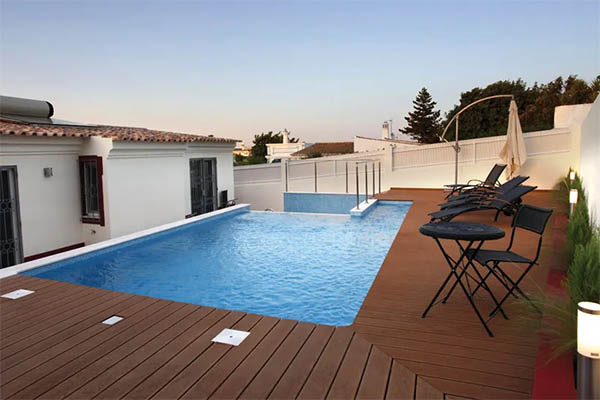
- The deck is near swimming pools or public areas
- Low maintenance is required
- A premium finish is expected
Typical applications:
- Swimming pool decks
- Hotels and resorts
- Commercial outdoor flooring
- Public walkways and parks
- High-end residential projects
Cost vs Performance: Which Is More Practical?
While 2nd generation co-extruded decking has a higher upfront cost, its longer lifespan and lower maintenance often result in a lower total cost of ownership over time.
For standard residential projects, 1st generation 3D embossed decking remains a practical and cost-effective solution.
Final Conclusion
Both 1st and 2nd generation 3D embossed WPC decking offer natural wood appearance and reliable outdoor performance.
The key difference lies in surface protection and long-term durability.
- 1st generation focuses on texture and affordability
- 2nd generation focuses on protection, longevity, and premium performance
Choosing the right option depends on project type, budget, environment, and lifespan expectations.