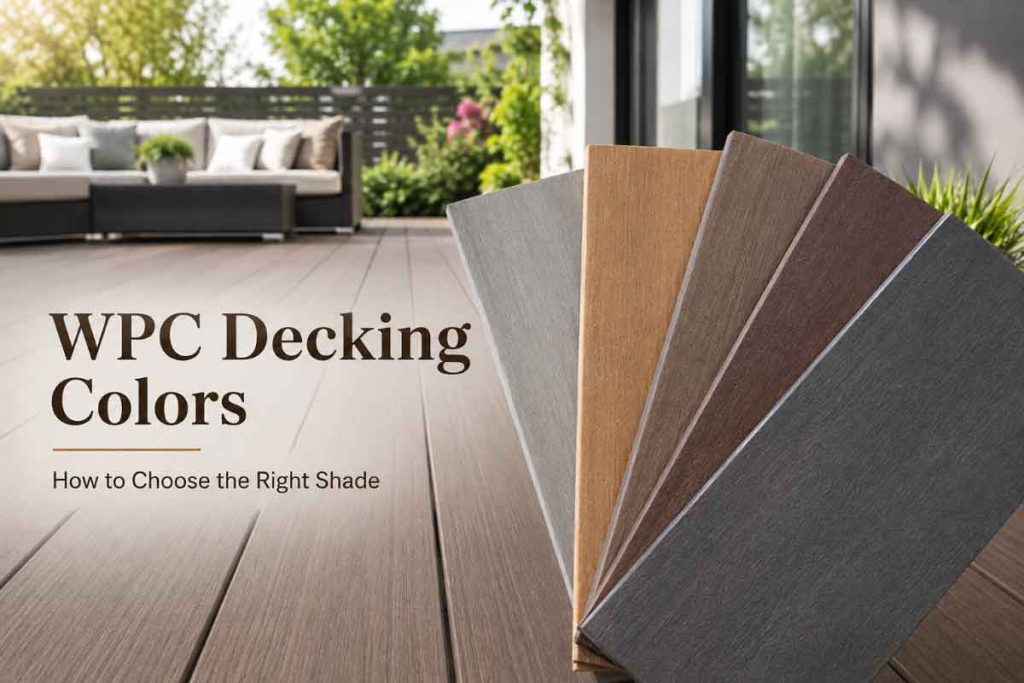
WPC materials, with their advantages of environmental friendliness, durability, attractive appearance, and easy maintenance, have become a popular choice for indoor decoration and outdoor landscaping.
However, many people have a misunderstanding: as long as the main WPC materials are of good quality, everything will be fine, while ignoring the details of WPC accessories installation.
Clips, fasteners, internal and external corner trims, and other seemingly insignificant WPC accessories—once installed improperly—may not only affect the overall appearance, but also cause deformation, loosening, and water leakage of the main materials. Later rework is time-consuming, labor-intensive, and increases additional costs.
Especially for installers, accurately avoiding installation mistakes is the key to improving efficiency and reducing after-sales disputes. For homeowners, understanding these key points can also help supervise construction quality and avoid being misled.
Today, we will break down the 5 most common mistakes in WPC accessories installation, along with specific solutions, inspection points, and scenario-based precautions to help you avoid detours and achieve a one-time successful installation.
I. 5 High-Frequency Installation Mistakes to Avoid Rework
The core of WPC accessories installation is “compatibility, proper force, and scenario adaptation.” The following 5 mistakes are very common, especially for inexperienced installers.
Mistake 1: Mismatch Between Accessories and WPC Materials (Too Loose or Too Tight)
This is the most basic and most easily overlooked mistake. Many installers skip size checking and install directly.
If clips are too small, they will be loose after installation, causing noise and displacement during use. If clips are too large and forced into place, they may damage the grooves of WPC decking or panels, leading to cracking and reduced service life.
Mixing accessories from different brands may also cause compatibility issues even if the labeled sizes are the same.
Solution:
Before installation, size verification must be carried out. Use WPC accessories from the same brand and specifications whenever possible. Test-fit clips with the grooves to ensure proper tightness—firm but easy to install and remove. Replace any mismatched accessories immediately.
Mistake 2: No Waterproof Treatment in Outdoor Installation
Although WPC materials are water-resistant, the joints and connection points of WPC accessories are weak spots.
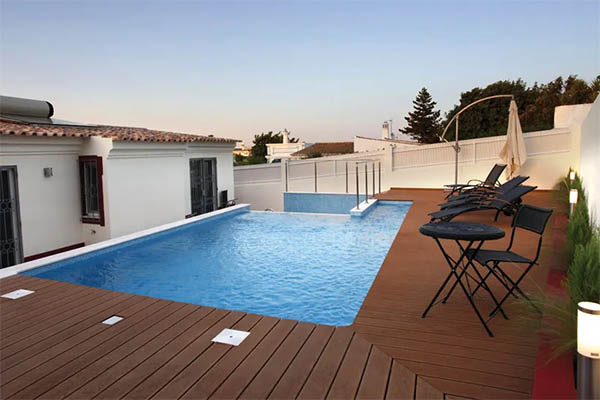
In outdoor WPC decking applications (balcony, garden, walkway), many installers ignore waterproof treatment, allowing rainwater to seep into joints. Over time, this can corrode connectors, soften the base, and cause loosening, deformation, or even mold.
Tests show that without waterproofing, the service life of WPC accessories joints can be reduced by more than 50%.
Solution:
After installation, apply waterproof sealant evenly to all joints and connections. Use WPC-specific sealants with UV resistance and temperature tolerance. For larger gaps, use sealing strips before applying sealant. Maintain a 1–2% drainage slope to prevent water accumulation.
Mistake 3: Fasteners Installed Too Tight, Causing Deformation
Some installers over-tighten screws or bolts in pursuit of firmness, ignoring the thermal expansion and contraction of WPC materials.
Excessive pressure can cause warping, cracking, or bulging. It may also damage clips and fasteners, leading to instability later.
Solution:
Follow the principle of moderate force and reserved expansion space. Do not overtighten—leave 1–2 mm space. Fastener spacing should be 30–40 cm, and holes should be slightly larger than screw diameter. Add expansion joints every 6–8 meters.
Mistake 4: Uneven Installation of Internal and External Corners
Corners are critical for both appearance and waterproofing. Poor installation may lead to gaps, uneven surfaces, and lifting edges.
Common problems include uneven base surfaces, improper cutting angles, and lack of secure fixing.
Solution:
Level the base before installation. Use dedicated WPC corner trims. Apply adhesive and fix with screws (≤400 mm spacing). If cutting materials, ensure precise 45° angles and seal gaps properly.
Mistake 5: Ignoring Anti-Aging Treatment in Outdoor Applications
In outdoor environments, some installers use indoor WPC accessories that lack UV resistance.
These accessories may fade, crack, or become brittle under sunlight and weather exposure, affecting the overall structure.
Solution:
Use outdoor WPC accessories with UV stabilizers and weather-resistant properties. Apply protective coating if needed. Avoid using indoor accessories outdoors.
II. Inspection Points After Installation
Whether for installers or homeowners, focus on the following:
- Stability: No looseness, noise, or deformation
- Seamless joints: No visible gaps, unevenness, or lifting
- Proper sealing: Waterproof treatment completed with no遗漏(→ here translated as “no missing areas”)
You may refer to local standards such as technical regulations for WPC decking installation to ensure compliance.
III. Additional Notes for Different Scenarios
1. Indoor Applications
Focus on compatibility and flatness. Use matching WPC accessories and allow slight expansion space.
2. Outdoor Applications
Focus on waterproofing and durability. Use corrosion-resistant fasteners and ensure proper drainage. Avoid installation in extreme weather (5–35°C recommended).
3. Wet Areas
Ensure full sealing. Use moisture-resistant WPC accessories and corrosion-resistant fasteners. Regularly check sealant condition.
IV. Conclusion
WPC accessories installation may seem like a small detail, but it plays a critical role in the durability and performance of WPC projects.
For installers, avoiding these mistakes improves professionalism and efficiency. For homeowners, understanding these points helps ensure better results and avoid unnecessary costs.
Remember: WPC materials are the foundation, and WPC accessories are the key.
Following this guide will help you achieve a durable, stable, and visually appealing WPC installation.