WPC fence boards are widely used in modern outdoor fencing projects because they combine the appearance of wood with the durability of composite materials. Compared with traditional wooden fences, WPC fencing usually requires less maintenance and offers better resistance to moisture, cracking, and outdoor weather conditions.
Today, WPC fence boards are used in residential gardens, villas, parks, commercial areas, scenic projects, farms, and many other outdoor environments. Different fence board types are designed for different applications, appearances, and structural requirements.
This article explains the common types of WPC fence boards, their surface styles, structures, sizes, and where they are commonly used.
What Are WPC Fence Boards?
WPC fence boards are outdoor fencing materials made from wood plastic composite materials. They are usually produced from wood fiber, plastic, and additives through extrusion technology.
The wood fiber provides a natural wood-like appearance, while the plastic improves weather resistance and durability for outdoor use.
Compared with traditional wood fencing, WPC fence boards are designed to reduce common problems such as:
- Rotting
- Cracking
- Insect damage
- Frequent painting
- High maintenance requirements
Because of these advantages, WPC fencing has become increasingly popular in modern outdoor projects.
Different Surface Types of WPC Fence Boards
The surface design affects both the appearance and practical performance of WPC fence boards.
Straight Grain WPC Fence Boards
Straight grain surfaces are one of the most common styles.
This type usually features parallel grooves or simple linear textures on the surface.
Main features include:
- Simple and modern appearance
- Easier cleaning
- Suitable for large fencing projects
- Cost-effective option
Straight grain fence boards are commonly used in:
- Garden fences
- Residential boundaries
- Commercial outdoor areas
- Public projects
For projects that focus on practicality and easier maintenance, straight grain surfaces are often a good choice.
Wood Grain WPC Fence Boards
Wood grain fence boards are designed to imitate the texture of natural wood.
Compared with straight grain surfaces, wood grain textures usually create a warmer and more decorative appearance.
Advantages include:
- More natural wood-like effect
- Better visual texture
- Suitable for decorative fencing projects
Wood grain WPC fence boards are widely used in:
- Villas
- Courtyards
- Hotels
- Landscape projects
- Outdoor leisure areas
Many buyers choose wood grain surfaces when appearance is an important part of the project design.
3D Embossed WPC Fence Boards
3D embossed surfaces provide deeper and more realistic wood textures.
Compared with ordinary wood grain surfaces, embossed textures usually offer:
- Stronger visual depth
- Better decorative appearance
- More natural wood simulation
This type of fence board is commonly used in high-end residential or commercial outdoor projects.
However, embossed surfaces may require slightly more cleaning in dusty environments because of the deeper texture.
Co-Extruded WPC Fence Boards
Co-extruded fence boards include an additional protective outer layer.
This outer layer helps improve:
- Stain resistance
- Surface durability
- Color stability
- Moisture resistance
Co-extruded WPC fence boards are suitable for outdoor environments with stronger sunlight, humidity, or frequent cleaning requirements.
They are commonly used in:
- Coastal areas
- Public outdoor projects
- Commercial fencing
- High-end outdoor spaces
Different Structures of WPC Fence Boards
Besides surface design, the internal structure also affects performance, weight, and application.
Hollow WPC Fence Boards
Many WPC fence boards use a hollow structure.
Hollow boards are popular because they are:
- Lighter in weight
- More cost-effective
- Easier to transport
- Suitable for most residential projects
The hollow structure also helps reduce material consumption while maintaining reasonable strength for fencing applications.
Common sizes may include widths such as:
- 140mm
- 162mm
with thicknesses around:
- 20mm
Different internal cavity designs can also affect strength and weight.
Solid WPC Fence Boards
Solid boards contain a denser internal structure and higher material content.
Compared with hollow boards, solid fence boards are usually:
- Heavier
- Stronger
- More stable for high-impact environments
Solid boards are commonly used for:
- Public projects
- Commercial fencing
- Areas requiring stronger durability
However, they are usually more expensive than hollow structures.
Common Applications of WPC Fence Boards
Different WPC fence board types are suitable for different outdoor projects.
Residential Garden Fencing
WPC fence boards are widely used in residential gardens because they provide privacy while maintaining a modern appearance.
Homeowners often prefer wood grain or embossed surfaces for decorative purposes.
Villa and Courtyard Projects
For villas and private courtyards, WPC fencing is often selected because it creates a cleaner and more premium outdoor appearance than ordinary metal fencing.
Co-extruded or embossed fence boards are commonly used in these projects.
Commercial Outdoor Spaces
Hotels, restaurants, cafes, and commercial outdoor areas often use WPC fencing to divide outdoor spaces while improving decoration.
In commercial projects, low maintenance is usually an important advantage.
Parks and Scenic Areas
Public parks and scenic projects often use WPC fence boards because they can maintain stable outdoor performance while reducing long-term maintenance costs.
Straight grain or hollow structures are commonly selected for large-scale projects.
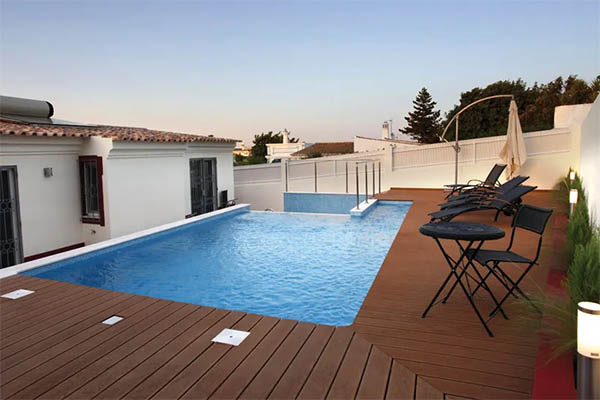
Poolside and Leisure Areas
WPC fencing can also be used around outdoor leisure areas, including poolside spaces and rooftop terraces.
For these environments, moisture resistance and weather resistance are important considerations.
Factors Buyers Should Consider
Before choosing WPC fence boards, buyers should evaluate several important factors.
Surface Style
Different surface textures create different visual effects and maintenance requirements.
Structure Type
Hollow and solid boards are suitable for different budgets and project requirements.
Board Size
Width and thickness affect both appearance and structural performance.
Installation Environment
Climate, sunlight, humidity, and project location all influence product selection.
Maintenance Requirements
Different surface types may require different cleaning frequency.
Why WPC Fence Boards Are Becoming More Popular
Modern outdoor projects increasingly prefer materials that combine durability with attractive appearance.
Compared with traditional wood fencing, WPC fence boards provide:
- Lower maintenance
- Better moisture resistance
- More stable outdoor performance
- Longer service life
- Modern decorative appearance
At the same time, they are available in different colors, textures, structures, and sizes, making them suitable for various outdoor applications.
Conclusion
WPC fence boards are available in different surface styles, structures, and sizes to meet the needs of residential, commercial, and public outdoor projects.
Straight grain, wood grain, embossed, and co-extruded surfaces each provide different visual effects and maintenance characteristics. Hollow and solid structures also offer different advantages depending on project requirements and budget.
By understanding the differences between WPC fence board types and their applications, buyers can select more suitable fencing solutions for long-term outdoor use.