If you’re undertaking an outdoor renovation project—whether it involves a garden patio, balcony deck, poolside area, or public walkway—you may have wondered: Can WPC tiles be used outdoors? The answer is yes.
WPC (Wood-Plastic Composite) tiles are specifically designed for outdoor use, offering advantages over traditional flooring materials such as wood, porcelain, and concrete in terms of durability, ease of maintenance, and adaptability. This guide explores all aspects of using WPC tiles outdoors, including their characteristics, suitable applications, selection criteria, installation steps, maintenance practices, and real-world use cases.
What Are WPC Tiles, and Why Are They Fit for Outdoor Use?
To start, it’s important to understand what WPC tiles are. These tiles are produced by combining recycled wood fibers (such as wood flour, bamboo powder, or rice hulls) with thermoplastic polymers (including HDPE, PE, or PVC), along with small quantities of stabilizers, lubricants, and color additives, through extrusion or molding techniques.
This composition combines the natural look of wood with the durability of plastic, resulting in a material that can withstand the harsh conditions of outdoor environments—where rain, sunlight, humidity, and temperature changes can quickly damage other flooring options.
Unlike solid wood, which tends to rot, warp, or splinter when exposed to moisture and UV radiation, WPC tiles are engineered to resist these issues. Compared with porcelain or concrete, they are lightweight, easy to install, and provide a warmer, more natural appearance for outdoor spaces.
For homeowners, contractors, and commercial project managers, WPC tiles offer a balanced combination of performance and aesthetics, making them a widely used choice for outdoor flooring.
Key Benefits of WPC Tiles for Outdoor Applications
WPC tiles are not just suitable for outdoor use—they often outperform many traditional materials. Below are the main advantages:
1. Strong Weather Resistance and Durability
Outdoor environments are constantly exposed to rain, snow, intense sunlight, and temperature fluctuations. WPC tiles perform well under these conditions. Their plastic base forms a protective barrier with a low water absorption rate (typically below 0.5%), helping prevent swelling, cracking, or deformation.
High-quality WPC tiles are also produced with UV stabilizers, helping maintain stable color and surface performance over long-term outdoor use.
They are also resistant to biological damage such as mold, fungi, and termites, making them suitable for humid, coastal, and tropical environments.
2. Excellent Water Resistance and Slip Resistance
Water resistance is essential for outdoor flooring, especially in areas like pool decks, balconies, or near water features. WPC tiles offer excellent water resistance and do not easily absorb moisture.
Most outdoor WPC tiles feature textured or embossed surfaces, which improve slip resistance even when wet. This helps reduce the risk of slipping compared with smooth surfaces like polished tiles.
3. Minimal Maintenance Requirements
Outdoor flooring often requires ongoing maintenance. Solid wood needs sanding, staining, and sealing, while concrete and tiles may require repairs.
WPC tiles require very little maintenance. They do not require painting, sanding, sealing, or staining. Regular cleaning with water and mild detergent is usually sufficient, helping reduce long-term maintenance costs.
4. Easy Installation
Most WPC tiles use an interlocking system, allowing them to be installed without glue or nails. This makes them suitable for both DIY users and professional installers.
Even users with limited installation experience can complete installation within a short time.
They can also be installed over existing surfaces such as concrete or old decking, provided the base is flat and stable.
5. Eco-Friendly and Sustainable
WPC tiles are made using recycled wood fibers and plastics, reducing the demand for natural timber and helping reuse plastic waste.
They can also be recycled after use, making them a more environmentally friendly alternative to traditional materials.
6. Flexible Design Options
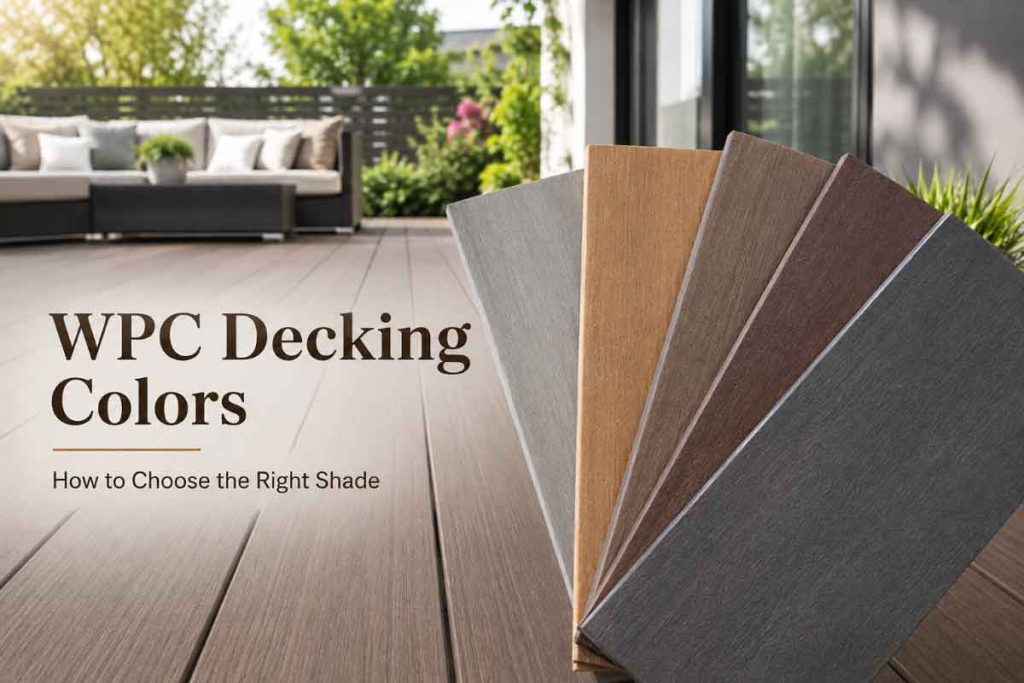
WPC tiles are available in a wide range of colors, textures, and sizes to suit different outdoor styles. Common finishes include wood grain and stone-like textures.
Standard sizes such as 300×300mm are widely used, and customized options are also available depending on project requirements.
Suitable Outdoor Applications for WPC Tiles
WPC tiles are highly versatile and can be used in many outdoor environments, including:
- Garden patios and terraces
- Poolside decks
- Balconies
- Park walkways and public spaces
- Garage floors and driveways
- Coastal and dock areas
Their durability and low maintenance make them suitable for both residential and commercial use.
Potential Limitations (and How to Address Them)
1. Thermal Expansion
WPC tiles may expand slightly under high temperatures. It is recommended to leave a 3–5mm gap between tiles and an 8–10mm gap near edges during installation.
2. Surface Temperature
Dark-colored tiles may become warm under direct sunlight. Choosing lighter colors can help reduce heat absorption.
3. Load Capacity
For heavy-load areas, thicker tiles or reinforced substructures are recommended.
How to Select the Right Outdoor WPC Tiles (Buyer’s Guide)
When choosing WPC tiles, consider the following:
1. Material Quality
Select tiles made from high-quality HDPE or PE materials. Check for UV stabilizers and anti-aging additives for long-term durability.
2. Surface Treatment
Choose slip-resistant textures and co-extruded protective layers to improve durability and weather resistance.
3. Size and Style
Choose sizes based on your space. Larger tiles suit large areas, while smaller tiles are easier for compact spaces.
4. Installation System
Interlocking systems are recommended for easier installation and better performance outdoors.
5. Certification and Warranty
Ensure the product meets standards such as CE, ISO, or ASTM, and comes with a reliable warranty.
Installation and Maintenance Tips for Outdoor WPC Tiles
Installation Tips
- Ensure the base is flat, clean, and dry
- Maintain proper drainage slope
- Leave expansion gaps
- Start installation from a straight edge or corner
- Cut tiles carefully to fit edges
Maintenance Tips
- Clean regularly with water
- Use mild detergent for stains
- Avoid sharp objects
- Inspect annually for damage
Common Outdoor Applications of WPC Tiles
1. Garden Patios
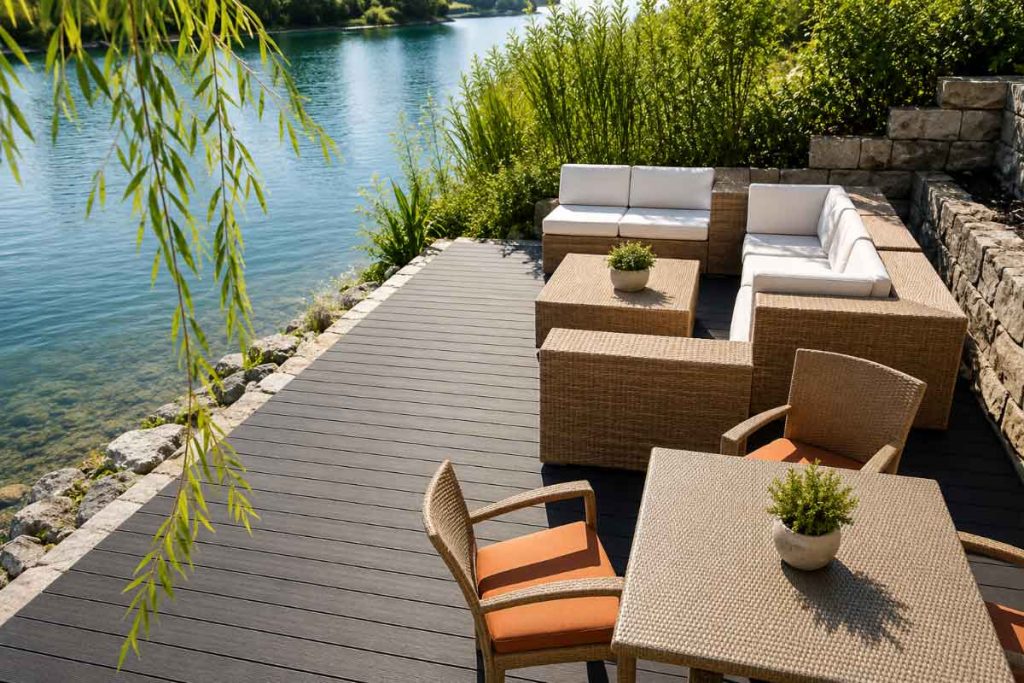
WPC tiles are widely used in garden patios to create a natural and comfortable outdoor space. Their wood-like appearance blends well with plants, outdoor furniture, and landscaping, making them ideal for relaxation and entertainment areas.
2. Poolside Areas
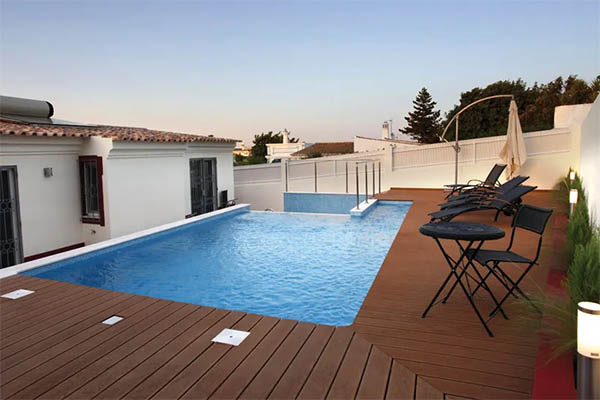
WPC tiles are suitable for poolside environments due to their water resistance and slip-resistant surface. They help create a safer walking area while maintaining a clean and modern look.
3. Outdoor Terraces
For terraces and rooftop spaces, WPC tiles provide a practical and attractive flooring solution. Their lightweight structure and easy installation make them especially suitable for elevated outdoor areas.
Final Conclusion: WPC Tiles Are an Excellent Outdoor Solution
WPC tiles are a reliable option for outdoor flooring due to their durability, water resistance, low maintenance, and ease of installation. They are suitable for a wide range of applications, from residential patios to commercial outdoor spaces.
Available in various types such as interlocking and co-extruded tiles, WPC products can meet different project needs. Many options comply with international standards and offer long-term warranties.
If you would like more information, request a quote, or receive samples, feel free to contact us. With the right WPC tiles, you can create a durable and attractive outdoor space that lasts for years.