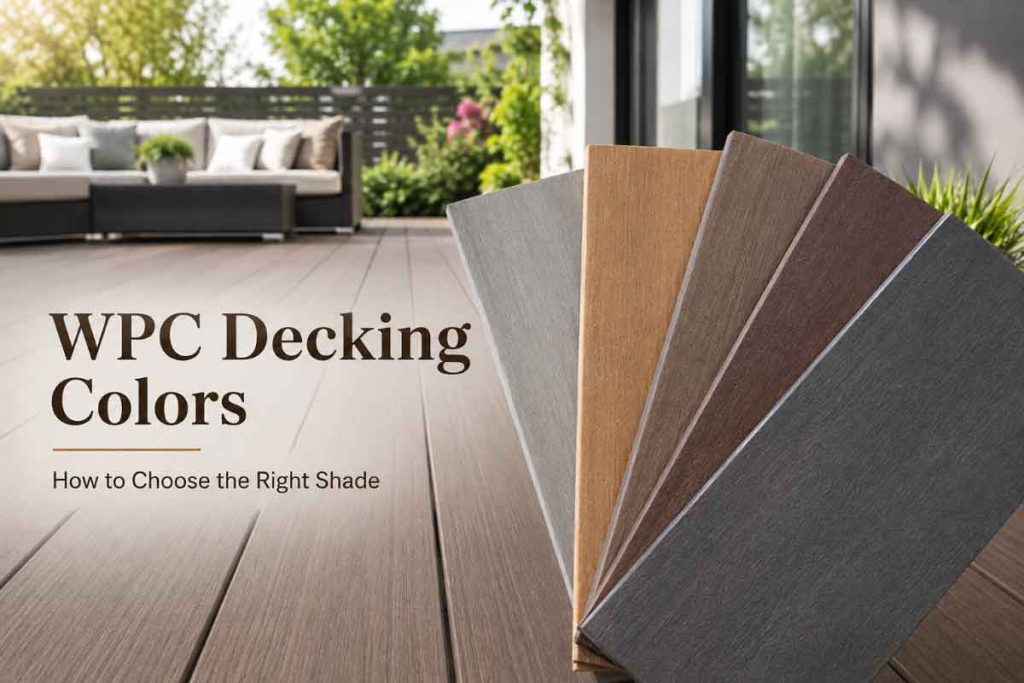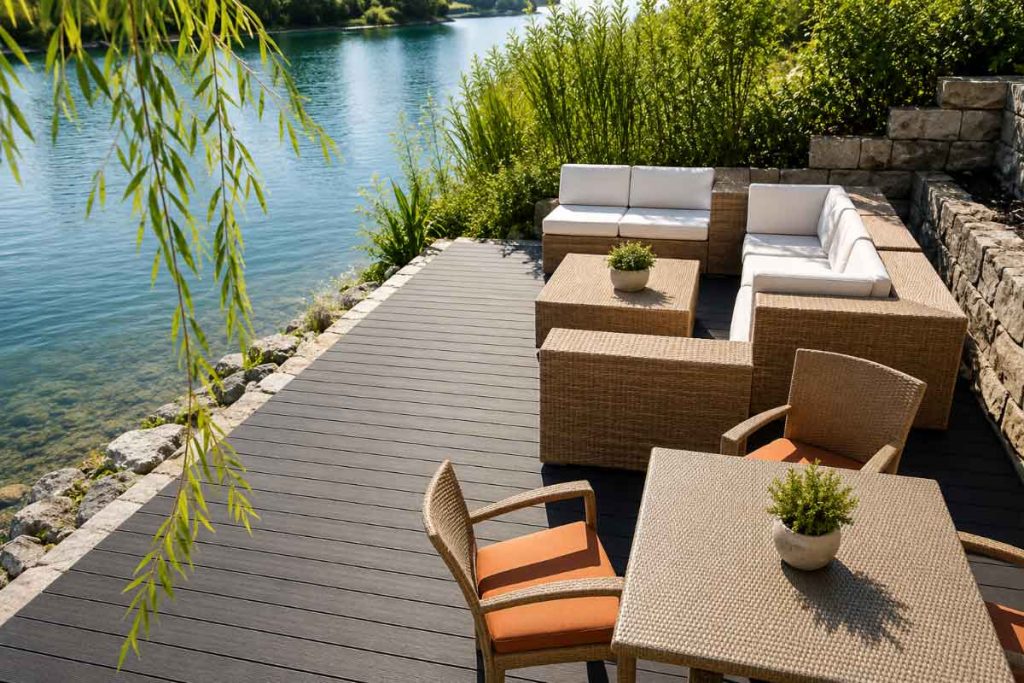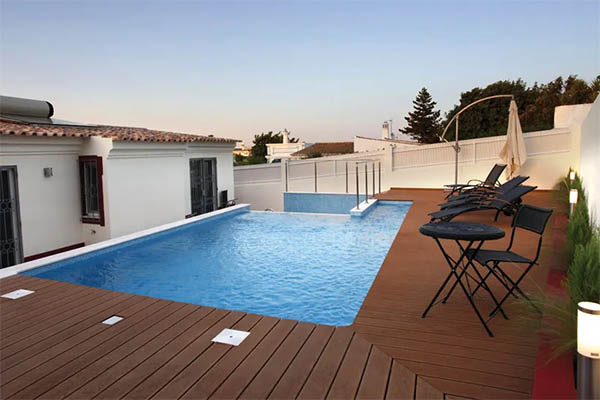
WPC decking, due to its durability, environmental friendliness, and aesthetic appeal, has become a widely used material in outdoor construction and landscape design. However, many people often overlook some of its physical characteristics when choosing and using WPC decking, especially its fire resistance and thermal expansion. This article will explore these two important aspects and provide practical advice for consumers, helping them select the right WPC decking and ensure its stability and safety over long-term use.
1. Fire Resistance of WPC Decking
WPC decking is made from a composite of wood fibers and plastics (such as polyethylene, polypropylene, or PVC). Most WPC decking materials have good fire resistance, especially those made from specially treated plastics, which can effectively slow down the spread of flames. Therefore, the ignition point of WPC decking usually falls between 250°C to 350°C, making it significantly more fire-resistant compared to pure wood decking.
Why Won’t WPC Decking Ignite with a Lighter?
- Plastic Composition: The plastic component of WPC decking typically has a high ignition point, making it fire-resistant. Plastics treated with fire retardants can have an ignition point above 300°C, so the typical lighter flame (around 1000°C) usually won’t easily ignite WPC decking.
- Wood Fiber Component: Although wood fiber is combustible, the wood fibers in WPC decking are generally encased in plastic, which makes it harder for the flame to directly reach the wood fiber, significantly reducing the risk of fire.
- Fire Retardant Additives: Some WPC decking products include fire retardant additives during the manufacturing process to further improve their fire resistance. This helps reduce the risk of fire and extends the lifespan of the decking.
Despite the strong fire resistance of WPC decking, if exposed to high temperatures for prolonged periods or direct flame contact, the surface of the decking may develop scorch marks or melt. Therefore, it is still recommended to avoid exposing the decking to open flames or extremely high temperatures.
2. Thermal Expansion and Contraction of WPC Decking
WPC decking contains both wood fibers and plastics, which have different thermal expansion properties, causing the decking to expand and contract with temperature changes. This phenomenon can impact the long-term stability of the decking, particularly in environments where temperature and humidity fluctuate significantly.
Factors Influencing Thermal Expansion and Contraction
- Wood’s Thermal Expansion: Wood (especially wood fiber) has strong moisture absorption and thermal expansion characteristics. As the temperature rises, the wood expands; when the temperature drops, it contracts. This characteristic of expansion is more pronounced in the wood fiber portion of WPC decking.
- Plastic’s Thermal Expansion: Compared to wood, plastic has a smaller thermal expansion coefficient, but it still expands or contracts with temperature changes. The expansion of plastic is usually more noticeable at higher temperatures, especially in summer or tropical regions.
- Effect of Humidity on WPC Decking: The wood fiber component is sensitive to changes in humidity. When humidity increases, the wood fibers absorb moisture and expand; when humidity decreases, the wood fibers release moisture and contract. Although the plastic part of WPC decking is not affected by humidity, the changes in the wood fiber component still affect the overall dimensions of the decking.
3. How to Minimize the Impact of Thermal Expansion and Contraction?
Since WPC decking is often used outdoors or in humid environments, changes in temperature and humidity can directly affect its expansion and contraction, leading to warping or gaps. Proper installation and maintenance are crucial.
- Leave Expansion Gaps: When installing WPC decking, it is important to leave sufficient expansion gaps to allow the decking to expand and contract freely with temperature changes. It is generally recommended to leave a gap of 3-5mm between the planks.
- Choose High-Quality WPC Decking: High-quality WPC decking is designed with anti-deformation features during production. Using the right composite ratio and waterproof coatings can effectively reduce the impact of temperature fluctuations on the decking, improving its stability.
- Regular Inspection and Maintenance: Regularly check for excessive expansion or deformation of the WPC decking, and perform timely adjustments and maintenance, especially during seasons with significant climate changes.
4. Conclusion
WPC decking, as a modern building material, offers advantages such as fire resistance, weather resistance, and deformation resistance. However, it also has some physical characteristics that need attention. Understanding the fire resistance and thermal expansion characteristics of WPC decking, and taking appropriate installation and maintenance measures, will help consumers make better use of this material, ensuring its stability and safety over long-term use. By choosing the right product, installing it properly, and performing regular maintenance, we can maximize the benefits of WPC decking and ensure it continues to perform excellently in various environments.