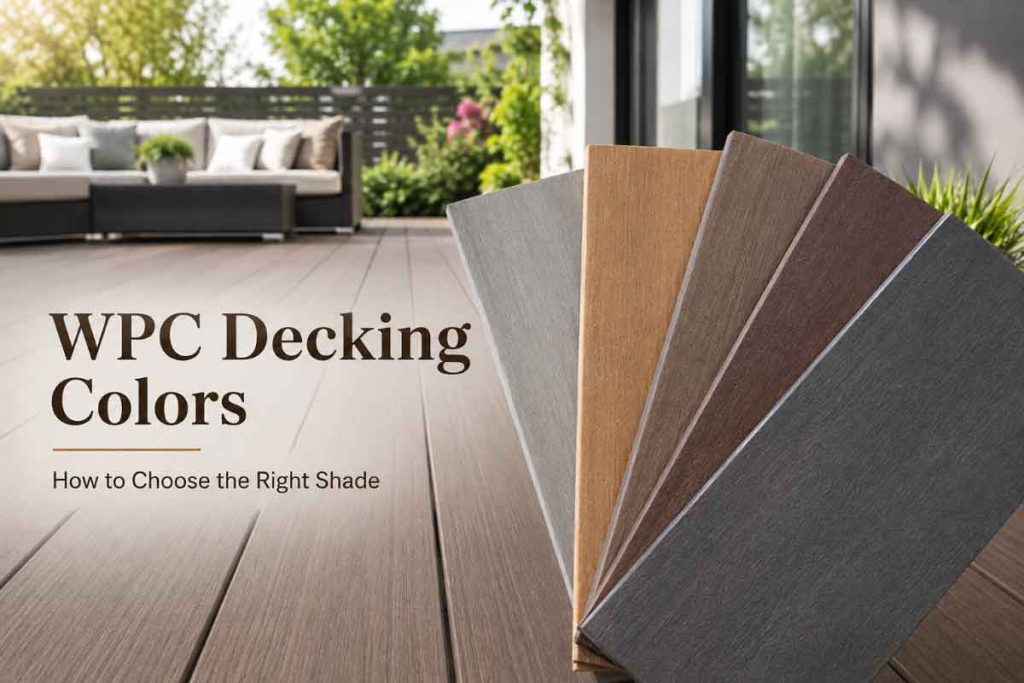
Choosing the right WPC decking color is not only about appearance. Color can also affect the overall outdoor design style, surface temperature, dirt visibility, cleaning frequency, and long-term maintenance experience.
For homeowners, contractors, and project buyers, understanding how different WPC decking colors perform can help create a better outdoor space and reduce future maintenance problems. Whether the project is a garden, balcony, terrace, poolside area, resort, or commercial walkway, color selection should be considered carefully before ordering.
Why WPC Decking Color Matters
WPC decking is widely used in outdoor projects because it combines wood fibers and plastic materials. It offers a natural wood-like appearance while requiring less maintenance than traditional timber decking.
However, different decking colors create different visual effects and practical results. A light grey deck, a dark brown deck, and a teak-colored deck may all use similar materials, but they can look and perform differently in real outdoor environments.
The right color can:
- Match the building and landscape style
- Make the space look larger or warmer
- Affect how visible dust, scratches, and stains are
- Influence surface heat under sunlight
- Reduce or increase cleaning frequency
That is why WPC decking color should be selected based on both design needs and maintenance expectations.
Light-Colored WPC Decking: Clean and Modern
Light colors such as light grey, beige, sand, and light teak are often used in modern outdoor designs.
These colors can make outdoor spaces look brighter, cleaner, and more open. They are suitable for small balconies, modern villas, garden platforms, rooftop terraces, and poolside areas.
Advantages of Light Colors
Light-colored WPC decking usually absorbs less heat than dark-colored decking. In areas with strong sunlight, this can make the surface more comfortable to walk on.
Light colors also create a fresh and modern appearance. They work well with white walls, glass railings, metal structures, and minimalist outdoor furniture.
Maintenance Considerations
The main disadvantage is that light-colored decking may show mud, dust, leaves, and dark stains more easily. In rainy areas, garden areas, or places with heavy foot traffic, light decking may need more regular cleaning.
For commercial projects, such as restaurants or resorts, light colors can look elegant, but cleaning should be planned more frequently.
Dark-Colored WPC Decking: Stable and Premium
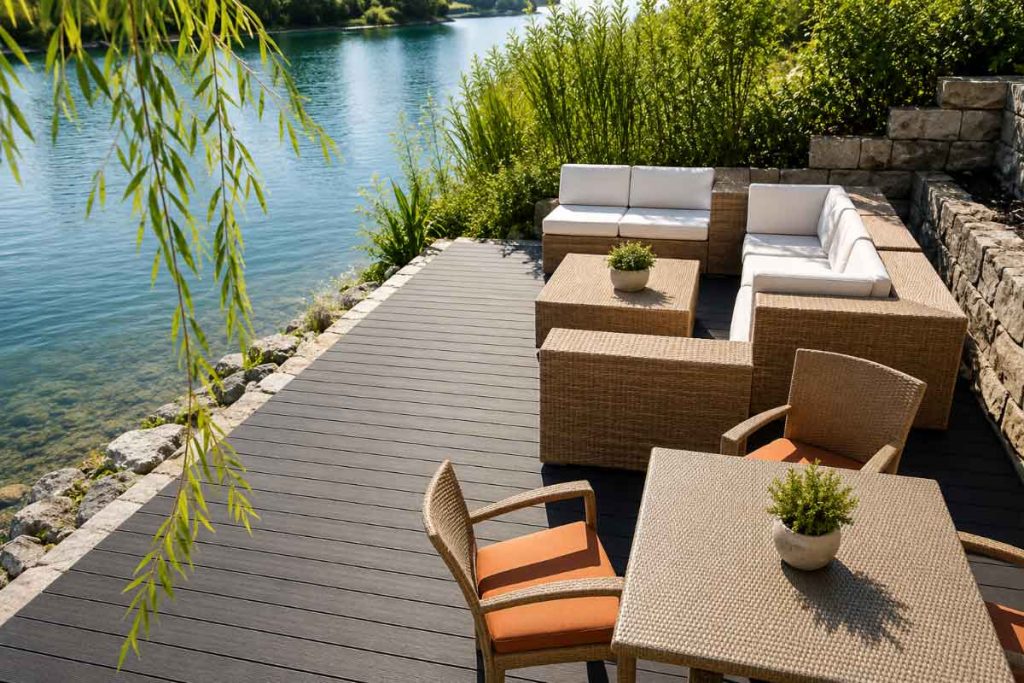
Dark colors such as coffee, dark brown, charcoal, black, and deep grey are popular for high-end outdoor projects.
These colors create a strong, calm, and premium appearance. They are often used in villas, hotels, resorts, outdoor restaurants, commercial terraces, and landscape projects.
Advantages of Dark Colors
Dark-colored WPC decking can hide dust, small stains, and daily marks better than light colors. This makes it a good choice for outdoor areas with frequent use.
Dark brown and coffee colors also look closer to natural hardwood, which is suitable for traditional garden designs and warm outdoor spaces.
Maintenance Considerations
Dark colors absorb more heat under direct sunlight. In hot regions, the surface temperature may become higher, especially around pools, open terraces, and areas without shade.
Dark decking may also show water spots, fading, or surface scratches more clearly depending on the surface finish and product quality. For strong UV environments, co-extruded WPC decking is usually a better option because the outer protective layer offers better stain resistance and color stability.
Wood-Tone WPC Decking: Natural and Versatile
Wood-tone colors such as teak, walnut, oak, red brown, and cedar are among the most common choices for WPC decking.
These colors are popular because they provide a natural wood appearance while keeping the low-maintenance benefits of WPC materials.
Where Wood-Tone Colors Work Best
Wood-tone WPC decking is suitable for many outdoor projects, including:
- Garden decking
- Balcony flooring
- Terrace decking
- Poolside areas
- Boardwalks
- Resorts and hotels
- Outdoor restaurants
- Landscape projects
Teak and brown colors are especially popular because they are easy to match with plants, stone, outdoor furniture, and building facades.
Maintenance Considerations
Wood-tone colors usually offer a good balance between appearance and maintenance. They do not show dirt as easily as very light colors, and they do not absorb as much heat as very dark colors.
For many buyers, teak, brown, and grey-brown are safer choices because they are practical for different climates and outdoor styles.
Grey WPC Decking: Modern and Easy to Match
Grey WPC decking has become increasingly popular in modern outdoor design. It works well with contemporary buildings, metal railings, glass fences, and light-colored walls.
Grey colors can create a clean, neutral, and stylish look. They are suitable for both residential and commercial projects.
Light Grey vs Dark Grey
Light grey decking gives a brighter and softer feeling. It is suitable for modern gardens, balconies, and poolside areas.
Dark grey decking looks more stable and high-end. It is suitable for hotels, commercial platforms, outdoor dining areas, and modern villas.
Maintenance Considerations
Grey is usually easier to maintain than pure white or very light beige. It can hide dust better while still keeping a modern appearance. This makes grey WPC decking a practical choice for buyers who want a balance between design and maintenance.
How Color Affects Outdoor Space Design
WPC decking color can change the visual feeling of an outdoor area.
Light Colors Make Spaces Look Larger
For small balconies, narrow terraces, or compact garden areas, light-colored WPC decking can make the space feel more open.
Dark Colors Create a Premium Look
Dark decking creates stronger contrast and a more luxurious feeling. It works well in large outdoor spaces, villas, hotels, and commercial projects.
Natural Wood Colors Create Warmth
Brown, teak, and walnut colors make outdoor areas feel warmer and closer to nature. They are especially suitable for gardens, courtyards, and landscape projects.
Grey Colors Create a Modern Style
Grey decking is ideal for modern architecture. It works well with black frames, glass railings, concrete walls, and minimalist outdoor furniture.
How Color Affects Cleaning and Maintenance
Different colors do not change the basic cleaning method of WPC decking, but they do affect how often the surface appears dirty.
Light Colors
Light colors may show mud, leaves, food stains, and dust more clearly. They may need more frequent cleaning, especially in garden and restaurant areas.
Dark Colors
Dark colors can hide dirt better, but they may show dust, water marks, and scratches in some environments.
Medium Colors
Medium colors such as teak, brown, grey-brown, and walnut are usually easier to maintain because they balance appearance and dirt visibility.
For most outdoor projects, medium colors are often the most practical option.
Color and Sunlight Exposure
In outdoor applications, sunlight is an important factor.
Dark colors generally absorb more heat and may feel hotter under direct sun. Light colors usually stay cooler, but they may require more cleaning.
In hot climates, such as the Middle East, Australia, Southeast Asia, and sunny coastal areas, buyers should consider:
- Choosing lighter or medium colors
- Using co-extruded WPC decking for better color stability
- Leaving proper expansion gaps during installation
- Avoiding very dark colors in fully exposed areas if surface heat is a concern
Choosing the Right WPC Decking Color for Different Projects
Garden Projects
Recommended colors:
- Teak
- Brown
- Walnut
- Grey-brown
These colors match plants, soil, stone, and outdoor furniture naturally.
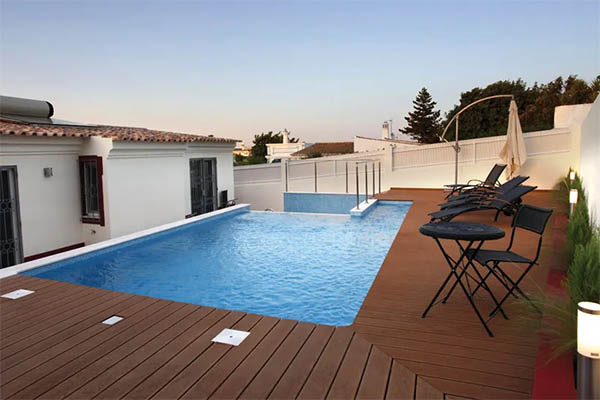
Poolside Areas
Recommended colors:
- Light grey
- Teak
- Sand
- Light brown
These colors create a clean look and usually feel more comfortable under sunlight.
Commercial Outdoor Areas
Recommended colors:
- Dark grey
- Coffee
- Brown
- Co-extruded mixed colors
These colors create a premium appearance and are suitable for restaurants, hotels, resorts, and public spaces.
Balconies and Terraces
Recommended colors:
- Light grey
- Teak
- Brown
- Charcoal grey
The final choice should match the wall color, railing style, and furniture design.
Tips for Selecting WPC Decking Color
Before choosing a WPC decking color, buyers should consider several practical points.
First, check the project environment. A sunny poolside area may need a different color from a shaded garden path.
Second, consider the building style. Modern buildings often match grey or dark decking, while natural gardens usually look better with wood-tone colors.
Third, think about maintenance. If the project owner wants easier cleaning, medium colors are usually safer than very light colors.
Fourth, ask for samples before confirming the order. Photos may look different from real products because of lighting, screen settings, and surface texture.
Finally, consider the surface type. Straight grain, 3D embossed, and co-extruded WPC decking may show colors differently. Co-extruded decking often provides richer colors and better stain resistance.
Conclusion
WPC decking color plays an important role in both outdoor design and daily maintenance. Light colors create a clean and modern look but may require more frequent cleaning. Dark colors look premium and stable but may absorb more heat under strong sunlight. Wood-tone and medium colors usually provide a practical balance between appearance, comfort, and maintenance.
For gardens, balconies, terraces, poolside areas, hotels, resorts, and commercial outdoor projects, the best WPC decking color should match the project style, climate, usage frequency, and maintenance expectations.
Choosing the right color from the beginning can help create a more attractive outdoor space and make long-term maintenance easier.