When purchasing wood-plastic composite (WPC) fences, many customers focus only on the unit price, while overlooking critical factors such as surface treatment, panel structure, size, color, and enclosure type.
In reality, these differences directly affect not only the fence’s appearance and service life, but also have a significant impact on material quantity calculations and final project costs.
This article systematically explains the classification, characteristics, and suitable applications of different WPC fence panels, helping you make more informed decisions during selection and pricing.
I. Classification by Surface Treatment
The most visible difference among WPC fence panels lies in their surface texture. Different surface treatments lead to variations in appearance, tactile feel, durability, and cost.
1. Untreated Surface (Glossy / Flat)
Characteristics
- Smooth surface with no visible texture
- Simple manufacturing process
- Lowest production cost
- Easy to clean, but limited decorative appeal
Suitable for
- Industrial fencing and functional barriers
- Budget-sensitive projects
- Temporary or semi-permanent installations
Note
Glossy surfaces are more likely to show dust, water stains, or scratches under strong light, making them a more practical than decorative option.
2. Straight Grain Surface (Brushed / Striped)
Characteristics
- Regular straight-line grain pattern
- Improved slip resistance
- Enhanced three-dimensional appearance
- Clean, modern visual effect
Suitable for
- Residential fencing
- Commercial and courtyard projects
- Modern architectural designs
Summary
This surface achieves an excellent balance between appearance and cost and is currently the most widely used WPC fence panel finish.
3. Embossed Surface (Wood Grain Embossed)
Characteristics
- Surface mimics natural wood grain
- Random texture with a strong natural feel
- Significantly enhanced decorative appearance
Suitable for
- Parks, scenic areas, and villa fencing
- Projects with high aesthetic requirements
- Applications seeking a wood-like look with lower maintenance
Cost Note
Due to the embossing process, prices are typically higher than flat or straight-grain surfaces.
4. Co-Extruded WPC Fence Boards
Characteristics
- Polymer protective outer layer with a WPC core
- Superior weather resistance, fade resistance, and stain resistance
- More refined surface texture and stable color performance
Suitable for
- High-end residential projects
- Coastal, high-humidity, or high-UV environments
- Projects requiring long service life and appearance retention
Recommendation
Co-extruded fence boards are ideal for long-term projects or applications where a one-time investment is preferred for extended use.
II. Fence Panel Dimensions
1. Width and Thickness
The width and thickness of WPC fence panels are typically fixed specifications determined by molds and are not recommended to be altered.
Common specifications
- Width: 140 mm / 150 mm / 180 mm
- Thickness: 10–25 mm (depending on structure)
These parameters directly affect:
- Weight per meter
- Structural strength
- Unit price
2. Length
Fence panel length is usually customizable:
- Common lengths: 1.5 m / 1.8 m / 2.0 m / 2.4 m
- Can be adjusted based on post spacing and installation method
Advantages
- Reduces on-site cutting
- Improves installation efficiency
- Minimizes material waste
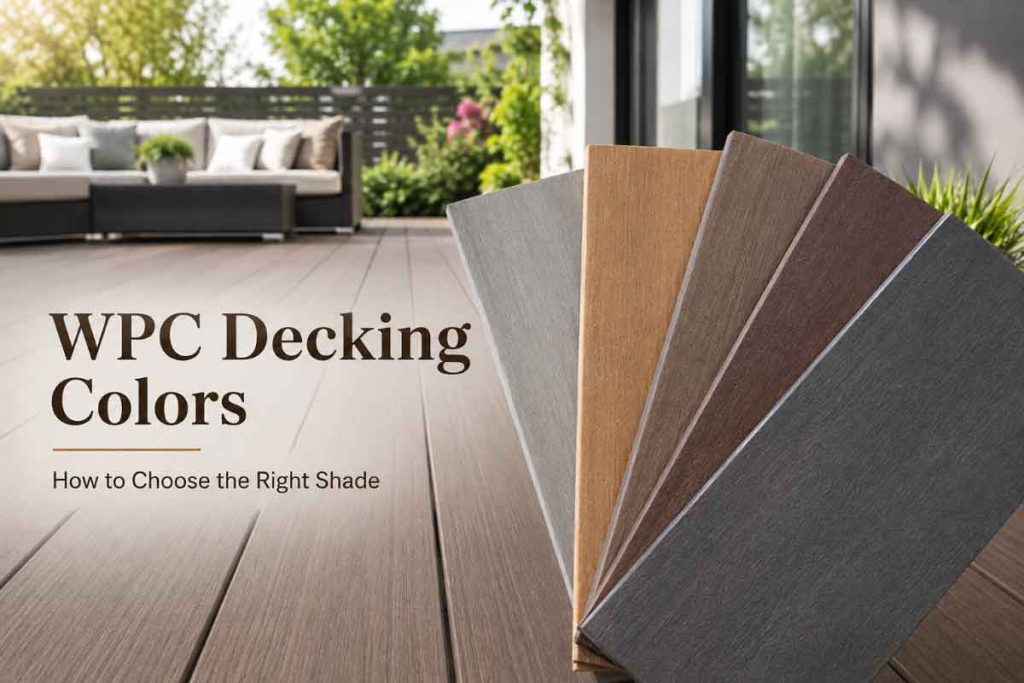
III. Can Fence Panel Colors Be Customized?
Yes — but with certain conditions.
Standard Colors
- Dark Gray / Carbon
- Coffee / Walnut
- Teak / Dark Wood
These colors typically feature:
- Existing color formulas
- Low MOQ
- Stable and predictable lead times
Custom Colors
- Matched according to color cards or samples
- Usually require higher MOQ
- Color consistency must be controlled per production batch
Recommendation
Standard colors are recommended for engineering projects, while custom colors are more suitable for high-end or branding-focused applications.
IV. Fence Panel Structure: Fully Enclosed vs. Semi-Enclosed
The internal structure of a fence panel directly affects material consumption, weight, and price, yet this factor is often overlooked.
1. Fully Enclosed Fence Panels
Characteristics
- Dense internal structure
- High strength and impact resistance
- Higher weight per meter
Suitable for
- High-security areas
- Locations with strong winds or heavy pedestrian traffic
- Projects requiring enhanced structural stability
Price Impact
Higher material usage results in increased unit price and transportation costs.
2. Semi-Enclosed Fence Panels
Characteristics
- Optimized internal cavity design
- Reduced weight while maintaining sufficient strength
- More flexible cost control
Suitable for
- Residential fencing
- Landscape and decorative fences
- Cost-sensitive projects
Summary
This is currently the most commonly used structural type in the market.
V. Do These Factors Affect Quantity and Price?
Yes — and the impact is significant.
Key factors include:
- Surface treatment → unit price differences
- Width and thickness → weight per meter
- Fully enclosed vs. semi-enclosed → material and freight costs
- Custom length and color → MOQ and material loss rate
Therefore, when comparing quotations, it is essential to ensure all parameters are consistent, otherwise price comparisons will not be meaningful.
VI. How to Choose the Right WPC Fence Panels
Selection guidelines
- Budget priority: Flat or straight-grain surface + semi-enclosed structure
- Appearance priority: Embossed or co-extruded surface
- Durability priority: Co-extruded panels with stable structure
- Project efficiency: Fixed width and thickness + custom length + standard colors
By clearly defining the application scenario, budget range, and expected service life, you can select the most suitable WPC fence panel and achieve optimal cost performance.