WPC composite decking has become a popular outdoor flooring material for residential, commercial, and public projects. Compared with traditional wood decking, WPC decking offers better moisture resistance, lower maintenance requirements, and a more stable appearance for long-term outdoor use.
For buyers, choosing WPC composite decking is not only about color or price. The material composition, surface treatment, structure, installation system, and supplier capability all affect the final performance of the decking. Understanding these factors can help project buyers, distributors, contractors, and wholesalers make a better purchasing decision.
What Is WPC Composite Decking?
WPC stands for wood plastic composite. It is a composite material made from wood fiber, plastic, and additives through extrusion production.
The wood fiber gives the decking a natural wood-like appearance, while the plastic improves moisture resistance and durability. Additives are used to improve color stability, processing performance, anti-aging ability, and outdoor weather resistance.
Because of this material combination, WPC composite decking is widely used in outdoor areas where traditional wood may require frequent maintenance.
Main Materials Used in WPC Decking
WPC decking is usually made from several key components.
Wood Fiber
Wood fiber is one of the main raw materials in WPC decking. It helps create a natural texture and wood-like appearance.
The quality and proportion of wood fiber can affect the surface look, strength, and stability of the decking. If the material formula is not well controlled, the product may have problems such as color difference, deformation, or poor surface quality.
Plastic Material
Plastic is another important part of WPC decking. Common plastic materials include HDPE, PE, or recycled plastic materials.
Plastic helps improve water resistance and reduces the risk of rotting, cracking, and insect damage. For outdoor decking, plastic quality is important because it directly affects long-term durability and weather resistance.
Additives
Additives are used to improve product performance. They may include UV stabilizers, colorants, coupling agents, lubricants, and anti-aging materials.
For outdoor projects, additives are very important because WPC decking needs to face sunlight, rain, temperature changes, and daily foot traffic.
Key Features Buyers Should Check
When comparing different WPC composite decking materials, buyers should not only look at the price. The following features are more important for long-term use.
Moisture Resistance
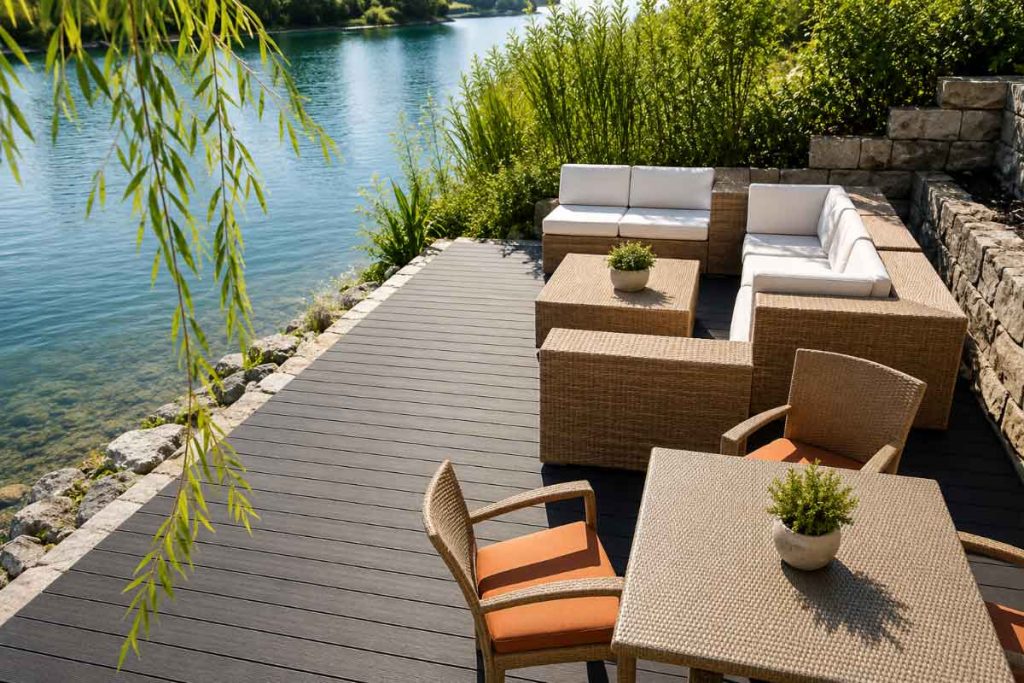
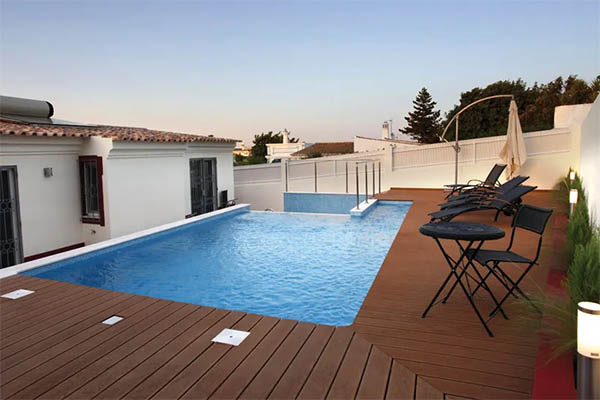
One major advantage of WPC decking is moisture resistance. It is more suitable than natural wood for outdoor areas such as gardens, balconies, poolside areas, walkways, and terraces.
However, moisture resistance does not mean the product can be installed without proper drainage. Good installation design is still necessary to avoid water accumulation under the decking.
Weather Resistance
Outdoor decking is exposed to sunlight, rain, wind, and temperature changes. Good WPC decking should have stable performance under different weather conditions.
For buyers, it is important to ask whether the decking is suitable for local climate conditions, especially in hot, humid, rainy, or coastal areas.
Surface Treatment
The surface treatment affects both appearance and cleaning difficulty.
Common WPC decking surfaces include:
- Straight grain surface
- Wood grain surface
- 3D embossed surface
- Co-extruded surface
Straight grain decking is usually simple and practical. 3D embossed decking offers a more natural wood-like texture. Co-extruded decking has an outer protective layer, which can provide better stain resistance and color stability.
For commercial projects or areas with high foot traffic, surface treatment should be selected carefully.
Hollow or Solid Structure
WPC decking can be hollow or solid.
Hollow decking is lighter and usually more cost-effective. It is commonly used in residential and light commercial projects.
Solid decking is heavier and may provide better load-bearing performance. It is often preferred for public areas, high-traffic spaces, or projects that require stronger structural performance.
Buyers should choose the structure based on project use, installation environment, and budget.
Color Stability
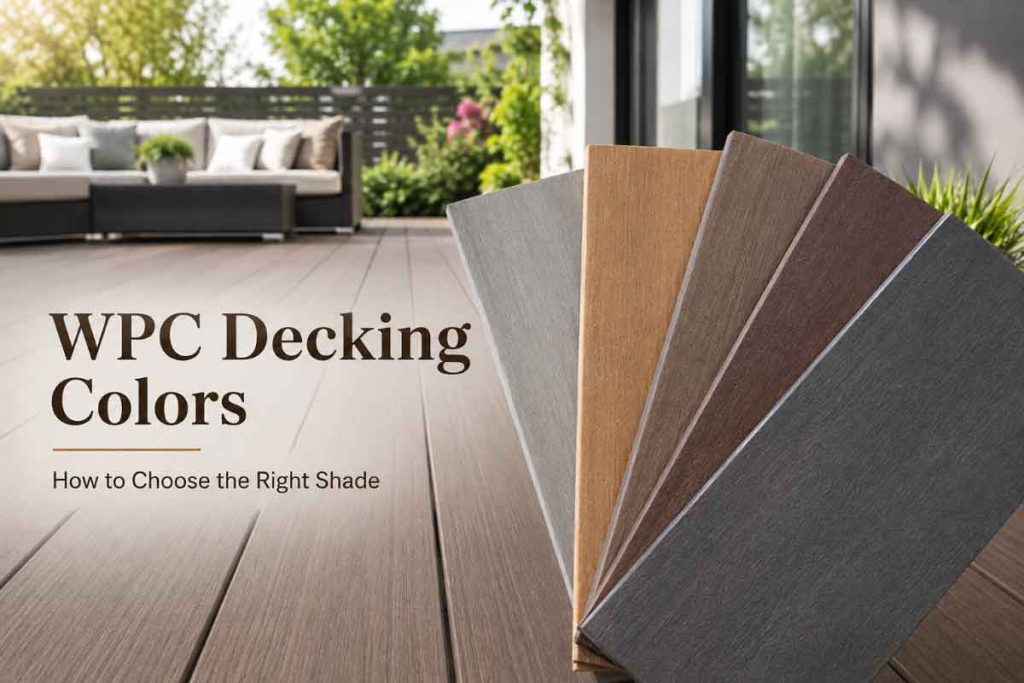
Color is important for outdoor design, but buyers should also care about color stability.
Low-quality WPC decking may fade quickly after outdoor exposure. Good-quality decking should use stable pigments and anti-UV additives to reduce obvious fading.
It is normal for outdoor WPC decking to have slight color changes over time, but serious fading usually means the material formula or surface protection is not good enough.
Load-Bearing Performance
For decking projects, strength is very important. Buyers should check the decking thickness, structure, joist spacing requirements, and installation accessories.
A good decking board needs to work together with the right joist system and clips. Even high-quality WPC decking may deform or become unstable if installed with incorrect spacing or poor accessories.
Common Uses of WPC Composite Decking
WPC composite decking is suitable for many outdoor applications.
Common uses include:
- Garden decking
- Backyard flooring
- Balcony flooring
- Poolside decking
- Park walkways
- Scenic area paths
- Commercial terraces
- Restaurant outdoor areas
- Hotel outdoor platforms
- Public leisure spaces
For B2B buyers, the application area is very important because different projects may require different decking structures, surface treatments, and installation methods.
WPC Decking vs Traditional Wood Decking
Many buyers compare WPC decking with traditional wood decking before purchasing.
Wood decking has a natural appearance, but it usually requires regular painting, sealing, anti-corrosion treatment, and maintenance. It may also face problems such as cracking, warping, rotting, and insect damage.
WPC decking is designed to reduce these maintenance problems. It does not need frequent painting or sealing and is easier to clean in daily use.
However, buyers should also understand that WPC decking is not completely maintenance-free. It still needs proper installation, regular cleaning, and reasonable use to maintain good performance.
What Buyers Should Ask Before Ordering
Before placing an order, buyers should confirm several important details with the supplier.
1. What Is the Material Formula?
A reliable supplier should understand the basic material composition of their WPC decking. Buyers can ask about wood fiber, plastic type, additives, and whether the product is suitable for outdoor use.
2. What Surface Options Are Available?
Different projects require different surface styles. Buyers should ask for available textures, colors, and surface treatments.
For example, co-extruded decking may be more suitable for buyers who care about stain resistance and long-term color stability.
3. What Is the Recommended Joist Spacing?
Joist spacing affects decking stability. If the spacing is too large, the board may bend or deform after installation.
Buyers should ask the supplier for clear installation guidance before ordering.
4. What Accessories Are Needed?
WPC decking usually needs clips, screws, joists, edge trims, and other accessories.
A complete decking system is better than buying boards only. Proper accessories help improve installation quality and long-term performance.
5. Can the Supplier Provide Samples?
Samples help buyers check color, surface texture, weight, structure, and material quality before bulk orders.
For overseas buyers, samples are especially important because product photos may not show the real surface details clearly.
6. Does the Supplier Have Production Experience?
For B2B orders, supplier capability is very important. Buyers should check whether the supplier has stable production lines, export experience, quality control, and packing experience.
A professional WPC decking manufacturer can provide better support for product selection, packaging, shipping, and after-sales communication.
How to Choose the Right WPC Composite Decking Supplier
Choosing the right supplier can reduce many project risks.
A good WPC decking supplier should provide:
- Stable product quality
- Clear product specifications
- Multiple color and surface options
- Installation guidance
- Sample support
- Export packaging experience
- Reasonable delivery time
- Professional communication
For distributors, contractors, and project buyers, a reliable supplier is not only a product provider but also a long-term business partner.
Conclusion
WPC composite decking is a practical outdoor flooring material for many residential and commercial projects. Its material composition, surface treatment, structure, color stability, and installation system all affect final performance.
For buyers, the most important point is not choosing the cheapest decking, but choosing the right product for the right project. Before ordering, buyers should check the material, structure, surface, accessories, installation requirements, and supplier capability.
With the right WPC composite decking material and professional supplier support, buyers can achieve a more stable, attractive, and low-maintenance outdoor decking solution.