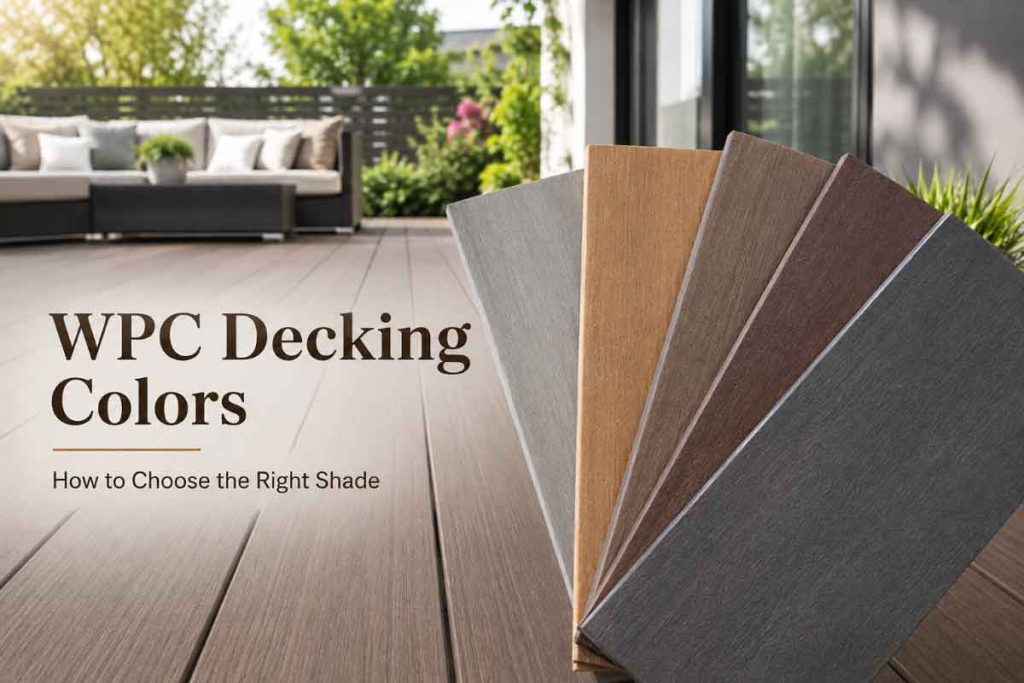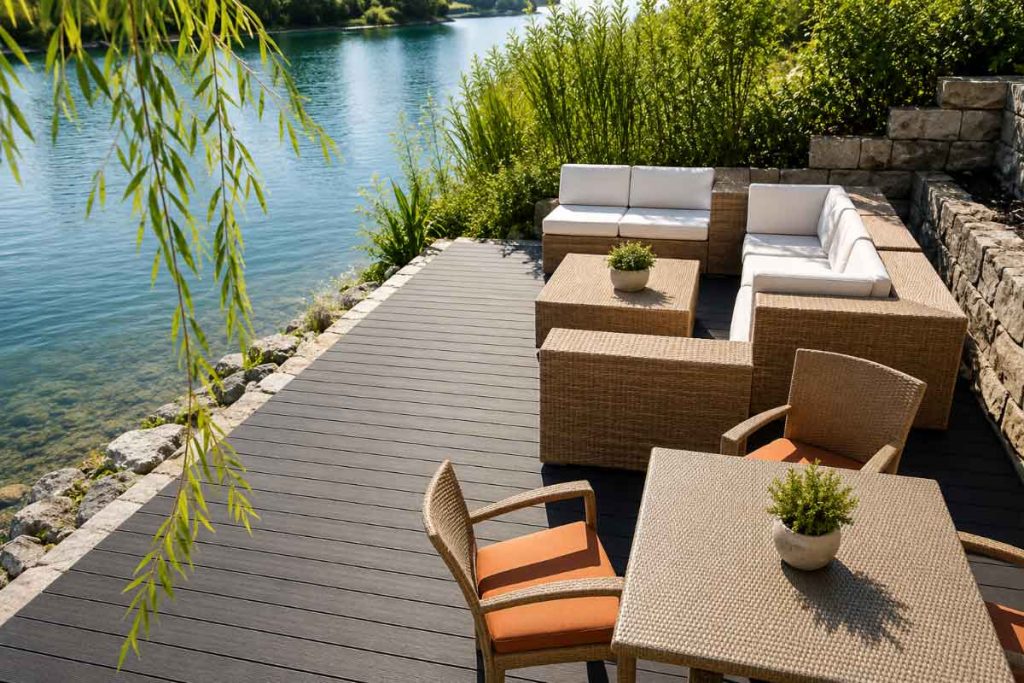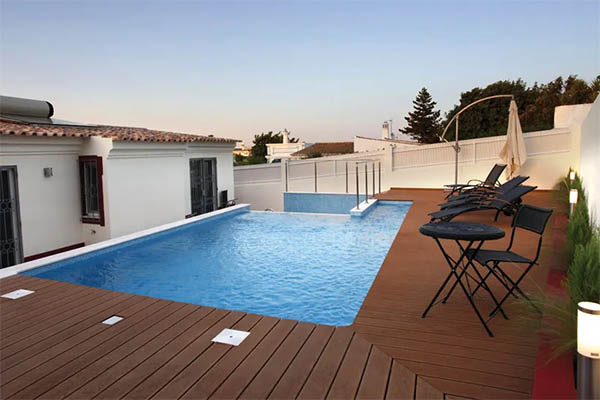
Wood-plastic composite railing, also known as WPC railing or composite railing, has become a popular choice for decks, balconies, gardens, boardwalks, parks, and commercial outdoor projects. Compared with traditional wood railings, WPC railing offers better resistance to moisture, insects, and rot while requiring far less maintenance.
However, not all composite railing systems perform the same over time. Some can remain stable for more than 20–30 years, while lower-quality systems may begin to fade, sag, or deform much earlier.
So, what actually determines the lifespan of WPC railing?
1. Raw Material Quality
Material quality is one of the most important factors affecting durability.
High-quality WPC railing usually uses:
- Stable wood fiber and HDPE ratios
- UV-resistant additives
- Anti-aging stabilizers
- Mold-resistant additives
- Better moisture protection formulas
Lower-grade materials are more likely to experience:
- Color fading
- Surface chalking
- Brittleness
- Cracking
- Warping
Cheap products with excessive recycled fillers or unstable formulations may look acceptable initially, but performance differences often become obvious after several years of outdoor exposure.
2. Whether the Railing Uses Co-Extrusion Technology
Capped composite railing, also called co-extruded composite railing, includes a protective outer layer around the core material.
This outer shield significantly improves:
- UV resistance
- Waterproof performance
- Stain resistance
- Scratch resistance
- Surface durability
Compared with traditional uncapped WPC railing, capped composite systems generally provide longer service life and more stable outdoor performance, especially in strong sunlight and humid environments.
In many outdoor projects, capped composite railing commonly lasts 25 years or longer under normal conditions.
3. UV Exposure and Sunlight Intensity
Long-term sunlight exposure greatly influences the lifespan of outdoor railing systems.
Strong UV exposure may gradually cause:
- Surface fading
- Color lightening
- Thermal expansion and contraction
- Surface aging
This issue is especially important in areas with:
- High temperatures
- Strong direct sunlight
- Tropical climates
- Coastal regions
Dark-colored railing systems typically absorb more heat than lighter colors, which may increase surface temperatures and expansion movement during summer months.
For hot climates, lighter shades such as light gray, teak, sand, or light brown often maintain a more stable appearance over time.
4. Thermal Expansion and Structural Movement
WPC materials naturally expand and contract with temperature changes.
If installation does not allow proper expansion space, problems may occur over time, including:
- Warping
- Joint pressure
- Surface deformation
- Handrail bending
- Sagging
This is particularly noticeable on long handrail sections without sufficient support.
Proper expansion gaps and structural reinforcement are essential for maintaining long-term stability.
5. Internal Structure Design
Many buyers focus only on appearance, but internal structural design is equally important.
Several structural details directly affect durability:
- Wall thickness
- Hollow vs solid structure
- Reinforcement rib design
- Aluminum-reinforced handrails
- Connector strength
Thin hollow structures are usually more likely to:
- Bend
- Shake
- Sag
- Deform over time
For commercial projects, aluminum-reinforced composite handrails are often preferred because they provide better rigidity and long-term structural stability.
6. Installation Quality
Even high-quality materials may fail early if installed incorrectly.
Common installation issues include:
- Excessive post spacing
- Insufficient support points
- Missing expansion gaps
- Weak foundations
- Improper fastener installation
- Poor drainage design
Correct installation helps reduce:
- Structural movement
- Long-term sagging
- Joint loosening
- Water accumulation problems
In many cases, installation quality is just as important as the railing material itself.
7. Climate and Outdoor Environment
Different outdoor environments create different aging conditions for composite railing systems.
For example:
Coastal Areas
Salt air may accelerate corrosion of metal connectors and hardware.
High-Humidity Regions
Constant moisture may increase mold buildup and dirt accumulation.
Snow and Freezing Areas
Repeated freeze-thaw cycles can place additional stress on railing structures.
Extreme Heat Regions
Continuous high temperatures may increase thermal expansion and surface aging.
Choosing weather-resistant materials and corrosion-resistant hardware becomes especially important in harsh climates.
8. Daily Maintenance
One major advantage of WPC railing is its low maintenance requirement. However, “low maintenance” does not mean “no maintenance.”
Simple routine care can help maintain appearance and extend service life.
Recommended maintenance includes:
- Periodic cleaning with water and mild soap
- Removing dirt, pollen, and debris
- Avoiding long-term standing water
- Inspecting screws and connectors occasionally
- Rinsing salt buildup in coastal areas
- Avoiding strong acidic or corrosive cleaners
Regular cleaning also helps reduce:
- Mold growth
- Surface staining
- Dust buildup
- Hardware corrosion
In most outdoor environments, occasional cleaning every few months is usually sufficient.
How to Choose WPC Railing With a Longer Lifespan
If long-term durability is the priority, several purchasing considerations are worth paying attention to.
Choose Capped Composite Railing
Co-extruded or capped composite railing generally provides:
- Better UV resistance
- Better waterproof performance
- Longer color stability
- Improved surface durability
Avoid Extremely Thin Hollow Structures
Thicker wall structures and reinforced designs usually provide:
- Better rigidity
- Reduced sagging
- Better structural stability
- Longer service life
Consider Lighter or Medium Colors in Hot Areas
Lighter colors often:
- Absorb less heat
- Show less visible fading
- Maintain more stable surface temperatures
Choose Textured Surfaces
Embossed or brushed finishes may help:
- Hide scratches
- Reduce visible fading
- Improve slip resistance
- Maintain appearance over time
Use Corrosion-Resistant Hardware
Outdoor railing systems should ideally use:
- Stainless steel screws
- Aluminum structural components
- Outdoor-grade anti-corrosion connectors
This is especially important for seaside or humid environments.
Conclusion
The lifespan of wood-plastic composite railing mainly depends on:
- Material quality
- Co-extrusion protection
- UV exposure
- Structural design
- Installation quality
- Climate conditions
- Daily maintenance
High-quality capped composite railing systems, combined with proper installation and basic maintenance, can commonly provide stable outdoor performance for 20–30 years or even longer.
For outdoor decks, balconies, parks, boardwalks, gardens, and commercial walkways, WPC railing remains one of the most durable and low-maintenance alternatives to traditional wood railing systems.