Is composite decking heavier than wood? In many like-for-like comparisons, solid composite decking weighs more than dry pressure-treated wood. However, not every composite board is heavier.
The final result depends on the board size, material density, hollow or solid profile, and the moisture content of the treated wood. Therefore, buyers should compare boards with similar dimensions instead of comparing materials by name alone.
Composite Decking vs Pressure-Treated Wood Weight: Quick Answer
| Comparison Factor | Composite Decking | Pressure-Treated Wood |
|---|---|---|
| Typical weight | Solid profiles are often heavier | Dry boards are often lighter |
| Weight variation | Mainly affected by size and profile | Strongly affected by moisture and wood species |
| Available structure | Hollow, solid and co-extruded | Usually solid lumber |
| Moisture effect | Relatively limited after production | Can change significantly as the wood dries |
| Product consistency | Manufactured to controlled specifications | Natural density and moisture may vary |
| Project planning | Confirm weight in kg/m or lb/ft | Confirm size and moisture condition |
A fair comparison must use boards with similar width, thickness, and length. Comparing a thick solid composite board with a thin wood board will not provide a useful result.
Why Does Composite Decking Weight Vary?
Composite decking is manufactured from wood fiber, polymer materials, additives, and pigments. However, the material formula is only one factor that affects its weight.
Board dimensions and internal structure usually have a greater effect on the final weight per meter.
Hollow Composite Decking Weight
Hollow composite decking contains internal holes that reduce the amount of material inside the board. As a result, a hollow profile is usually lighter than a solid profile with similar external dimensions.
However, hollow profiles are not all the same. The number of holes, wall thickness, internal ribs, board width, and board thickness can all change the final weight.
Solid Composite Decking Weight
Solid composite decking contains more material throughout the profile. Therefore, solid boards usually weigh more than hollow boards of a similar size.
Solid profiles are often selected for applications that require a thicker structure or a specific project specification. Still, weight alone does not prove that one board is better than another.
Board Width and Thickness
A wider or thicker board normally uses more material. Therefore, buyers should always check the complete size before comparing composite decking weight.
For example, a 140 × 30 mm board should not be compared directly with a 140 × 20 mm board without considering the difference in thickness.
Co-Extruded Composite Decking
Co-extruded decking has a protective surface layer around the core. However, co-extruded decking does not always weigh more than traditional WPC decking.
The internal structure, board dimensions, core formulation, and wall thickness still determine most of the final board weight.
Senlai WPC Decking Weight by Size and Profile
The following figures come from selected Senlai WPC decking boards specifications. They show how size and internal structure affect WPC decking weight per meter.
| Product Type | Model | Width × Thickness | Weight | Approx. Weight |
|---|---|---|---|---|
| Hollow WPC decking | SK25-140 | 140 × 25 mm | 2.45 kg/m | 1.65 lb/ft |
| Solid WPC decking | B25-140 | 140 × 25 mm | 4.10 kg/m | 2.76 lb/ft |
| Hollow WPC decking | RK30-140 | 140 × 30 mm | 3.00 kg/m | 2.02 lb/ft |
| Solid WPC decking | B30-140 | 140 × 30 mm | 4.76 kg/m | 3.20 lb/ft |
| Co-extruded WPC decking | CK23-140 | 140 × 23 mm | 2.70 kg/m | 1.81 lb/ft |
| Co-extruded WPC decking | CK23-148 | 148.5 × 22.5 mm | 2.75 kg/m | 1.85 lb/ft |
The 140 × 25 mm solid board weighs 4.10 kg/m, while the hollow board of the same external size weighs 2.45 kg/m. In this comparison, the solid board is about 67% heavier.
Similarly, the 140 × 30 mm solid board weighs 4.76 kg/m, while the hollow version weighs 3.00 kg/m. In this case, the solid profile is about 59% heavier.
These examples show why buyers should check the profile structure and dimensions before comparing composite deck board weight.
Actual product weight may vary slightly because of production tolerances, formulation, color, and surface treatment. Buyers should request the latest technical data before calculating packaging, transport, or container loading.
Why Does Pressure-Treated Wood Weight Change?
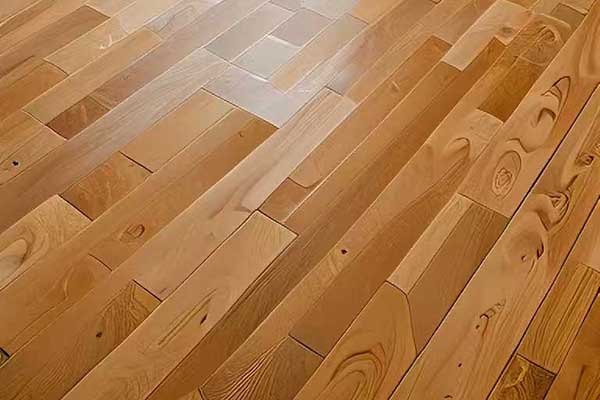
Pressure-treated wood weight is less consistent because wood is a natural material. Its weight can change because of moisture, wood species, dimensions, and storage conditions.
Moisture Content
Newly treated wood may contain a relatively high amount of moisture. Therefore, it may feel much heavier when it first arrives.
As the board dries, its weight decreases. This means wet pressure-treated wood may sometimes weigh as much as, or more than, a hollow composite board of similar dimensions.
Wood Species
Different wood species have different natural densities. Pine, fir, cedar, and other woods do not have the same weight, even when the boards have similar dimensions.
Therefore, a useful comparison should identify the wood species and moisture condition.
Board Dimensions
Thickness, width, and length affect pressure-treated wood weight in the same way that they affect composite decking weight. A thicker board will usually weigh more than a thinner one.
Consequently, buyers should compare complete specifications rather than relying on a general weight range.
How Does Decking Weight Affect a Project?
Board weight affects more than installation. It can also influence packaging, transportation, container loading, site handling, and supporting structure calculations.
Handling and Installation
Heavier boards may require two people to carry longer lengths safely. Installers should also plan how the boards will be stored and moved around the project site.
However, the complete decking system remains more important than board weight alone. Joist spacing, fasteners, supporting structure, board span, and installation conditions must all match the product specification.
Shipping and Container Loading
For importers and distributors, WPC decking weight per meter helps determine:
- Weight per package
- Total order weight
- Container loading quantity
- Handling requirements
- Estimated transport cost
Before placing a bulk order, buyers should provide the required board model, length, quantity, and destination. The supplier can then calculate the estimated gross weight and loading plan.
Supporting Structure
A project engineer should evaluate the complete system rather than looking only at the surface board. The design should consider the decking profile, joists, spacing, fasteners, supports, and expected service conditions.
Do not use board weight alone to determine structural capacity.
Does Heavier Composite Decking Mean Better Quality?
No. A heavier composite decking board is not automatically a better board.
Weight is only one technical parameter. Buyers should also check:
- Board dimensions and wall thickness
- Internal profile design
- Flexural performance
- Water absorption
- Raw material consistency
- Surface quality
- UV and weather resistance
- Production tolerances
- Matching clips and joists
A properly designed hollow board may be more suitable than a heavy solid board for some residential or commercial applications. Therefore, buyers should select the profile according to the project requirements.
Composite Decking Boards vs Wood: What Else Should Buyers Compare?
When buyers compare composite decking to wood, weight is only one part of the decision.
| Factor | Composite Decking | Pressure-Treated Wood |
|---|---|---|
| Weight | Depends on hollow or solid structure | Changes with moisture and species |
| Maintenance | Usually requires less routine surface treatment | Usually needs more regular maintenance |
| Specification consistency | Manufactured to defined profiles | Natural variation is common |
| Available profiles | Hollow, solid and co-extruded options | Mainly standard lumber dimensions |
| Colors and surfaces | Multiple colors and textures available | Appearance depends on the wood and finish |
| Bulk order planning | Stable model and weight data available | Moisture and grade need confirmation |
The benefits of composite decking over wood often include more consistent specifications, lower routine maintenance, and more profile options. However, the best decking material depends on the project, budget, climate, installation system, and performance requirements.
Request WPC Decking Weight and Loading Data
Senlai supplies hollow, solid, 3D embossed, and co-extruded WPC decking for outdoor projects.
Send us your required board size, length, quantity, application, and destination country. We can provide:
- Product specifications
- Weight per meter
- Package weight
- Estimated container loading quantity
- Matching joists and clips
- Sample and quotation information
Frequently Asked Questions
Is composite decking heavier than pressure-treated wood?
Solid composite decking is often heavier than dry pressure-treated wood of a similar size. However, hollow composite decking may be lighter, while newly treated wet wood may be heavier. Board size, profile, density, and moisture must all be considered.
How much does composite decking weigh per foot?
The weight depends on the board model. The selected Senlai examples in this guide range from approximately 1.65 to 3.20 lb/ft. Buyers should check the exact size and hollow or solid structure before calculating total weight.
Does hollow composite decking weight less than solid decking?
Usually, yes. Hollow profiles contain less material than solid profiles. However, wall thickness, internal ribs, width, and thickness can still affect the final hollow composite decking weight.
Can wet pressure-treated wood weigh more than composite decking?
Yes. Newly treated wood can retain considerable moisture. As a result, wet pressure-treated wood may temporarily weigh more than a hollow composite board with similar dimensions.
Does heavier composite decking mean better quality?
No. Weight alone does not determine quality. Profile design, raw materials, wall thickness, flexural performance, water absorption, weather resistance, and production stability are also important.
Summary
- Composite decking is heavier than pressure-treated wood decking due to its plastic content and the compression processes used during manufacturing.
- When considering transportation, installation, or load-bearing requirements, the weight of composite decking may present more challenges compared to pressure-treated wood decking, especially when covering large areas, as structural load capacity needs to be taken into account.
- However, weight is not the only consideration. The advantages of composite decking, such as enhanced durability, water resistance, and UV protection, may make it the better choice in certain applications.
Tell us the required decking size, length, quantity, application, and destination country. We will provide product weight, specifications, packaging details, and an estimated container loading plan.