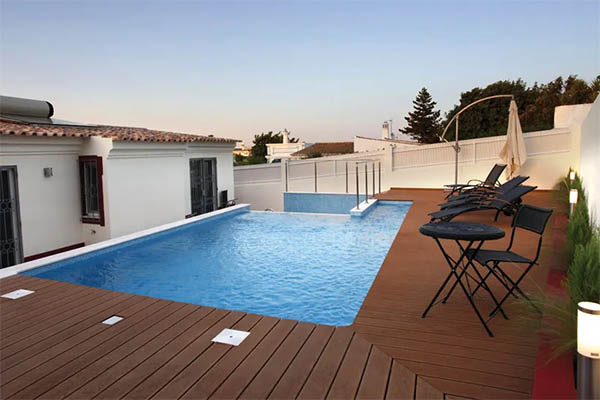
Poolside areas require decking materials that can handle moisture, sunlight, foot traffic, and regular cleaning. Unlike ordinary outdoor spaces, swimming pool areas are often wet, exposed to water splashes, and used by people walking barefoot. This means the decking material should not only look good, but also provide durability, comfort, and easy maintenance.
WPC decking has become a popular choice for poolside areas because it combines a natural wood-like appearance with better moisture resistance and lower maintenance needs than traditional wood. For residential pools, hotel pool decks, resorts, villas, and public leisure areas, WPC decking can offer a practical balance between appearance, safety, and long-term performance.
What Is WPC Decking?
WPC stands for wood plastic composite. It is made from wood powder, plastic, and functional additives. These materials are mixed and extruded into decking boards with different colors, textures, and structures.
WPC decking is widely used in outdoor spaces such as gardens, patios, balconies, terraces, walkways, and poolside areas. Compared with natural wood, WPC decking is designed to reduce common outdoor problems such as rotting, cracking, insect damage, and frequent maintenance.
Common types of WPC decking include:
- Hollow WPC decking
- Solid WPC decking
- 3D embossed WPC decking
- Co-extruded WPC decking
- Grooved WPC decking
- Wood grain composite decking
For poolside applications, buyers usually care more about moisture resistance, surface comfort, anti-slip performance, and long-term outdoor durability.
Poolside Areas Need More Than Ordinary Outdoor Flooring
A poolside deck faces more demanding conditions than a normal garden floor. It is not only exposed to rain and sunlight, but also to pool water, wet feet, cleaning water, and frequent temperature changes.
Common challenges around swimming pools include:
- Water splashes
- Humidity
- Strong sunlight
- Barefoot walking
- Frequent cleaning
- Heavy foot traffic
- Possible surface stains
- Expansion and contraction
- Need for good drainage
If the wrong decking material is used, the surface may become slippery, cracked, swollen, rotten, or difficult to maintain. That is why choosing the right material is important for poolside areas.
1. WPC Decking Has Better Moisture Resistance Than Wood
Moisture resistance is one of the main reasons WPC decking is suitable for poolside areas.
Traditional wood naturally absorbs water. When wood is repeatedly exposed to water and humidity, it may swell, shrink, crack, or rot over time. Around pools, this problem can become more obvious because the deck may stay wet for long periods.
WPC decking contains plastic materials, which helps reduce water absorption compared with natural wood. This makes it more stable in wet outdoor environments.
For poolside areas, better moisture resistance means:
- Lower risk of rotting
- Less swelling than ordinary wood
- Easier cleaning after water exposure
- Better performance in humid climates
- Longer-lasting outdoor appearance
This does not mean WPC decking can be installed without proper drainage. Good drainage and correct installation are still important. But compared with traditional wood, WPC decking is generally more suitable for wet poolside environments.
2. WPC Decking Is Comfortable for Barefoot Walking
Poolside areas are often used by people walking barefoot. This makes surface comfort very important.
Some outdoor flooring materials may feel too rough, too cold, or uncomfortable under bare feet. Natural wood may also develop splinters after long-term exposure to sun and water.
WPC decking offers a smoother and more comfortable walking surface. It does not easily form splinters like aging wood, which makes it more suitable for bare feet around swimming pools.
This is especially useful for:
- Family swimming pools
- Hotel pool decks
- Resort leisure areas
- Villa courtyards
- Children’s pool areas
- Outdoor spa spaces
A comfortable surface can improve the user experience and make the poolside area feel more relaxing and modern.
3. WPC Decking Can Reduce Splinter Problems
One common problem with natural wood decking is splintering. After years of outdoor exposure, wood may crack, peel, or form rough edges. This can be uncomfortable and even unsafe for people walking barefoot.
WPC decking is a composite material with a more uniform structure. It does not splinter as easily as natural wood, which makes it a better option for poolside use.
For pool areas, this is a major advantage because people often walk, sit, or lie near the deck surface. A smoother and splinter-free surface helps improve daily comfort and reduces maintenance pressure.
4. WPC Decking Offers a Wood-Like Appearance
Many buyers like wood decking because of its natural and warm appearance. However, real wood requires regular maintenance, especially around wet areas.
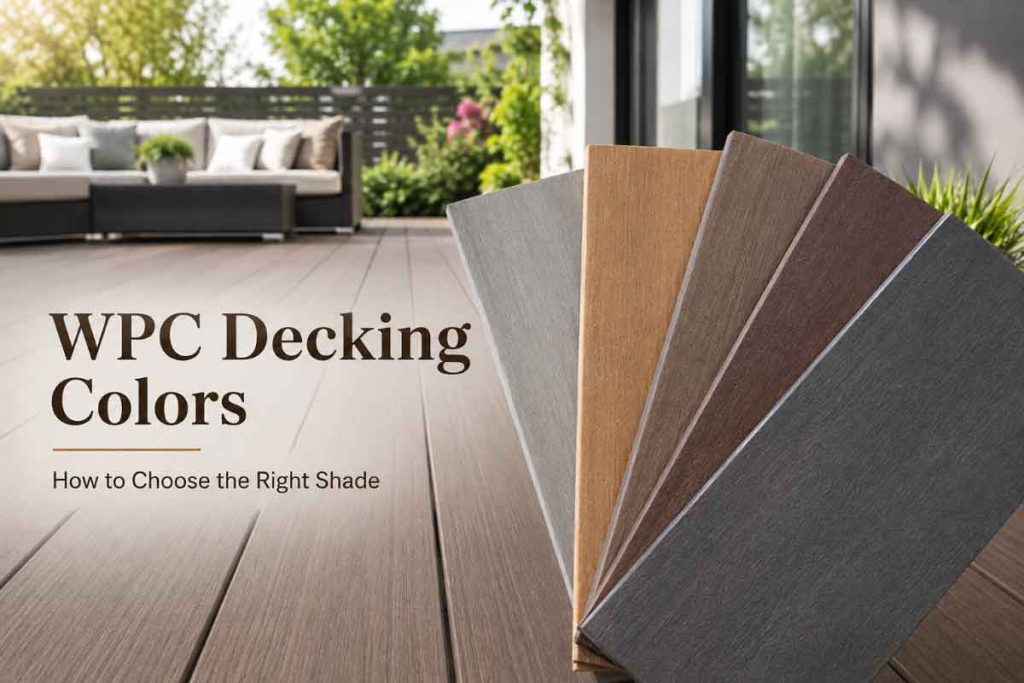
WPC decking provides a wood-like look while reducing many maintenance problems. It can be produced in different colors and textures, such as:
- Brown
- Teak
- Coffee
- Grey
- Dark grey
- Red-brown
- Wood grain texture
- 3D embossed texture
- Co-extruded surface
This allows project owners and designers to match different poolside styles, from natural garden spaces to modern hotel pool decks.
For outdoor pool areas, WPC decking can create a clean, comfortable, and high-end appearance without the heavy maintenance requirements of natural wood.
5. WPC Decking Is Easier to Maintain
Poolside areas need regular cleaning because they are exposed to water, dust, leaves, sunscreen, drinks, and daily foot traffic.
Traditional wood decking may need sanding, sealing, painting, or oiling to keep its appearance and durability. This increases long-term maintenance cost and labor.
WPC decking is easier to maintain. In most cases, regular cleaning with water, a soft brush, and mild detergent is enough.
Simple maintenance steps include:
- Rinse the deck surface with clean water
- Remove leaves, dirt, and debris in time
- Use mild detergent for stains
- Avoid strong acid or strong alkaline cleaners
- Do not use sharp metal tools to scrape the surface
- Keep gaps between boards clean for drainage
For hotels, resorts, villas, and public pool areas, easier maintenance can reduce long-term operation costs.
6. WPC Decking Is Suitable for Outdoor Sun Exposure
Poolside areas are usually exposed to direct sunlight for long hours. Strong UV exposure can cause many materials to fade, crack, or age faster.
WPC decking is designed for outdoor use and usually contains additives that help improve weather resistance and color stability. Co-extruded WPC decking, in particular, has an outer protective layer that can offer better resistance to stains, fading, and surface wear.
For sunny poolside areas, choosing high-quality WPC decking is important. Buyers should consider:
- UV resistance
- Surface type
- Color stability
- Product structure
- Local climate
- Installation environment
Lighter colors may be more comfortable in hot climates because dark surfaces can absorb more heat under strong sunlight.
7. WPC Decking Provides Better Design Flexibility
WPC decking can be used in different poolside layouts and project designs. It can create a clean and modern outdoor floor around pools, patios, and leisure zones.
Common poolside applications include:
- Residential pool decks
- Hotel swimming pool areas
- Resort leisure platforms
- Villa outdoor spaces
- Garden pool walkways
- Spa and sauna areas
- Outdoor shower areas
- Public leisure spaces
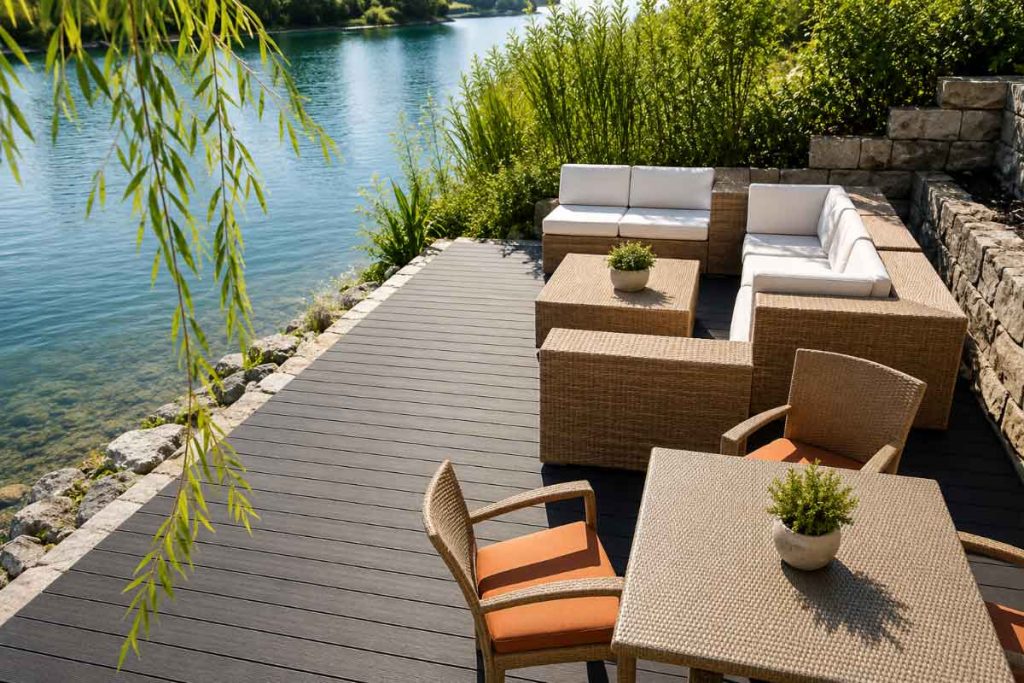
WPC decking can be combined with outdoor furniture, glass railings, garden plants, pergolas, and lighting to create a complete poolside design.
For B2B buyers, distributors, and contractors, this design flexibility makes WPC decking suitable for many outdoor projects.
8. Anti-Slip Surface Options Are Available
Slip resistance is a very important consideration around pools. Any outdoor floor can become slippery when wet if the surface design and maintenance are poor.
WPC decking can be made with different surface textures, such as grooves, brushed surfaces, wood grain, and 3D embossed patterns. These textures can help improve surface grip compared with completely smooth surfaces.
However, it is important to be honest: WPC decking is not automatically slip-proof in every condition. Water, algae, soap, sunscreen, and dirt can all affect slip resistance.
To improve safety around pools, buyers should:
- Choose suitable surface textures
- Keep the deck clean
- Avoid water accumulation
- Ensure good drainage
- Clean algae or stains in time
- Use correct installation spacing
For commercial poolside projects, it is better to confirm anti-slip requirements before choosing the product.
9. Proper Drainage Is Important for Poolside WPC Decking
Even though WPC decking has good moisture resistance, poolside installation still needs proper drainage. Water should not stay under or on the deck for a long time.
Good drainage helps reduce:
- Water accumulation
- Mold growth
- Surface stains
- Expansion problems
- Odor
- Long-term structural issues
Important installation points include:
- Leave proper gaps between decking boards
- Keep enough ventilation under the deck
- Use suitable joist spacing
- Avoid blocking drainage channels
- Install on a stable substructure
- Follow the manufacturer’s installation guide
For poolside areas, aluminum joists or properly treated support structures are often recommended because they can provide better stability in wet environments.
10. WPC Decking Can Help Reduce Long-Term Costs
The initial cost of WPC decking is usually higher than basic wood decking. However, poolside areas are demanding environments, and low-cost materials may require more maintenance or replacement over time.
WPC decking can help reduce long-term costs because it offers:
- Lower maintenance needs
- No regular painting or oiling
- Better moisture resistance
- Lower risk of rot
- Easier cleaning
- Longer outdoor service life
- More stable appearance
For commercial projects, reduced maintenance can be especially valuable. Hotels, resorts, restaurants, and leisure facilities need outdoor areas that stay clean and attractive with less downtime.
WPC Decking vs Wood Decking for Poolside Areas
| Factor | Wood Decking | WPC Decking |
| Moisture resistance | Lower | Better |
| Maintenance | Higher | Lower |
| Splinter risk | Higher over time | Lower |
| Painting or oiling | Often required | Not required |
| Barefoot comfort | Depends on condition | More stable |
| Rot resistance | Lower | Better |
| Surface options | Natural wood texture | Multiple textures and colors |
| Cleaning | Requires more care | Easier |
| Long-term cost | May increase with maintenance | More stable |
How to Choose WPC Decking for Poolside Areas
When choosing WPC decking for a poolside project, buyers should consider both appearance and performance.
Important factors include:
Surface Texture
Choose a surface texture that provides better grip and comfort. Grooved, brushed, or embossed surfaces are commonly used for outdoor areas.
Product Structure
Solid WPC decking usually offers stronger load-bearing performance, while hollow WPC decking can be more cost-effective. The right choice depends on the project budget and usage intensity.
Color Selection
Lighter colors may be better for hot poolside areas because they absorb less heat. Dark colors can look modern but may become hotter under strong sunlight.
Joist Material
For wet areas, aluminum joists or weather-resistant support systems may provide better long-term stability.
Installation Quality
Correct board spacing, ventilation, drainage, and fixing methods are essential for long-term performance.
Supplier Experience
Choose a manufacturer with experience in outdoor WPC decking projects. A reliable supplier can recommend suitable products based on climate, pool type, budget, and usage environment.
Maintenance Tips for Poolside WPC Decking
To keep WPC decking in good condition around pools, regular maintenance is recommended.
Useful tips include:
- Clean the surface regularly with water
- Remove leaves and dirt quickly
- Wash sunscreen or drink stains in time
- Keep board gaps free from debris
- Check drainage after heavy rain
- Avoid dragging sharp furniture directly on the surface
- Use protective pads under outdoor furniture
- Inspect clips, screws, and joists regularly
- Clean algae or slippery dirt immediately
- Avoid strong chemical cleaners
These simple steps can help the poolside deck stay cleaner, safer, and more attractive for longer.
Is WPC Decking the Best Choice for Every Poolside Area?
WPC decking is suitable for many poolside areas, but buyers should still choose the right product based on the project environment.
It is a good choice when the project needs:
- Wood-like appearance
- Better moisture resistance
- Comfortable barefoot walking
- Lower maintenance
- Outdoor durability
- Easy cleaning
- Modern design
- Long-term value
However, buyers should still pay attention to installation, drainage, anti-slip surface selection, and regular cleaning. No decking material can perform well if it is poorly installed or neglected for a long time.
Conclusion
WPC decking is suitable for poolside areas because it offers better moisture resistance, lower maintenance, comfortable barefoot walking, and a natural wood-like appearance. Compared with traditional wood, it is less likely to rot, splinter, or require frequent painting and sealing.
For residential pools, hotels, resorts, villas, and public leisure areas, WPC decking can provide a practical and attractive outdoor flooring solution. With the right product type, proper installation, good drainage, and regular cleaning, WPC decking can perform well in wet and sunny poolside environments.
For buyers who want a durable, low-maintenance, and modern poolside decking material, WPC decking is a strong option to consider.