

Wood-plastic composite (WPC) fencing has become increasingly popular in residential, commercial, and agricultural sectors. With its eco-friendly, durable, and low-maintenance features, WPC fences are gaining widespread acceptance. However, concerns regarding their performance in areas such as bird deterrence, mountain terrain suitability, water absorption, and weather adaptability still exist. This article delves into these issues, providing in-depth insights to help consumers better understand the advantages and applications of WPC fences.
1. Can WPC Fencing Prevent Birds from Perching?

In many areas, fences often become resting spots for birds, especially those with smooth surfaces and no obstructions. Birds perching on fences can leave large amounts of bird droppings, which not only makes the fence and surrounding area messy but may also damage plants or landscaping. Thus, considering ways to prevent birds from resting on fences is important when designing.
WPC fencing, with its surface treatment and design, is inherently less likely to attract birds. For instance, textured surfaces and specific designs can make it difficult for birds to find suitable perching spots. Additionally, WPC fences typically don’t swell or rot like traditional wood fences when exposed to moisture, maintaining higher resistance to moisture. Furthermore, designs such as dense mesh or spiked fence styles can be incorporated to further deter birds from perching.
2. Is WPC Fencing Suitable for Mountainous Environments?
Mountainous areas are subject to extreme weather conditions such as strong winds, heavy rain, and snow. For fencing in such areas, it’s crucial to consider how well it can withstand these natural elements and maintain stability. WPC fencing, due to its unique wood-plastic composite structure, offers enhanced wind resistance and weather durability, making it a viable option for use in mountainous climates.
Specifically, WPC materials are denser than traditional wood, which makes them less prone to being toppled or damaged by strong winds. Furthermore, WPC fencing is highly resistant to moisture and mold, meaning it can withstand prolonged exposure to wet or snowy conditions while maintaining structural integrity. Therefore, WPC fences are not only suitable for flat terrains but are also well-suited for areas prone to high winds, heavy rainfall, or snow, such as mountainous regions.
3. Will WPC Fencing Absorb Moisture and Rot?
Traditional wood often absorbs moisture in damp environments, leading to expansion, decay, and eventual rotting. However, this is not a concern with wood-plastic composite (WPC) fences. WPC is made from a blend of wood fibers and plastic, which gives it the appearance and texture of wood while providing superior water and rot resistance.
The plastic component of WPC fencing prevents water absorption, which means it won’t swell or rot like wood when exposed to moisture. Additionally, WPC is typically engineered to be UV-resistant and corrosion-resistant, so it won’t fade or degrade after long exposure to rain. Whether in coastal areas with high humidity or in rainy climates, WPC fencing maintains its durability and longevity without succumbing to moisture-related damage.
4. Will WPC Fencing Warp Due to Weather Changes?
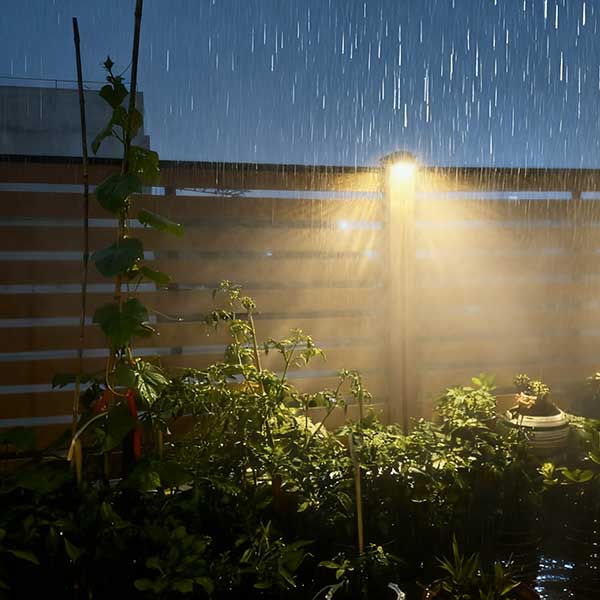
Extreme fluctuations in temperature and humidity often cause traditional wood fences to shrink, expand, or crack. In contrast, WPC fencing maintains superior dimensional stability, even in areas subject to drastic weather changes.
The primary advantage of WPC fencing is its low moisture absorption and its ability to resist thermal expansion and contraction. This means that WPC fences remain stable in both hot and cold climates, with minimal risk of warping or deforming due to temperature variations. Whether exposed to intense heat or freezing cold, WPC fences retain their shape and structural integrity, making them an ideal choice for regions with extreme weather conditions.
Conclusion
In summary, WPC fencing offers a range of impressive benefits that cater to various environmental and functional needs. From preventing birds from perching to adapting to mountainous terrains, along with superior water resistance and weather stability, WPC fencing proves to be a highly reliable and versatile choice. It not only rivals traditional wooden fences in appearance but also excels in performance, offering enhanced durability and practicality.
For consumers seeking long-term value and low maintenance, WPC fencing is undoubtedly a wise investment. With its excellent weather resistance, eco-friendly composition, and ability to withstand a range of environmental conditions, WPC fences represent the future of fencing solutions. By choosing WPC fencing, you can enjoy its exceptional durability, reduced maintenance costs, and extended service life, making it the ideal solution for modern homes and commercial properties.


