When installing WPC decking, the performance of the entire decking system depends not only on the surface boards but also on the substructure beneath.
Choosing the right aluminum joist for WPC decking is essential for long-term stability, safety, and durability.
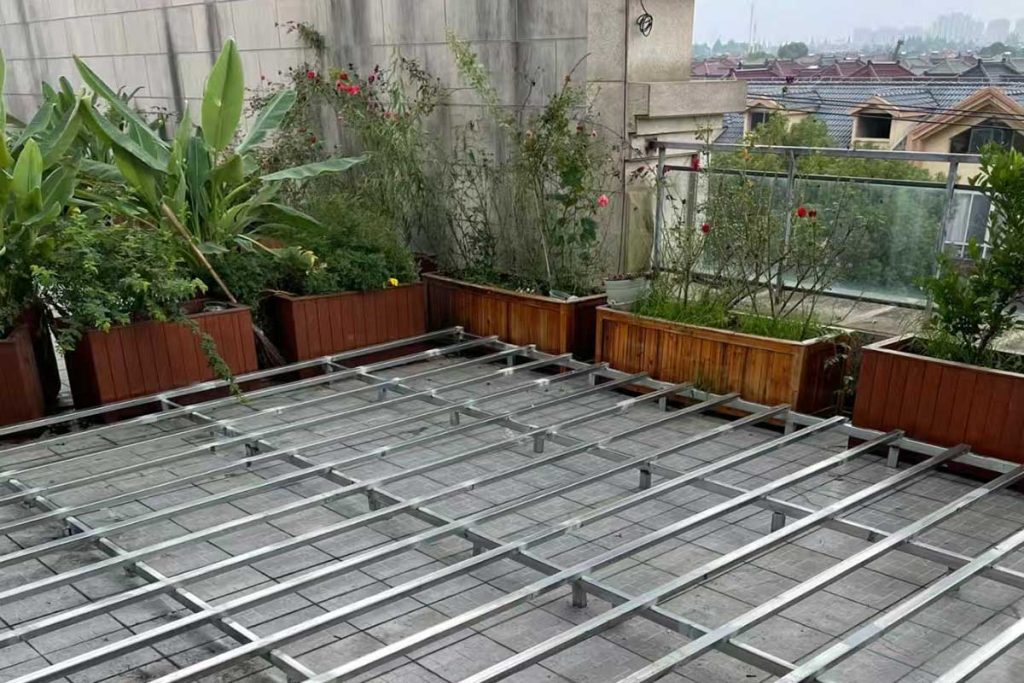
1. Aluminum joist for WPC decking provides superior structural strength
WPC decking mainly offers aesthetics and comfort, while the real load-bearing function comes from the joist system.
An aluminum joist for WPC decking has significantly higher strength than a WPC joist, making it resistant to sagging, cracking, or structural failure under long-term load.
This is why aluminum joists are widely used for commercial decks, public walkways, boardwalks, and other high-traffic applications where stability is critical.
2. Aluminum joist for WPC decking remains dimensionally stable
Outdoor decking systems are constantly exposed to temperature changes and humidity. These environmental factors often cause deformation in traditional substructures.
Compared with WPC joists, an aluminum joist for WPC decking is highly stable and does not bend or twist easily.
As a result, deck boards maintain uniform spacing and a clean appearance over time, even in regions with large day–night temperature differences.
3. Aluminum joist for WPC decking performs better in wet environments
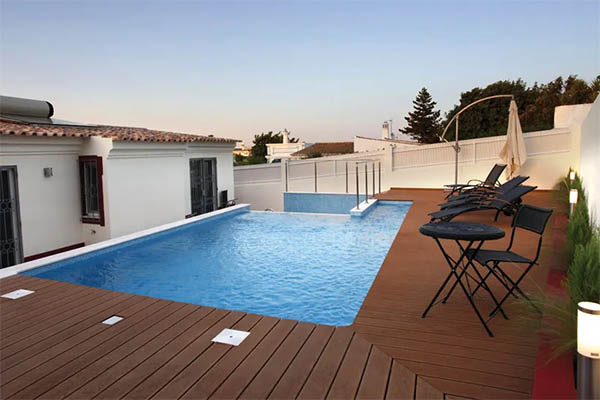
In areas such as swimming pools, coastal zones, or rainy climates, moisture resistance is essential.
An aluminum joist for WPC decking does not absorb water, does not rot, and is not affected by termites or mold.
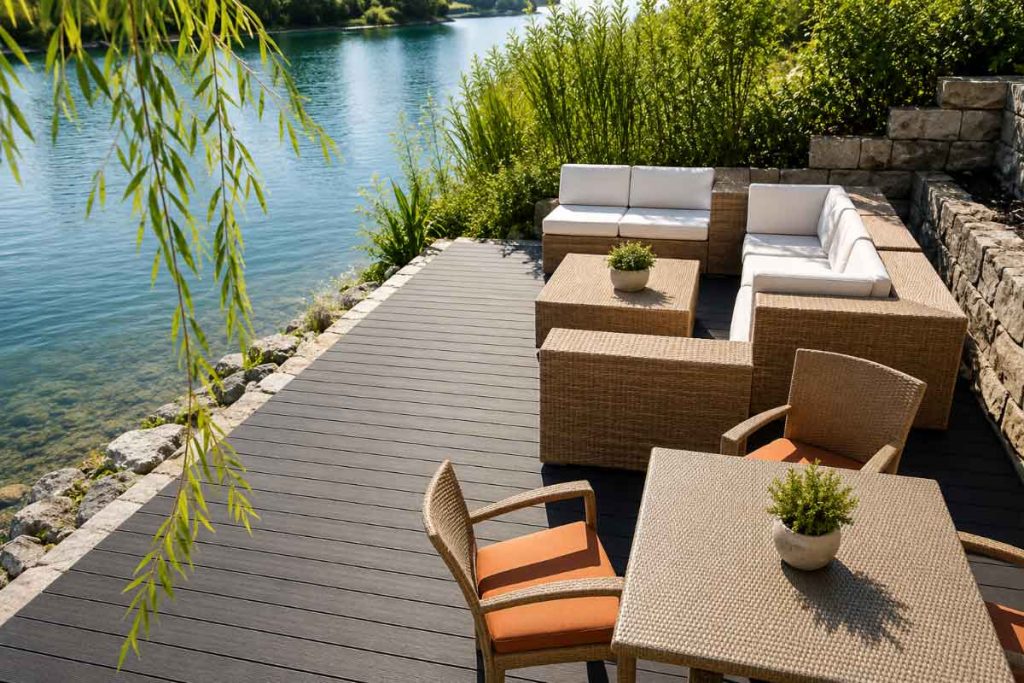
This makes aluminum joists an ideal solution for harsh outdoor conditions where long-term durability is required.
4. Aluminum joist for WPC decking reduces long-term costs
Although the initial cost of an aluminum joist for WPC decking is higher than that of a WPC joist, its service life typically reaches 20–30 years, compared to 10–15 years for WPC joists.
With fewer replacements and lower maintenance needs, aluminum joists significantly reduce the total lifecycle cost of the decking system.
5. Aluminum joist for WPC decking allows more efficient structural design
Thanks to its high load-bearing capacity, an aluminum joist for WPC decking allows optimized joist spacing, depending on design and specifications.
This helps reduce overall material usage while maintaining structural safety.
The result is a more efficient installation process and a cleaner, more professional substructure.
6. Aluminum joist for WPC decking enhances project quality and reliability
Because of their strength and stability, aluminum joists for WPC decking are commonly specified in commercial and government projects.
They help projects meet stricter engineering standards and provide end users with greater confidence in safety and long-term performance.
For premium WPC decking applications, aluminum joists are often the preferred substructure choice.
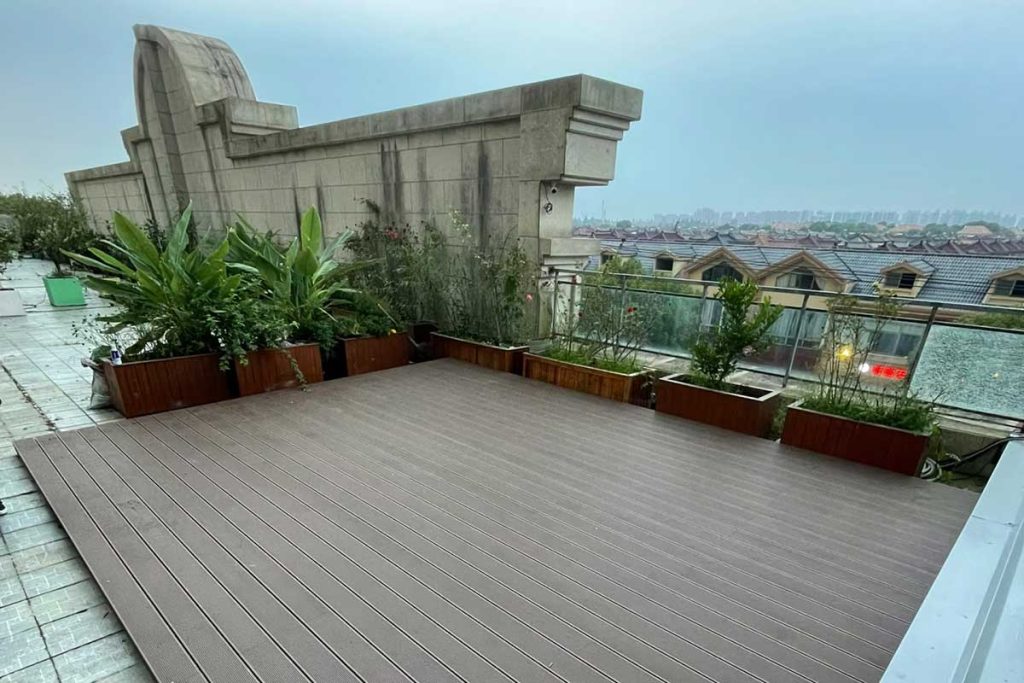
When should you choose aluminum joist for WPC decking?
An aluminum joist for WPC decking is strongly recommended for:
- Commercial and engineering projects
- High-load or high-traffic areas
- Poolside, coastal, or humid environments
- Projects requiring long-term warranties
- High-end WPC decking installations