WPC decking can be integrated with lighting systems, especially in outdoor environments. Installing waterproof lights or LED strips can not only enhance the lighting effect but also improve aesthetics and functionality. Many WPC decking products can be customized to meet your needs, making lighting a great way to elevate the atmosphere of any space.
Common Lighting Installation Methods
If your WPC decking is used in outdoor areas like patios, gardens, or balconies, here are some common ways to install lighting:
- Recessed Lighting
Install waterproof LED lights in the gaps between decking boards to provide soft lighting, enhancing the overall atmosphere. - LED Strip Installation
Install LED strips along the edges or in gaps of the decking to add highlights and decorative effects.
When installing lights, ensure the lights have good waterproof performance and consider the concealment and safety of the wiring.
Key Considerations When Purchasing Lighting
When purchasing lights, it’s important to pay attention to the following points:
- Waterproofing
Outdoor WPC decking with lighting should use lights with excellent waterproofing, especially in humid or rainy environments. It’s recommended to choose lights with an IP65 rating or higher. - Brightness and Color Temperature
The appropriate brightness and color temperature are crucial for creating the desired atmosphere. For outdoor lights, the brightness should not be too high, and a warm white light between 3000K-4000K is recommended to create a comfortable environment. - Electrical Connections
Ensure the voltage of the lights is compatible with the local power grid, and use high-quality cables to ensure stable and safe power transmission. - Matching the Lighting Design with Decking Style
The design of the lights should coordinate with the style of the WPC decking. Modern minimalist decking can pair with simple recessed lights, while vintage-style decking may suit more retro light fixtures. - Durability of the Lights
Outdoor environments require lights to be highly durable, so it’s best to select lights made from materials resistant to high temperatures, UV rays, and corrosion. - Pre-drilled Installation Holes
When purchasing WPC decking, confirm whether the decking comes with pre-drilled positions for light installation or if extra holes are required.
Key Considerations During Installation
During the installation of lights, special attention should be given to the following:
- Concealing and Protecting the Wires
Properly conceal the wiring to avoid exposed wires, reducing safety risks. It’s advisable to install hidden cable ducts beneath the decking to protect the wiring. - Gap Between Lights and Decking
Ensure there is enough gap between the lights and the decking to prevent overheating. In areas exposed to sunlight, leaving a larger gap will help with better heat dissipation. - Avoiding Damage to Decking’s Moisture Resistance
Ensure the connection between the lights and decking is sealed properly to prevent moisture from entering and affecting the WPC decking’s moisture resistance. - Lighting Control System
If you need to adjust brightness or switch lights on and off, consider installing a smart control system or dimmer switch for convenience in managing the lighting system. - Safety of the Installation Location
Make sure the light installation location is stable to prevent lights from loosening or falling during use. - Providing Maintenance Space
Even though lights are durable, they may need to be replaced or maintained over time. It’s best to leave enough space for future maintenance.
Benefits of Lighting Installation Locations
The placement of lights affects the aesthetics, functionality, and safety of the space. Here’s a breakdown of the advantages of placing lights in different locations:
- Installing Lights in the Center of the Decking
- Uniform Lighting Effect: Lights in the center provide even lighting, ideal for larger spaces.Visual Focus: Lights placed in the center of a patio or garden guide the eye and can become a focal point, adding depth and highlight to the space.
- Avoiding Obstruction: Lights installed centrally are less likely to be obstructed by furniture or plants, ensuring broad coverage.
- Installing Lights on the Edges of the Decking
- Atmospheric Lighting: Edge lighting creates a softer, more intimate atmosphere, perfect for romantic or cozy spaces.Enhanced Safety: Edge lights can guide walking paths, especially for outdoor stairs or corridors, reducing nighttime tripping hazards.
- Avoiding Direct Glare: Edge lighting helps avoid glare in the eyes, making it suitable for areas where people will be staying for long periods.
Suitable and Unsuitable Locations for Installing Lights
Suitable Locations for Installing Lights
- Patios and Gardens
Lights can enhance the aesthetics of a garden or patio and provide necessary lighting for evening activities. - Balconies and Terraces
Balconies and terraces are often used as leisure spaces. Installing lights extends the usable time, especially for evening activities when lighting is important. - Paths and Walkways
Installing lights along paths and walkways not only provides illumination but also enhances the beauty and dimension of the space. - Around Swimming Pools
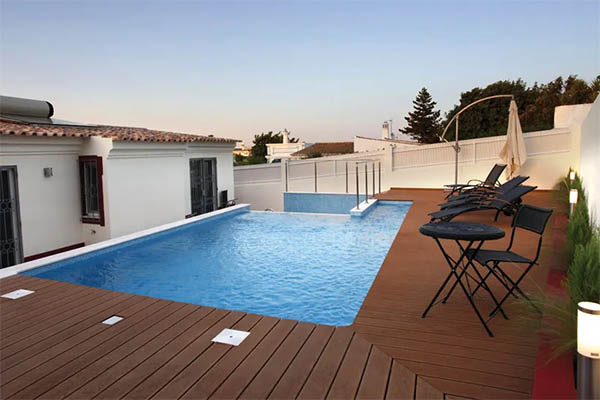
Poolside lighting can enhance the aesthetics of the pool area at night and provide necessary lighting for swimming after dark. - Outdoor Restaurants or Activity Spaces
Installing lights in outdoor restaurants or event spaces ensures proper illumination and creates a pleasant dining environment.
Unsuitable Locations for Installing Lights
- Exposed to Rain
If the WPC decking is not protected by a roof, long exposure to heavy rain could damage the lights. Even with waterproof lights, their safety and durability should still be considered. - Extreme Heat or Weather Conditions
If the installation area is exposed to extreme heat or cold (e.g., rooftops or exposed areas), you need to choose lights that can withstand high or low temperatures to avoid affecting their lifespan due to temperature fluctuations. - Small Spaces
In very small areas, too many lights may make the space feel cramped, negatively impacting the overall comfort of the area. - Difficult to Maintain Areas
Locations that are difficult to access for maintenance (e.g., beneath the decking or in narrow corners) are not suitable for light installation, as repairs and replacements may be challenging.
Influence of Color and Structure Selection
Color Selection
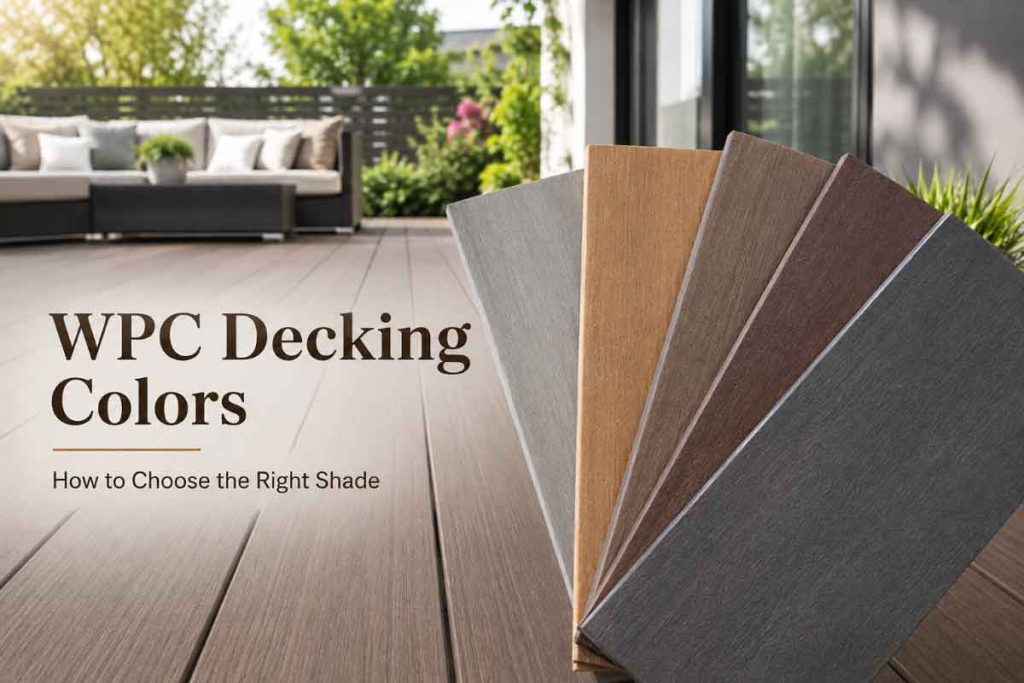
- Light-colored Decking: Light-colored decking (such as light gray, off-white, or light brown) creates a strong contrast with the lights, offering a bright and fresh effect. This is suitable for patios, gardens, and balconies where a lively and bright atmosphere is needed.
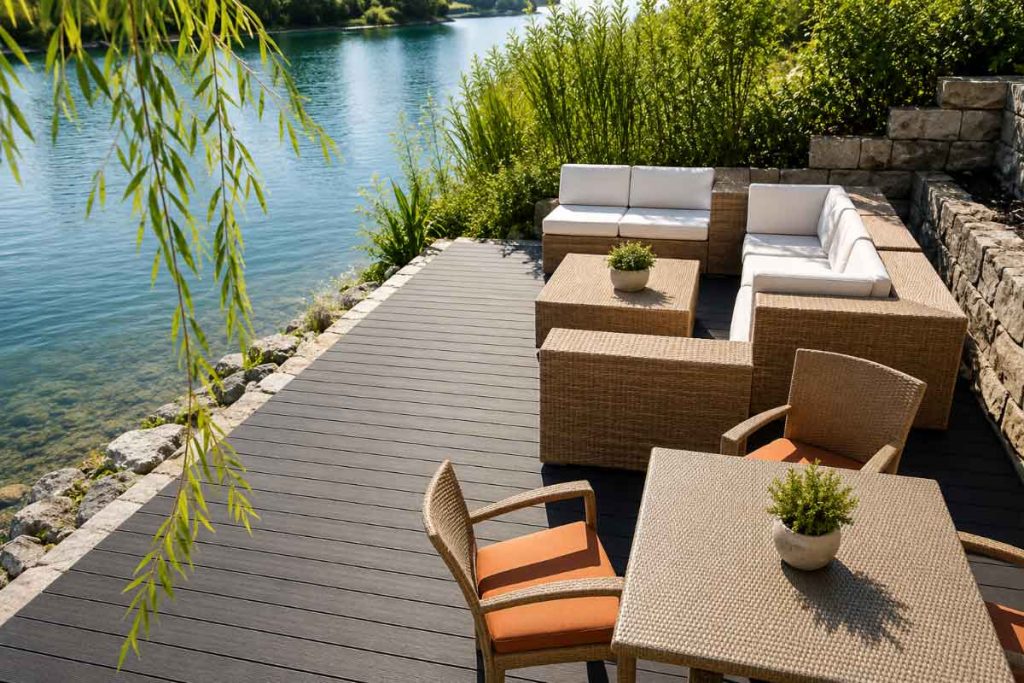
- Dark-colored Decking: Dark-colored decking (like dark brown, coffee, or charcoal gray) creates a warm, low-key atmosphere. It’s perfect for areas like outdoor restaurants, bars, and gardens where a more romantic or elegant ambiance is desired.
- Natural Wood Tones: Natural wood tones bring a warm and welcoming feel, perfect for family gardens and recreational areas where you want to maintain a cozy, natural atmosphere.
Hollow vs. Solid Decking
- Hollow Decking:
- Lightweight and breathable, making it suitable for mild climates.
- May have uneven light reflection, so when used with lights, careful placement is needed.
- Ideal for garden paths or outdoor spaces with mild weather conditions.
- Solid Decking:
- Durable and sturdy, perfect for areas that need stability and long-term use.
- More stable in terms of temperature and humidity fluctuations.
- Light reflection is more even, providing more consistent lighting effects.
- Ideal for patios, terraces, and stairs.
Final Summary
- Color Selection: Choose the color based on your space’s needs. Light colors are perfect for bright spaces, dark colors for romantic atmospheres, and natural wood tones for cozy and inviting areas.
- Hollow vs. Solid Decking: Hollow decking is suitable for lighter needs, while solid decking is ideal for more stable and durable environments.
By choosing the right WPC decking and lighting system, you can not only enhance the beauty of your outdoor space but also improve its functionality and safety. The correct lighting configuration and decking materials will transform your outdoor space into a unique highlight.
Perfect Combination of Lighting and WPC Decking
Whether placed in the center or at the edges, lighting can elevate the atmosphere by creating beautiful light and shadow effects. Selecting the right color and structure of WPC decking will further enhance the lighting effects.
- Center Lighting: Ideal for larger areas that require even illumination, creating a focal point and adding visual depth.
- Edge Lighting: Creates a soft ambiance, perfect for spaces like restaurants and gardens that focus on mood and safety.
Choosing the right decking structure, such as solid or hollow decking, will improve the stability of the lighting effects and avoid uneven lighting due to material properties.
Scene and Lighting Matching Suggestions
- Garden and Patios
- Recommended Color: Light or natural wood tones with warm lighting for a bright and comfortable environment.
- Lighting Type: Recessed lights or LED strips to highlight the beauty and functionality of the garden.
- Terraces and Balconies
- Recommended Color: Dark or natural wood decking with soft, warm lighting effects.
- Lighting Type: Wall lights or LED strips for enhanced comfort and safety.
- Swimming Pools
- Recommended Color: Light gray or off-white decking with cool LED strips for better night-time pool safety.
- Lighting Type: Waterproof LED lights to ensure stability and safety in a damp environment.
- Paths and Walkways
- Recommended Color: Natural wood or light brown decking to create a harmonious, natural feel.
- Lighting Type: Edge lights for both lighting and safety.
Final Recommendations
When choosing a WPC decking and lighting system, consider the following:
- Functionality of the Space: Choose appropriate lighting effects and decking materials based on the space’s primary use (e.g., leisure, entertainment, walkways).
- Light Source Type: Consider the installation location, brightness, and color temperature of the lights to create the ideal lighting environment.
- Decking Color and Structure: Select the right color and structure to harmonize with the lighting, enhancing overall aesthetics.
In the end, combining WPC decking and lighting systems can not only enhance the practicality of outdoor spaces but also create various atmospheres, making each scene a unique highlight.