When selecting outdoor railing materials, one question consistently tops buyers’ lists: Can WPC handrails be reliably used for stairs, balconies, and decks? The straightforward answer is yes—WPC (Wood Plastic Composite) handrails are engineered specifically for these high-traffic, outdoor applications. But here’s the critical caveat: their safety, durability, and performance depend entirely on proper design, material selection, and installation. Below, we break down exactly how WPC handrails work for each scenario, their key advantages, and the non-negotiable installation rules to avoid common pitfalls.
What Is a WPC Handrail? (Quick, No-Fluff Breakdown)
WPC handrails are composite materials made from a precise blend of:
• High-quality wood fibers (for natural texture and grip)
• Recycled HDPE plastic (for water and rot resistance)
• UV stabilizers, anti-oxidants, and anti-mildew additives (for long-term outdoor performance)
Unlike solid wood, WPC avoids the core flaws of traditional railing materials—rotting, cracking, warping, and rusting—while retaining the warm, natural look of wood. It’s a low-maintenance, cost-effective alternative to wood, aluminum, or steel, especially for outdoor spaces exposed to rain, sun, and foot traffic.
Where Can WPC Handrails Be Used? (Scene-by-Scene Guide)
WPC handrails are versatile, but their application specifics vary by space. Below is a detailed breakdown for stairs, balconies, and decks—including why they work, ideal use cases, and pro tips to maximize performance.
1. WPC Handrails for Stairs (Residential & Commercial)
Stairs demand handrails that are grippy, stable, and wear-resistant—and WPC checks all three boxes. It’s one of the most popular choices for both indoor and outdoor stairs, thanks to its balanced combination of comfort and durability.
Why WPC Works for Stairs:
• Comfortable Grip: The wood-like texture provides a non-slip surface, even when wet (critical for outdoor steps). Unlike metal, it doesn’t get hot in direct sun or cold in winter.
• Moisture & Wear Resistance: Stairs (especially outdoor ones) are prone to splashes, foot traffic, and debris—WPC resists scratches, stains, and water damage, so it won’t degrade over time.
• Customizable Lengths: WPC handrails can be cut to fit straight or curved stairs, making them suitable for both residential and commercial projects.
Ideal Applications:
• Deck stairs (paired with WPC decking for a cohesive look)
• Garden steps and pathways
• Public walkways, office buildings, and retail spaces
• Outdoor staircases leading to patios or pool areas
Pro Tip for Stairs: For stair handrails, choose a thickness of 30–40mm for optimal grip and stability. Pair with WPC balusters (spaced no more than 10cm apart) to meet safety standards and prevent small children or pets from slipping through.
2. WPC Handrails for Balconies (Safety & Aesthetics Combined)
Balconies are exposed to constant weather—rain, UV rays, humidity—and require handrails that balance safety, durability, and style. WPC handrails excel here because they eliminate the need for frequent maintenance while complementing any outdoor decor.
Key Advantages for Balconies:
• Weatherproof Performance: WPC is impervious to rain, humidity, and UV rays—no rotting, cracking, or fading, even in coastal or tropical climates.
• No Rust or Corrosion: Unlike metal handrails, WPC won’t rust or leave unsightly stains on your balcony flooring.
• Low Maintenance: No painting, sealing, or sanding—just wipe with a damp cloth occasionally to keep it clean.
• Stylish Versatility: Available in wood grain finishes (teak, oak, pine) and neutral colors, WPC handrails match modern, traditional, or rustic balcony designs.
Perfect For:
• Residential balconies (apartments, villas, houses)
• Hotel and resort balconies
• Condo complexes and multi-family buildings
Pro Tip for Balconies: Install WPC handrails with a height of at least 1.1m (per international safety standards) to ensure fall protection. For high-rise balconies, use steel reinforcement posts (spaced 1.2–1.5m apart) to add structural stability.
3. WPC Handrails for Decks (Most Common & Cohesive Choice)
WPC handrails are most frequently used with WPC decking—and for good reason: they create a unified, polished look while delivering the same durability and low maintenance as the deck itself. This pairing is a top choice for garden decks, poolside areas, and outdoor platforms.
Benefits for Decks:
• Consistent Aesthetics: Matching WPC handrails and decking creates a seamless, professional look that boosts your outdoor space’s value.
• Slip-Resistant Safety: Deck handrails need to be secure, especially near pools or wet areas—WPC’s textured surface prevents slipping, even when wet.
• Low Maintenance Synergy: If you already have WPC decking, adding WPC handrails means zero extra maintenance (no need to match paint or sealants).
• Durability in High-Traffic Areas: Decks are often used for entertaining, so handrails need to withstand frequent use—WPC resists scratches, dents, and wear.
Common Applications:
• Garden decks and patios
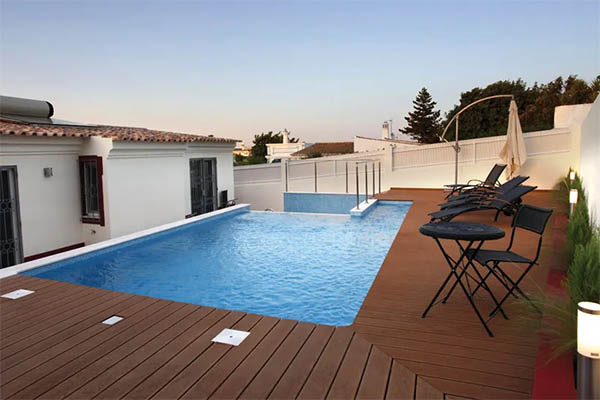
• Poolside decks (resistant to chlorine and water damage)
• Outdoor platforms and rooftop terraces
• Commercial decks (restaurants, cafes, parks)
Pro Tip for Decks: For poolside decks, choose a WPC handrail with a anti-slip texture and UV-resistant finish to prevent fading from constant sun exposure. Pair with hidden fasteners for a clean, seamless look.
Key Advantages of WPC Handrails (vs. Wood, Aluminum, Steel)
To help you understand why WPC is the better choice for stairs, balconies, and decks, here’s a direct comparison to traditional materials—no fluff, just facts:
- Durability & Weather Resistance: WPC outperforms wood (rots, warps) and steel (rusts) in outdoor environments. It withstands temperatures from -20°C to 60°C, making it suitable for all climates—rain, snow, humidity, or intense sun.
- Low Maintenance: Wood requires annual painting/sealing; metal needs rust treatment. WPC? Just occasional cleaning with water and mild soap—save time and money long-term.
- Eco-Friendly: Made from recycled wood fibers and plastic, WPC is a sustainable alternative to solid wood (which contributes to deforestation). It’s also 100% recyclable at the end of its lifespan.
- Stylish & Customizable: Unlike aluminum (cold, industrial look) or steel (heavy, bulky), WPC has a natural wood texture. It’s available in multiple colors, finishes, and sizes to fit any project.
- Cost-Effective: While WPC has a slightly higher upfront cost than wood, its 15–25 year lifespan (vs. 5–10 years for wood) makes it more affordable long-term—no replacement or maintenance costs.
Critical Installation Considerations (Avoid These Mistakes!)
WPC handrails are reliable—if installed correctly. Below are the non-negotiable rules to ensure safety, stability, and longevity. Skip these, and you’ll risk premature damage or safety hazards.
1. WPC Is Not Structural—Use Reinforcement
WPC handrails are decorative and protective, not structural. They cannot support heavy loads on their own. Always install them with:
• Steel or aluminum posts (minimum 80mm diameter)
• Reinforced frames (for curved or long-span handrails)
• Secure anchoring to the building structure (not just the decking or stairs)
2. Follow Safety Standards (Non-Negotiable)
For stairs, balconies, and decks, safety standards vary by region—but these universal rules apply:
- Stair handrails: Height 90–110cm; baluster spacing ≤10cm (prevents entrapment).
- Balcony handrails: Height ≥110cm (for residential) or ≥120cm (for commercial).
- Deck handrails: Height ≥100cm; no gaps larger than 10cm between balusters.
3. Proper Installation Techniques
- Use the Right Fasteners: Choose stainless steel or galvanized screws (outdoor-grade) to prevent rust. Avoid ordinary iron fasteners—they will corrode and damage the WPC.
- Leave Expansion Gaps: WPC expands and contracts with temperature changes. Leave 2–5mm gaps between handrail sections and at wall connections to avoid warping.
- Control Span Distance: For long handrails (over 2m), add intermediate posts every 1.2–1.5m to prevent sagging.
- Ensure Proper Drainage: Install handrails with a slight slope (1–2°) to direct water away from the structure—prevents moisture buildup and mold.
Conclusion
WPC handrails are an excellent, reliable choice for stairs, balconies, and decks—offering the perfect balance of safety, durability, low maintenance, and style. They outperform traditional materials (wood, metal) in outdoor environments, and with proper installation (reinforcement, safety standards, expansion gaps), they will last 15–25 years.
Whether you’re a homeowner upgrading your balcony, a contractor working on a commercial deck, or a buyer selecting materials for a residential project, WPC handrails deliver long-term value and peace of mind—no constant maintenance, no premature replacement, just a stylish, safe railing solution.
FAQ (Answers to Buyers’ Most Common Questions)
Q1: Are WPC handrails safe for stairs?
Yes—when installed with steel/aluminum reinforcement posts and proper baluster spacing (≤10cm), WPC handrails provide stable, secure support for stairs. The non-slip texture also reduces fall risks, even when wet.
Q2: Can WPC railings be used outdoors in all climates?
Absolutely. WPC is engineered to withstand extreme temperatures (-20°C to 60°C), rain, snow, UV rays, and humidity. It’s suitable for coastal areas (resistant to saltwater) and tropical climates (resistant to mold).
Q3: Do WPC handrails require maintenance?
Very little. Unlike wood, there’s no need for painting, sealing, or sanding. Just wipe with a damp cloth and mild soap occasionally to remove dirt—That’s it.
Q4: How long do WPC handrails last?
Typically 15–25 years, depending on the environment (coastal vs. inland) and installation quality. High-quality WPC with UV stabilizers can last up to 30 years in mild climates.
Q5: Can WPC handrails be painted or stained?
While it’s not necessary (WPC comes in pre-finished wood grain colors), you can paint or stain it if you want to match a specific decor. Use a water-based paint designed for composite materials for best results.