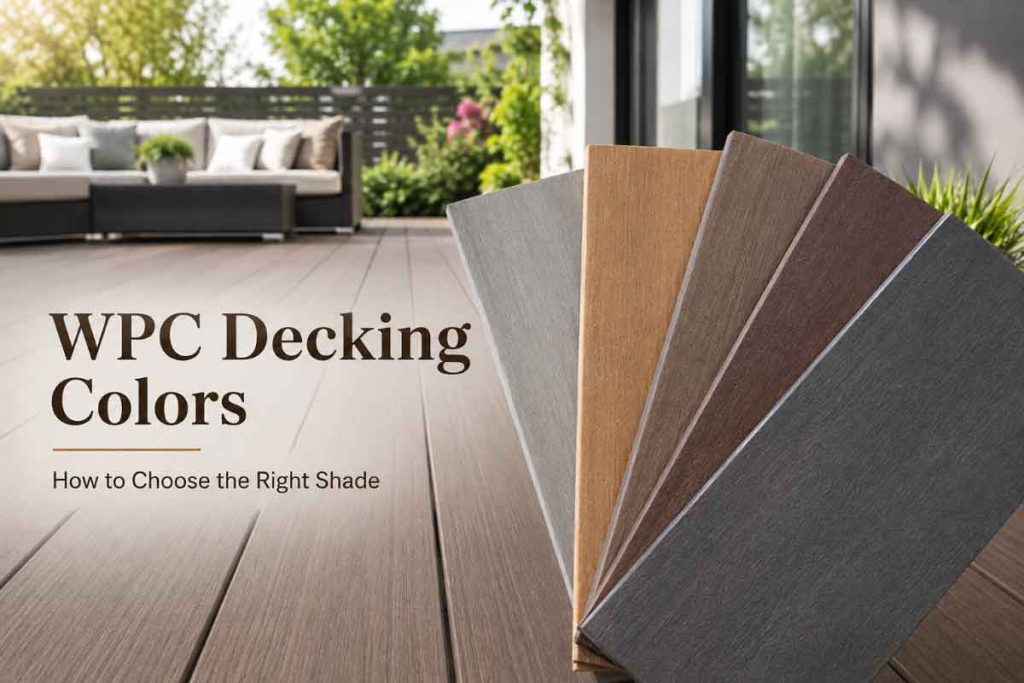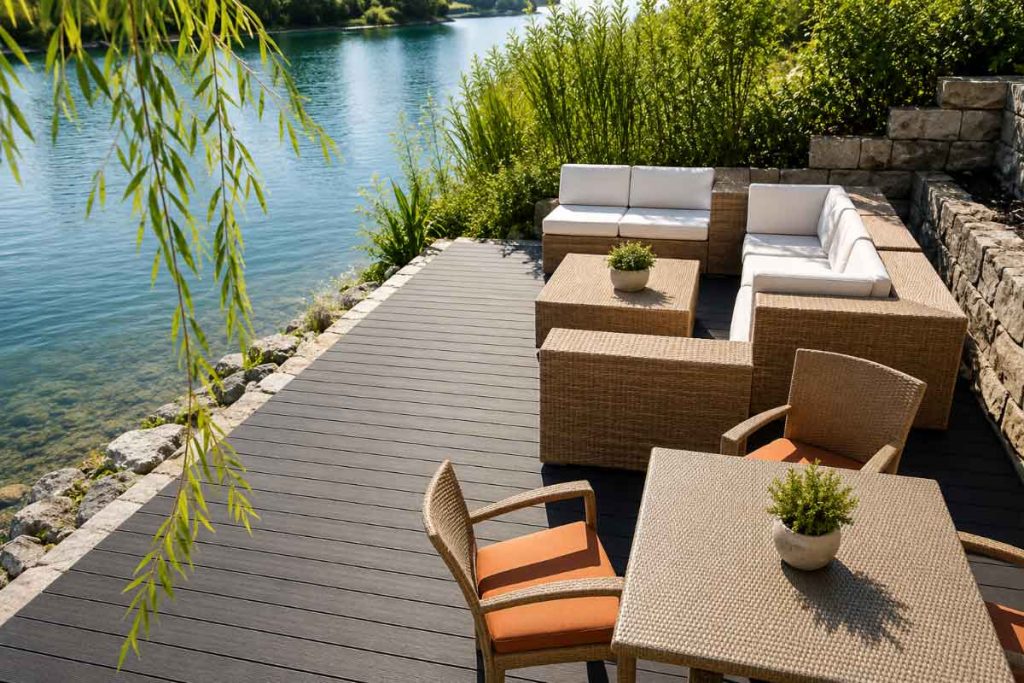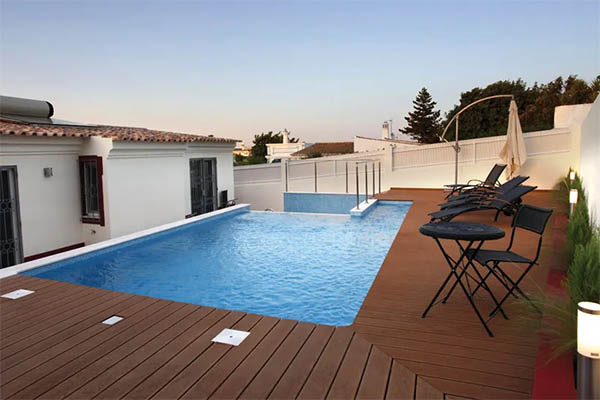
WPC decking is a popular outdoor flooring material for gardens, balconies, terraces, pool areas, commercial walkways, and public projects. Compared with traditional wood decking, WPC decking is more resistant to moisture, insects, cracking, and daily weather changes.
However, good material alone is not enough. If the decking is installed incorrectly, it may still have problems such as deformation, loose boards, water accumulation, unstable structure, or shortened service life.
For homeowners, contractors, and project buyers, understanding common installation mistakes can help reduce maintenance problems and improve the long-term performance of WPC decking.
1. Ignoring Expansion Gaps
One of the most common mistakes when installing WPC decking is not leaving enough expansion gaps.
WPC decking contains plastic and wood fiber, so it will expand and contract with temperature changes. In hot weather, the boards may expand. In cold weather, they may shrink slightly.
If the gap between boards is too small, the decking may:
- Bulge
- Bend
- Press against nearby boards
- Become uneven
- Affect the overall appearance
Proper spacing should be left between the ends of boards, between side-by-side boards, and around walls or fixed structures. The exact gap depends on the decking type, board length, local climate, and supplier’s installation guide.
2. Using the Wrong Joist Spacing
Joist spacing directly affects the stability of WPC decking.
If the joists are too far apart, the decking boards may feel soft when walking on them. Over time, the boards may sag, bend, or become unstable.
For most WPC decking installations, joist spacing should be controlled according to the board structure and application. Residential areas and light-use spaces may use standard spacing, while commercial areas, public walkways, or high-traffic projects usually need closer joist spacing.
Before installation, always check the recommended joist spacing from the manufacturer.
3. Installing on an Uneven Base
WPC decking should not be installed directly on an unstable or uneven surface.
If the ground is not flat, the decking system may have poor support. This can cause noise, shaking, uneven boards, or drainage problems after installation.
A good base should be:
- Flat
- Stable
- Strong enough to support the structure
- Designed with proper drainage
- Suitable for outdoor use
Concrete, steel frames, aluminum joists, or treated support structures are commonly used depending on the project requirements.
4. Poor Drainage Design
Water drainage is very important for outdoor decking.
Although WPC decking has better moisture resistance than natural wood, long-term water accumulation is still not ideal. If water stays under the decking for a long time, it may affect the joists, clips, screws, and overall structure.
Poor drainage may lead to:
- Mold growth
- Bad smell
- Rust on metal accessories
- Shortened service life of the substructure
- Unstable decking surface
The installation area should have a slight slope or drainage channel to allow water to flow away naturally.
5. Using Incorrect Screws or Clips
Some installers use ordinary screws or unsuitable fasteners to reduce cost. This can create problems later.
Outdoor decking needs accessories that can withstand moisture, temperature changes, and long-term outdoor exposure. Poor-quality screws may rust, loosen, or damage the decking boards.
For WPC decking, it is better to use recommended clips, stainless steel screws, or matched accessories from the supplier. The right accessories help keep the boards stable and improve the appearance of the finished deck.
6. Fixing Boards Too Tightly
Some people think that fixing the decking boards as tightly as possible will make the floor stronger. In fact, this can cause problems.
WPC decking needs some space for natural expansion and contraction. If the boards are fixed too tightly, they cannot move properly when temperature changes. This may cause stress inside the decking system.
The result may include:
- Warping
- Cracking around screw holes
- Uneven surface
- Loose clips
- Board deformation
The boards should be fixed firmly, but not in a way that restricts normal thermal movement.
7. Not Considering Board Direction
Board direction affects both appearance and function.
If the decking boards are installed without a clear layout plan, the finished deck may look messy. In some areas, the wrong direction may also affect drainage or walking comfort.
Before installation, it is better to plan:
- The direction of decking boards
- The position of board joints
- The direction of water flow
- The location of steps, walls, doors, and edges
- The final visual effect
For large projects, a simple layout drawing can help avoid material waste and installation mistakes.
8. Cutting Boards Without Sealing or Cleaning
During installation, WPC decking boards often need to be cut to fit the project size.
After cutting, dust and small particles should be cleaned from the surface and gaps. If the cut edges are left messy, the final appearance may look unprofessional.
For some decking types, edge covers, fascia boards, or end caps may be used to improve the finish and protect the exposed ends.
A clean edge treatment makes the decking look more complete and professional.
9. Mixing Different Batches Without Checking Color
WPC decking color may have slight differences between different production batches. This is normal for many building materials, especially products with wood-like surfaces.
If different batches are mixed randomly, the deck may show visible color differences after installation.
To avoid this problem, installers should check all boards before installation. If there is a slight color difference, the boards can be arranged evenly instead of placing all different-color boards in one area.
This is especially important for large outdoor projects.
10. Ignoring Installation Instructions
Every WPC decking product is not exactly the same. Hollow decking, solid decking, co-extruded decking, embossed decking, and DIY decking tiles may all have different installation requirements.
A common mistake is using one installation method for all types of WPC decking.
Before installation, it is important to read the supplier’s installation guide carefully. The guide usually includes:
- Joist spacing
- Expansion gap
- Screw position
- Clip usage
- Edge treatment
- Drainage requirements
- Maintenance advice
Following the correct installation method can reduce future problems and protect the decking system.
11. Installing WPC Decking Too Close to the Ground
If WPC decking is installed too close to the ground without enough ventilation, moisture may stay under the boards for a long time.
Good ventilation helps the decking dry faster after rain and reduces the risk of mold, odor, and structural problems.
This is especially important in humid areas, garden spaces, pool areas, and locations with heavy rainfall.
A proper gap between the decking and ground surface can improve air circulation and extend the service life of the deck.
12. Choosing the Wrong Decking Type for the Project
Installation problems sometimes start before installation. Choosing the wrong decking type can also cause poor performance.
For example:
- Light-duty decking may not be suitable for commercial walkways.
- Hollow decking may need better support in high-traffic areas.
- Dark colors may absorb more heat in hot climates.
- Deep embossed surfaces may need more cleaning in dusty environments.
- Poolside decking should have good slip resistance and drainage.
Before buying WPC decking, buyers should consider the climate, application, traffic level, budget, and maintenance requirements.
How to Install WPC Decking More Correctly
To avoid common installation mistakes, it is important to prepare well before construction.
A good WPC decking installation should include:
- Stable and level substructure
- Correct joist spacing
- Proper expansion gaps
- Good drainage design
- Suitable clips and screws
- Clear board layout
- Enough ventilation
- Careful edge treatment
- Manufacturer’s installation guide
For large projects, it is also useful to communicate with the supplier before installation. A professional supplier can provide product recommendations, installation drawings, and technical advice according to the project requirements.
Conclusion
WPC decking is a durable and low-maintenance outdoor flooring material, but correct installation is essential for long-term performance. Many problems such as warping, loose boards, water accumulation, and uneven surfaces are not caused by the material itself, but by poor installation methods.
By avoiding common mistakes such as insufficient expansion gaps, wrong joist spacing, poor drainage, unsuitable accessories, and unclear layout planning, WPC decking can perform better and last longer in outdoor environments.
For homeowners, contractors, wholesalers, and project buyers, choosing quality WPC decking and following proper installation standards can help create a safer, more stable, and more attractive outdoor space.
Senlai is a China WPC product manufacturer, if you want to buy them, please be free to contact us.