When comparing outdoor decking materials, many buyers notice that WPC decking is usually more expensive than traditional wood decking. At first glance, wood may seem like the more economical choice because its initial purchase price is often lower.
However, the real cost of decking is not only about the price per square meter. Material durability, maintenance cost, service life, weather resistance, installation stability, and long-term performance all affect the final value.
WPC decking is more expensive than wood because it uses composite raw materials, a more complex manufacturing process, functional additives, and a structure designed for long-term outdoor use. Although the initial cost is higher, WPC decking can often reduce maintenance work and long-term replacement costs.
What Is WPC Decking?
WPC stands for wood plastic composite. It is a composite material made from wood powder, plastic, and functional additives. These materials are mixed, heated, and extruded into decking boards with different colors, surface textures, and structural designs.
Compared with traditional wood decking, WPC decking is designed to offer better resistance to moisture, insects, cracking, rotting, and daily outdoor weather exposure.
Common WPC decking types include:
- Hollow WPC decking
- Solid WPC decking
- 3D embossed WPC decking
- Co-extruded WPC decking
- Grooved WPC decking
- Wood grain composite decking
Because of these material and production differences, WPC decking naturally has a higher production cost than ordinary wood boards.
1. WPC Decking Uses More Complex Raw Materials
Traditional wood decking is usually made from natural timber. Its cost mainly depends on wood species, grade, size, and treatment process.
WPC decking is different. It is made from a combination of several materials, including:
- Wood powder
- HDPE or other plastic materials
- Coupling agents
- UV stabilizers
- Color pigments
- Anti-oxidation additives
- Lubricants
- Processing aids
These materials help improve the performance of WPC decking in outdoor environments. For example, UV additives help reduce fading, while plastic content improves moisture resistance.
This material formula is one of the main reasons why WPC decking costs more than normal wood decking.
2. The Manufacturing Process Is More Advanced
Wood decking is usually cut, dried, treated, and shaped from natural timber. Although high-quality wood also requires processing, the production process is generally more straightforward than WPC manufacturing.
WPC decking requires a more technical production process. The raw materials must be mixed evenly, heated, extruded, cooled, shaped, textured, cut, and inspected.
For some advanced WPC decking products, additional processes may also be used, such as:
- Surface sanding
- Deep embossing
- 3D wood grain treatment
- Co-extrusion protective layer
- Color mixing
- Online cooling and shaping
- Profile testing
These processes require production equipment, technical control, skilled operators, and quality inspection. This increases the overall manufacturing cost.
3. WPC Decking Is Designed for Outdoor Durability
Outdoor decking faces many challenges, including rain, sunlight, temperature changes, humidity, dust, and daily foot traffic.
Natural wood can perform well outdoors, but it usually needs regular sealing, painting, oiling, or staining. Without proper care, wood decking may develop problems such as:
- Cracking
- Warping
- Rotting
- Insect damage
- Surface splinters
- Color fading
- Mold growth
- Loose boards
WPC decking is designed to reduce many of these problems. It has better resistance to moisture and decay than untreated wood, and it does not require regular painting or oiling.
This outdoor durability is one of the key reasons why WPC decking has a higher initial price.
4. WPC Decking Requires Less Maintenance
One of the biggest advantages of WPC decking is low maintenance.
Wood decking often needs regular maintenance to keep its appearance and performance. Depending on the environment, wood decking may require:
- Sanding
- Painting
- Staining
- Sealing
- Anti-mold treatment
- Insect prevention
- Board replacement
These maintenance tasks cost time and money. For commercial projects, gardens, hotels, restaurants, resorts, and public outdoor areas, maintenance can become a long-term expense.
WPC decking usually only needs simple cleaning with water, a soft brush, or mild detergent. This makes it easier to maintain in daily use.
So while WPC decking costs more at the beginning, it can help reduce long-term maintenance costs.
5. WPC Decking Has Better Moisture Resistance
Moisture is one of the biggest problems for outdoor decking.
Wood naturally absorbs water. When wood repeatedly absorbs and releases moisture, it may expand, shrink, crack, or deform. In humid areas, wood may also rot or grow mold more easily.
WPC decking has better moisture resistance because of its plastic content and composite structure. It is more suitable for areas exposed to rain, humidity, poolside moisture, and outdoor cleaning.
This makes WPC decking a good choice for:
- Gardens
- Patios
- Balconies
- Terraces
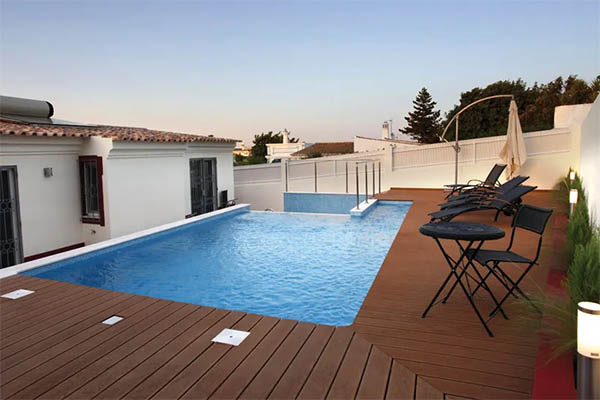
- Poolside areas
- Outdoor restaurants
- Resorts
- Public walkways
Better moisture resistance adds value, but it also increases the production cost compared with ordinary wood.
6. WPC Decking Offers More Stable Appearance
Wood is a natural material, so color, grain, knots, and texture can vary from board to board. Some buyers like this natural variation, but for commercial projects, a more consistent appearance is often preferred.
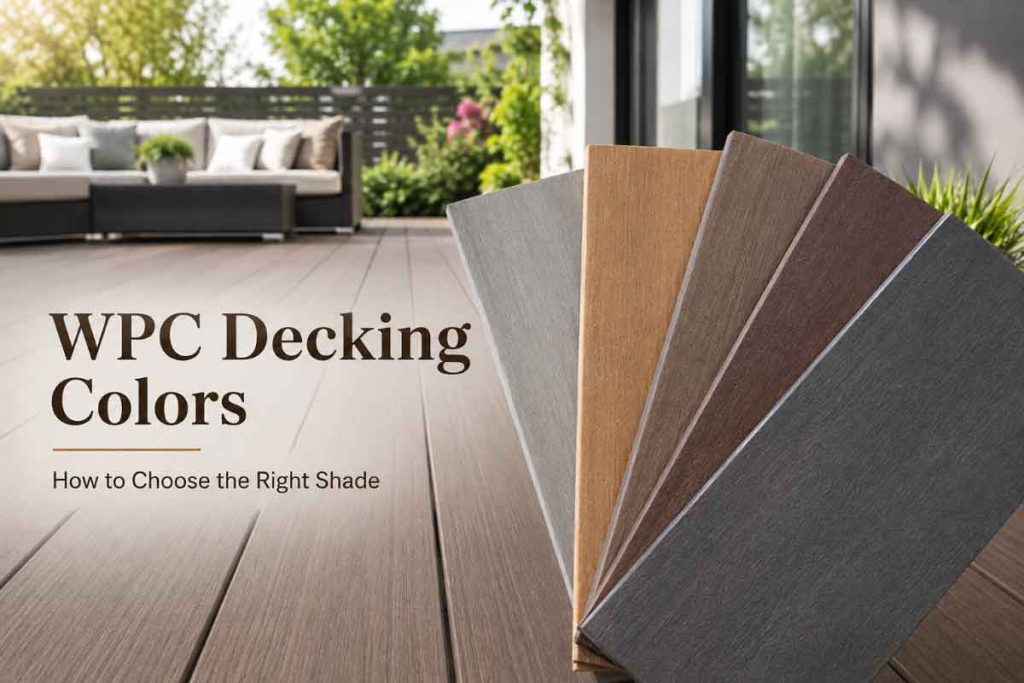
WPC decking can be produced with controlled colors and surface textures. Buyers can choose from different shades, such as brown, teak, coffee, grey, dark grey, and red-brown.
WPC decking can also be made with different surface effects, including:
- Straight grain
- Wood grain
- 3D embossed texture
- Brushed surface
- Co-extruded surface
This gives designers, contractors, and project buyers more control over the final outdoor appearance.
The stable color and customizable design also make WPC decking more expensive than basic wood decking.
7. Co-Extruded WPC Decking Costs Even More
Not all WPC decking has the same price. Co-extruded WPC decking is usually more expensive than traditional WPC decking.
Co-extruded WPC decking has an outer protective layer that helps improve:
- Stain resistance
- Scratch resistance
- Color stability
- Water resistance
- Surface durability
- Cleaning performance
This protective layer requires additional raw materials and a more advanced production process. That is why co-extruded WPC decking costs more than both wood decking and ordinary WPC decking.
However, for outdoor projects that need better long-term appearance and lower maintenance, co-extruded decking can be a worthwhile choice.
8. WPC Decking Can Have a Longer Service Life
The upfront cost of WPC decking is higher, but the long-term value is often better.
Wood decking may need regular repair or replacement if it is exposed to harsh weather, moisture, insects, or poor maintenance. In some environments, wood can lose its appearance and strength faster than expected.
WPC decking is designed for longer outdoor use with less maintenance. A good-quality WPC decking system can maintain its structure and appearance for many years when installed correctly.
This longer service life is one of the main reasons buyers choose WPC decking even though the initial price is higher.
9. Installation Accessories Also Affect the Total Cost
WPC decking is often installed with a complete system, including joists, clips, screws, edge boards, and other accessories.
These accessories help improve:
- Board spacing
- Expansion control
- Drainage
- Stability
- Safety
- Installation appearance
Compared with simple wood decking installation, WPC decking installation may require more specific accessories and installation standards.
For example, WPC decking needs proper expansion gaps because composite materials still expand and contract with temperature changes. Correct joist spacing is also important to prevent deformation and improve long-term performance.
These installation requirements can slightly increase the total project cost, but they also help the decking system last longer.
10. Wood May Be Cheaper at First, but Not Always Cheaper Long Term
Wood decking is usually cheaper in the beginning, especially if the buyer chooses local softwood or basic treated timber. For projects with a very limited budget, wood may look more attractive.
However, the long-term cost can be different.
Wood may require:
- Regular painting or oiling
- Anti-rot treatment
- Pest control
- Surface repair
- Replacement of damaged boards
- More frequent maintenance labor
WPC decking may cost more upfront, but it usually requires less maintenance and fewer repairs.
So the better question is not only:
“Which material is cheaper?”
The better question is:
“Which material offers better value over the full service life?”
For many outdoor projects, WPC decking can provide better long-term value.
WPC Decking vs Wood Decking: Cost Comparison
| Factor | Wood Decking | WPC Decking |
| Initial price | Usually lower | Usually higher |
| Maintenance | Higher | Lower |
| Painting or oiling | Often required | Not required |
| Moisture resistance | Depends on wood type and treatment | Better |
| Rot resistance | Lower | Better |
| Insect resistance | Lower | Better |
| Color stability | May fade or change naturally | More stable |
| Cleaning | Needs more care | Easier |
| Service life | Depends heavily on maintenance | More stable for outdoor use |
| Long-term value | May cost more over time | Often better |
Is WPC Decking Worth the Higher Price?
WPC decking is worth the higher price when buyers care about long-term durability, low maintenance, stable appearance, and better outdoor performance.
It is especially suitable for:
- Residential gardens
- Villa courtyards
- Hotels and resorts
- Outdoor restaurants
- Poolside decks
- Balconies and terraces
- Commercial walkways
- Public landscape projects
For projects where appearance, safety, and maintenance cost are important, WPC decking can be a better choice than traditional wood.
However, wood may still be suitable for buyers who prefer a fully natural material, have a very limited budget, or are willing to do regular maintenance.
How to Choose Cost-Effective WPC Decking
If buyers want to control the cost of WPC decking, they should not only choose the cheapest option. Very cheap WPC decking may use lower-quality raw materials, poor formulas, or unstable production processes.
When choosing WPC decking, buyers should consider:
- Raw material quality
- Board thickness
- Hollow or solid structure
- Surface treatment
- UV resistance
- Color stability
- Manufacturer experience
- Installation accessories
- Project environment
- Long-term maintenance needs
A reliable supplier can recommend the right product type according to the project, climate, budget, and usage requirements.
Choosing the right WPC decking can help buyers avoid unnecessary replacement costs in the future.
Conclusion
WPC decking is more expensive than wood because it uses composite raw materials, functional additives, advanced production technology, and outdoor-focused design. It is made to resist moisture, reduce maintenance, improve durability, and provide a more stable appearance over time.
Although wood decking usually has a lower initial price, it often requires more maintenance, repair, and treatment during long-term outdoor use. WPC decking costs more at the beginning, but it can provide better long-term value for many residential and commercial projects.
For buyers who want a durable, low-maintenance, and attractive outdoor decking solution, WPC decking is often worth the higher price.