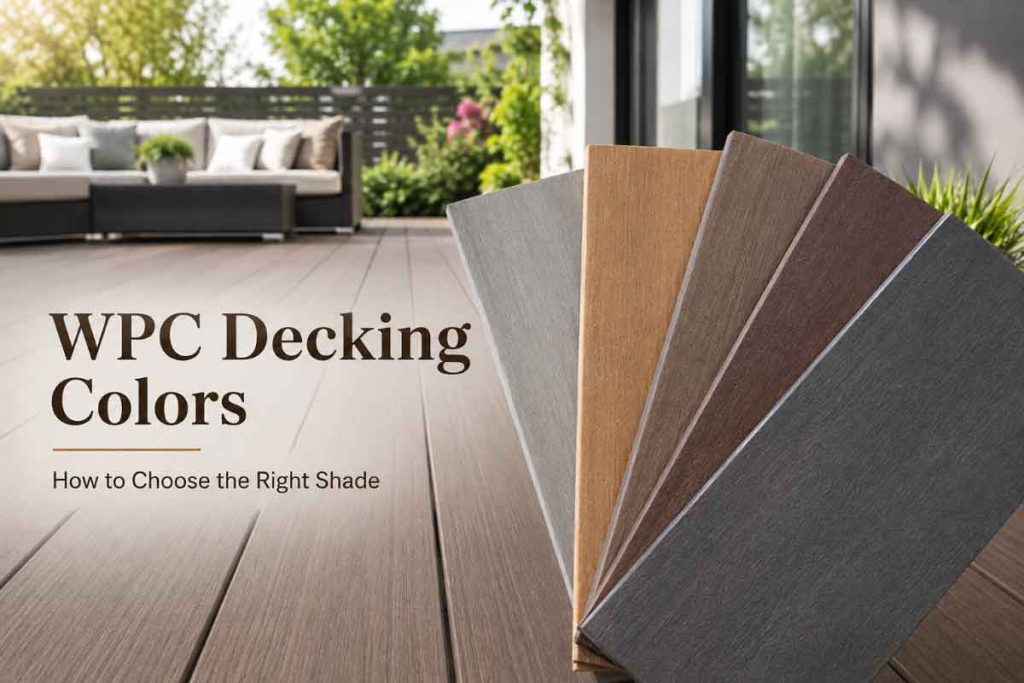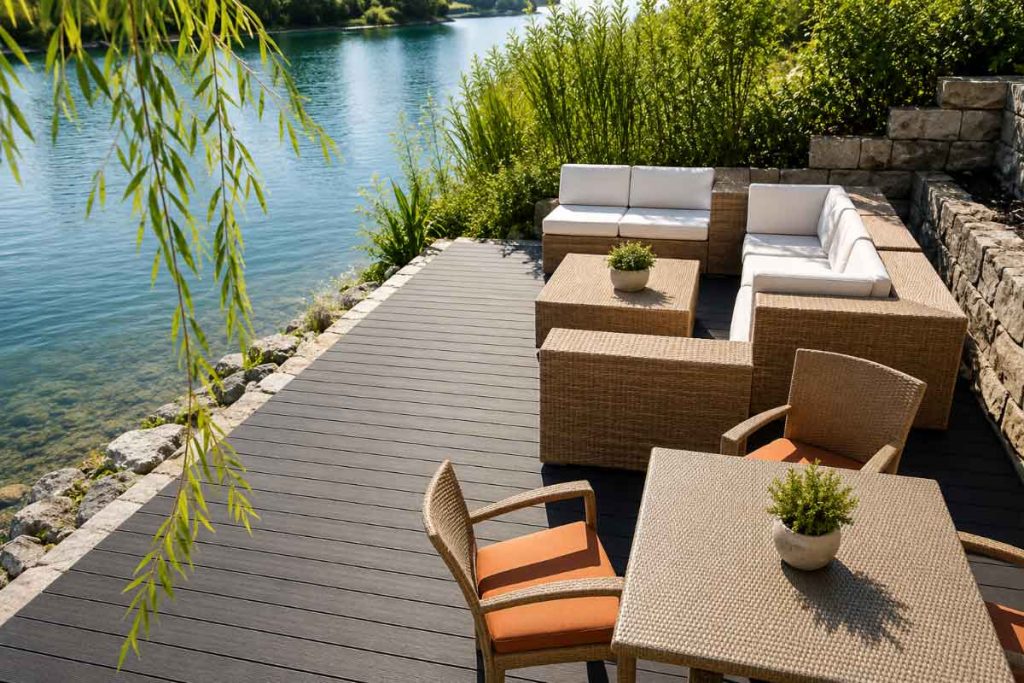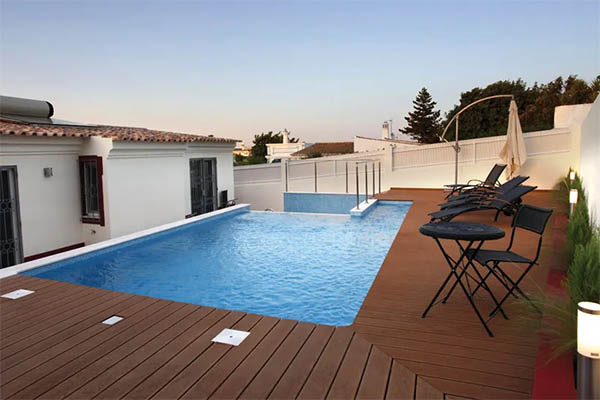
Many people wonder why WPC decking, which also has a wood-like appearance, is more expensive than regular indoor wood decking. The core reason for this is simple: it’s not meant to be compared with indoor wood decking. WPC decking is primarily designed to replace outdoor materials like pressure-treated wood, which is why its price is higher than regular indoor wood floors.
1. The Core Difference: WPC Decking vs Regular Indoor Wood Decking
Regular indoor wood decking is designed for indoor use. It is made from solid wood slices or engineered wood, which are relatively simple to process. The materials are affordable, and the production cost is mainly based on the wood itself. Indoor wood decking is intended to be used in dry, stable environments, and it doesn’t need special features like water resistance or protection from pests.
In contrast, WPC decking is designed for outdoor use, like in gardens, patios, parks, and boardwalks. The outdoors is a harsh environment with direct sunlight, rain, humidity, and pest attacks, which can quickly damage traditional wood decking. Regular indoor wood decking will crack, warp, get moldy, or rot when exposed to these conditions, so it cannot be used outdoors.
This means that WPC decking is not designed to replace indoor wood floors, but rather to replace outdoor pressure-treated wood. Its materials and construction are specifically intended to meet the challenges of outdoor environments, which is why it costs more than regular indoor wood decking.
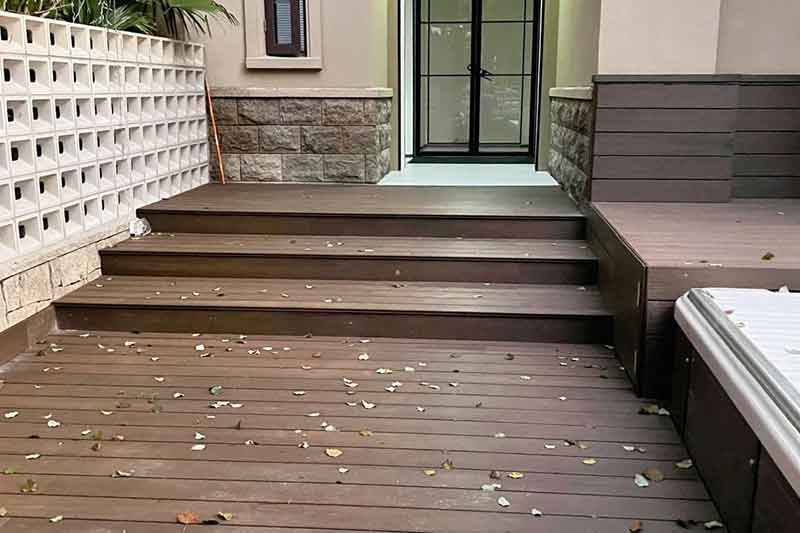
2. Why WPC Decking is More Expensive than Regular Indoor Wood Decking: “It’s Meant to Replace Pressure-Treated Wood”
The reason WPC decking costs more than indoor wood decking is that it competes with pressure-treated wood, not indoor wood decking. To achieve the function of replacing pressure-treated wood, WPC decking uses better materials, more advanced construction techniques, and provides higher long-term value. This results in higher costs.
1. Higher Material Costs: Designed for the Outdoors
Regular indoor wood decking is made from solid or engineered wood, which is relatively cheap. On the other hand, WPC decking is made from a composite material that combines wood powder, plastic, and special additives. This material is created through high-temperature melting and extrusion, and is designed to resist moisture, mold, pests, UV rays, and warping—issues that regular wood decking cannot handle outdoors. High-quality WPC uses virgin plastic, high-purity wood powder, and special UV-resistant agents, all of which increase the material costs significantly.
2. Higher Manufacturing Costs: Designed to Withstand Outdoor Damage
Indoor wood decking involves simpler manufacturing processes like cutting, sanding, and coating. WPC decking, however, goes through multiple steps such as high-temperature extrusion, surface texturing, and sometimes adding an extra layer of protective coating (like UV-resistant layers). These extra steps add to the production cost, making WPC decking more expensive than regular wood decking.
3. Higher Long-Term Value: Replaces Pressure-Treated Wood and Saves Hidden Costs
The higher price of WPC decking isn’t just due to the upfront material and manufacturing costs—it’s also due to its long-term value. WPC decking is designed to replace pressure-treated wood, which has high maintenance costs. Pressure-treated wood needs regular oil treatments, and after 3-5 years, it often needs to be replaced. It can also warp, crack, or fade over time.
WPC decking, on the other hand, requires zero maintenance, lasts 10-15 years (sometimes up to 20 years), and is far more durable in harsh weather conditions. It saves money on maintenance and replacement costs, making it a more cost-effective option in the long run.
3. Summary: WPC Decking Isn’t Expensive, It’s Just Meant for a Different Purpose
Regular indoor wood decking is designed for indoor use in comfortable, dry conditions. It doesn’t need extra protection from moisture or pests, so it’s simpler and cheaper to produce. WPC decking, however, is specifically designed for outdoor environments, where it must withstand harsh weather conditions and constant exposure to the elements.
Therefore, comparing WPC decking to indoor wood decking is like comparing apples to oranges. WPC decking is meant to replace outdoor pressure-treated wood, which requires constant maintenance and has a limited lifespan. WPC decking’s higher price reflects the superior materials, more complex manufacturing process, and long-term durability.
Conclusion:
The real reason WPC decking is more expensive than regular indoor wood decking is because its purpose and materials are designed to meet the challenges of outdoor environments. It competes with outdoor pressure-treated wood, not indoor wood decking, and its higher cost is justified by the materials and benefits it offers.