1. What Is a Terrace?
A terrace is an open, roofless outdoor platform in a building where people can carry out activities. It is different from a covered balcony. Its key features are being open-air, large in size, and directly connected to nature. It is an extension of indoor space to the outdoors, combining functions such as viewing, relaxation, socializing, and gardening. It allows people to enjoy sufficient sunlight and open views while supporting outdoor living activities.

2. Terrace vs Balcony: Key Differences at a Glance
Many people confuse terraces with balconies, but their essential differences are clear:
| Comparison | Terrace | Balcony |
| Roof | No permanent roof, completely open | Has a fixed roof, semi-enclosed |
| Size | Usually large (over 10㎡ to dozens of ㎡) | Smaller (usually a few ㎡) |
| Location | Rooftops, villa courtyards, stepped or podium areas | Outside living rooms or bedrooms on each floor |
| Function | Outdoor gatherings, garden, BBQ, viewing | Drying clothes, simple leisure, storage |
| Ownership | Often private to top floor or shared | Belongs to the homeowner |
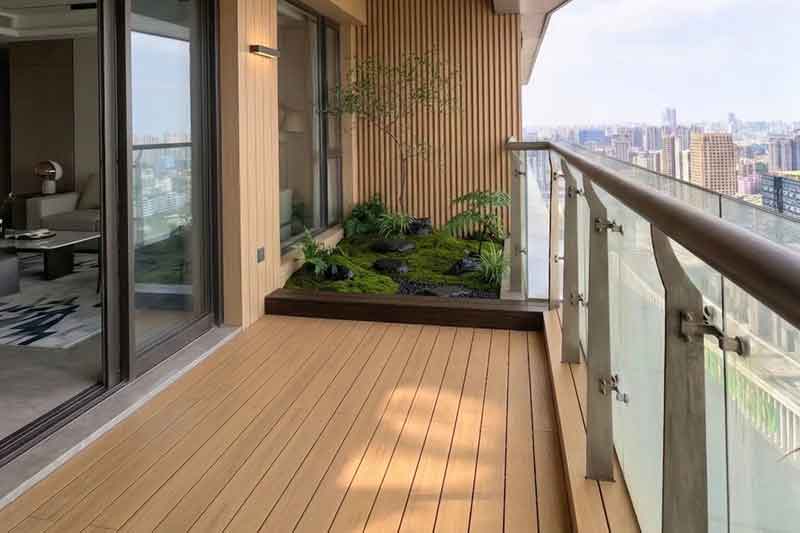
Simply put: A covered space is a balcony, while a large open platform without a roof is a terrace.
3. What Types of Houses Have Terraces?
Not all homes have terraces. They are mainly found in four types of housing:
1. Top-Floor or Duplex Apartments
This is the most common type. Top-floor units often come with a private rooftop terrace, and duplex layouts usually include a large terrace on the upper level with an open view.

2. Villas (Detached, Townhouse, or Stacked)
Villas often have courtyard terraces on the ground floor, and viewing terraces on upper floors or rooftops. Some stacked villas also provide exclusive terraces for certain units.
3. Fourth-Generation Housing (Sky Garden Homes)
This is a popular new type of housing in recent years. A key feature is that each unit comes with a large sky terrace or garden. The terrace area is usually not included in the property size, offering a higher usable space ratio and a “sky garden” living experience.
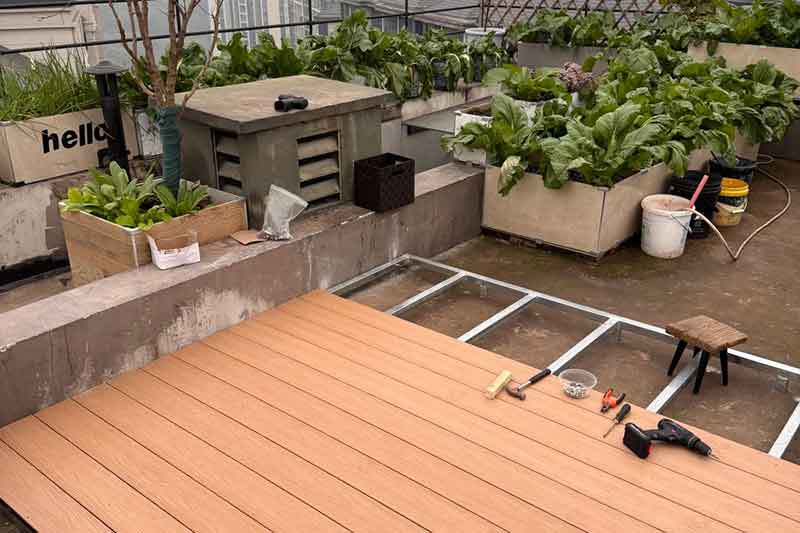
4. Stepped or Setback Apartments
These buildings use stepped or setback designs, allowing some units on each floor to have terraces. They provide both low-density comfort and outdoor space, commonly seen in 6–11 floor residential buildings.
4. Best Decking for Terraces: Why Choose WPC Decking?
Terraces are exposed to sunlight, rain, and temperature changes for a long time, so flooring must have strong weather resistance. Wood Plastic Composite (WPC) decking is currently the most suitable material for terrace flooring, with clear advantages over solid wood, treated wood, and tiles.
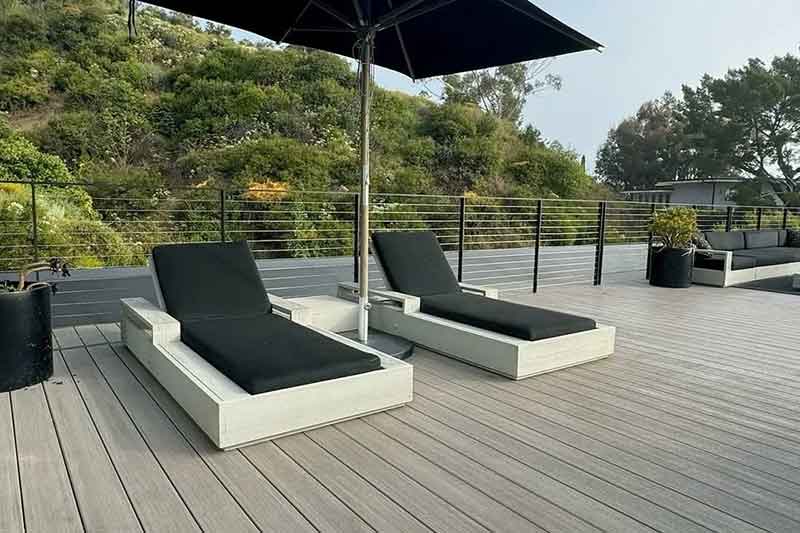
1. Excellent Weather Resistance
- Waterproof and moisture-resistant: Water absorption rate below 0.5%, no swelling, warping, or mold in rainy seasons
- UV resistant: With anti-aging additives, it does not fade or crack easily after 8–10 years of sun exposure, far better than wood
- Temperature resistant: Stable from -30°C to 60°C without deformation
- Anti-corrosion and insect-resistant: Naturally resistant to termites and fungi, suitable for coastal and humid environments
2. Low Maintenance and Cost-Effective
- No need for sanding, painting, or oiling like wood
- Only requires simple cleaning
- Service life exceeds 15 years, with almost zero maintenance cost over 10 years
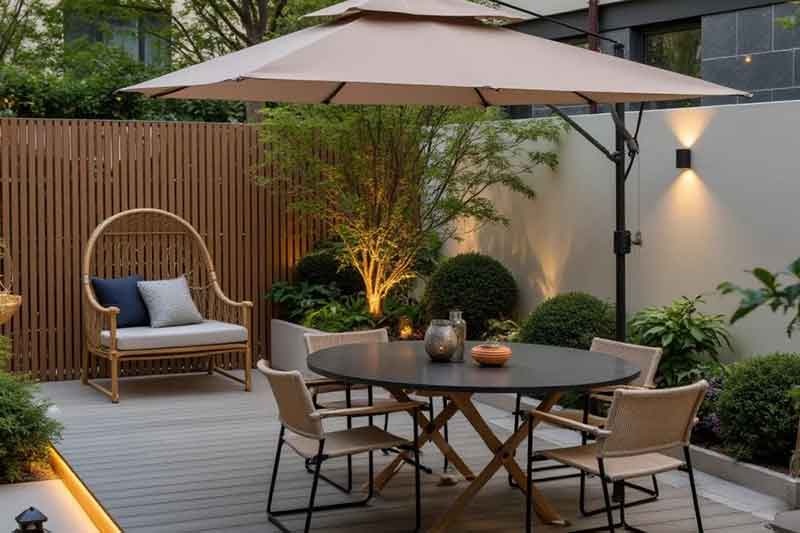
3. Aesthetic and Comfortable
- Realistic wood-like texture with a natural and warm appearance
- Multiple colors to match different styles
- Comfortable underfoot with good elasticity and reduced noise
- Modular installation system for fast construction, no mortar base required, suitable for DIY
4. Eco-Friendly and Safe
Made from recycled wood fiber and plastic, WPC decking is formaldehyde-free, non-polluting, and recyclable, meeting green building standards.
Conclusion
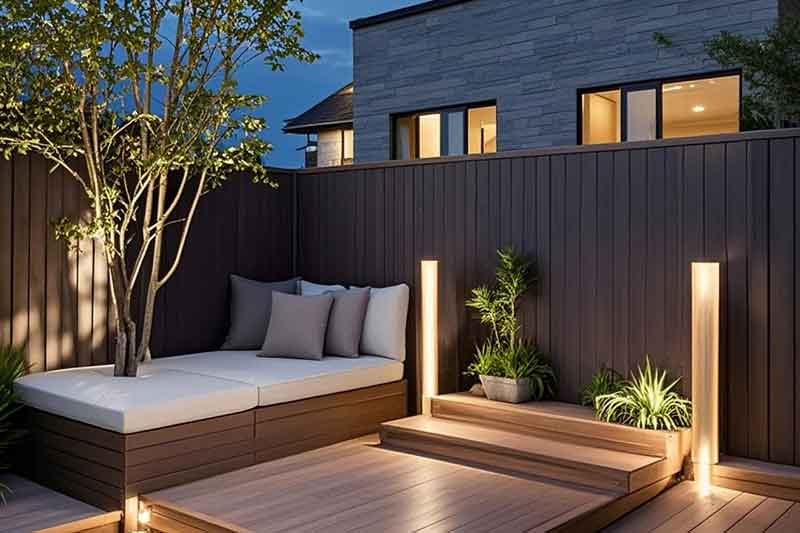
A terrace is a key space that improves living quality. After choosing a property with a terrace, selecting the right flooring is essential.
WPC decking should be the first choice, as it balances appearance and practicality while providing a long-lasting, low-maintenance outdoor living experience.