Choosing the right WPC decking profile is critical for performance, durability, and installation. The two most common edge types are tongue & groove and grooved (clip system). While they may look similar at first glance, they are designed for very different applications.
This guide will help you understand the differences and choose the right option for your project.
1. What Is Tongue & Groove WPC Decking?
Tongue & groove decking features:
- One side with a protruding tongue
- The other side with a matching groove
- Boards lock tightly together with almost no visible gap
Key Features:
- Seamless, clean appearance
- Smooth walking surface
- No visible fasteners
Limitations:
- Poor drainage due to tight joints
- Limited space for expansion and contraction
- Difficult to replace individual boards
It behaves more like indoor flooring than outdoor decking.
2. What Is Grooved WPC Decking?
Grooved WPC decking has side slots designed for hidden clips.
Installation system:
- Boards are fixed using hidden clips
- Installed on a joist (substructure) system
- Small, consistent gaps between boards
Key Features:
- Excellent water drainage
- Allows thermal expansion and contraction
- Better ventilation under the deck
- Easy to remove and replace individual boards
This is the industry standard for outdoor decking.
3. Key Differences
| Feature | Tongue & Groove | Grooved Decking |
| Appearance | Seamless | Visible gaps |
| Drainage | Poor | Excellent |
| Expansion | Restricted | Flexible |
| Installation | Interlocking | Clip + joist system |
| Maintenance | Difficult | Easy |
| Best Use | Indoor / covered areas | Outdoor decking |
4. Which One Should You Choose?
Choose Tongue & Groove if:
- The area is indoor or fully covered
- You want a flush, seamless look
- No exposure to heavy rain or standing water
Choose Grooved Decking if:
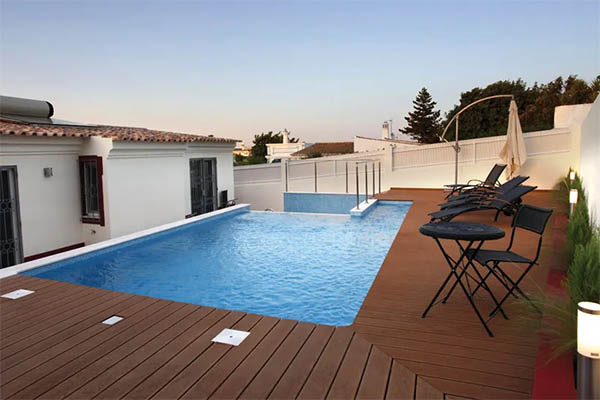
- The project is outdoor (deck, garden, poolside)
- You need long-term durability
- You want low maintenance and easy replacement
5. Why Grooved Decking Dominates the Market
Most WPC decking projects worldwide use grooved boards with hidden clips. The reason is simple:
Outdoor environments require drainage, airflow, and movement tolerance.
Tongue & groove structures restrict all three, which can lead to:
- Water accumulation
- Board deformation
- Reduced lifespan
That’s why grooved decking has become the preferred solution for contractors, distributors, and project buyers.
Conclusion
There is no “better” option in absolute terms—only the right choice for the right environment.
- Tongue & groove = best for indoor or covered spaces
- Grooved decking = best for outdoor performance and durability
If your project is outdoors, grooved WPC decking with a clip system is almost always the safer and more professional choice.