In the application of wood-plastic composite (WPC) materials, many users often wonder: why can WPC fluted wall panels be used for both indoor and outdoor applications, while regular WPC wall panels are mostly limited to outdoor use? The core answer lies in the formulation, structural design, and usage positioning of the two materials. Below, we will dive into the key differences, helping you distinguish between them and make the right choice.
Although both WPC fluted wall panels and regular WPC wall panels share the same base advantages of wood-plastic composites—such as moisture resistance, anti-corrosion, and eco-friendliness—their development purposes and performance optimization are fundamentally different. WPC fluted wall panels are designed with dual-purpose use in mind, balancing both decorative appeal and weather resistance, while regular WPC wall panels are more focused on outdoor construction needs and are not optimized for indoor settings, limiting their use primarily to outdoor environments.
1. Weather Resistance and UV Protection: The Core Advantage of Dual-Use Panels
Outdoor environments are constantly exposed to sunlight, rain, and UV radiation, while indoor spaces focus more on aesthetics and environmental considerations. These two settings have significantly different demands when it comes to weather resistance, which is a key factor in determining their suitability.
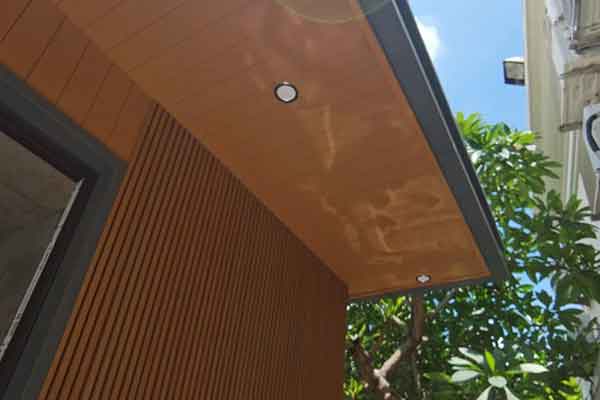
To make WPC fluted wall panels suitable for both indoor and outdoor use, they are crafted with co-extrusion technology to form a dense protective layer on the surface. Additionally, sufficient UV stabilizers and anti-aging additives are incorporated to effectively resist UV degradation. As a result, they are resistant to fading, chalking, and cracking even after prolonged exposure to outdoor conditions, fully meeting the weathering requirements of outdoor house cladding. At the same time, their composition ensures environmental safety, a delicate surface finish, and no unpleasant odor, making them perfect for interior use as well, such as WPC wall indoor panels for indoor wall decor.
In contrast, regular WPC wall panels are primarily designed for outdoor use, with a formula that emphasizes durability and corrosion resistance. While they are suitable for handling outdoor rain and wind, they are not optimized for indoor use. Their UV protection only meets basic outdoor needs, and the surface lacks fine detailing, making it unsuitable for the aesthetic requirements of indoor spaces. This makes regular WPC wall panels more appropriate for outdoor applications only.

2. Water Resistance, Moisture Control, and Structural Performance: Hardware Support for Different Settings
Whether indoor or outdoor, walls require a certain level of water resistance and structural stability. The design differences in structure directly determine the boundaries of their suitable applications.
WPC fluted wall panels have a dense structure design, which makes them highly resistant to water absorption, effectively preventing issues like deformation or mold growth caused by moisture. The unique fluted design enhances the panel’s aesthetic depth and improves water drainage and ventilation, making it ideal for both exterior wall cladding and interior wall decoration. The panel remains stable and durable in both settings, meeting the needs for a flat, moisture-resistant, and easy-to-clean interior wall.
On the other hand, regular WPC wall panels, designed for outdoor environments, have a thicker and rougher structure, prioritizing water resistance and corrosion resistance. However, they do not offer the refined surface smoothness necessary for interior decor. When used indoors, their rough texture, combined with their lower eco-friendly standards, makes them unsuitable for interior spaces. They may also result in a jarring aesthetic and difficulty in cleaning, limiting their use to outdoor applications.
3. Appearance and Aesthetic Quality: Meeting Different Decorative Demands
The difference in aesthetic quality and scene positioning further clarifies the use case boundaries of the two types of panels, establishing the dual-use flexibility of WPC fluted wall panels versus the outdoor-only nature of regular WPC wall panels.
WPC fluted wall panels are designed to balance decorative appeal and functionality. They feature smooth, flowing lines and come in various styles, such as wood-grain and stone-grain textures. This makes them not only suitable for outdoor house cladding to enhance the exterior design but also perfect for interior applications like feature walls, ceilings, and hallways. These panels cater to a wide range of interior and exterior decor needs, adaptable to different styles.
In contrast, regular WPC wall panels are typically used for outdoor engineering applications, such as perimeter fencing, basic exterior wall decoration, and landscape design. Their designs are relatively simple and rough, and their surface lacks the fine finish required for indoor applications. Their environmental standards and aesthetic qualities are not up to par with those required for interior decoration, making them unsuitable for use in indoor settings.
4. Durability and Cost-Effectiveness: Considerations for Long-Term Use
Durability and cost-effectiveness are also essential factors when choosing between the two options. The differences further reinforce their appropriate use cases.
WPC fluted wall panels offer moderate strength and excellent stability, making them suitable for both indoor dry environments and outdoor complex climates. They are not prone to deformation or cracking, require minimal maintenance, and offer a long service life. The panels’ ability to serve both indoor and outdoor purposes provides a great cost-effective solution, offering versatility and a broader range of applications.
While regular WPC wall panels are strong in weather resistance and anti-aging properties, making them ideal for outdoor use, they are more engineered for heavy-duty outdoor applications. Their texture and eco-friendly standards are not designed for the finer requirements of indoor design. This makes them less suitable for use indoors, limiting their use to outdoor environments.
Conclusion
The core advantage of WPC fluted wall panels lies in their dual-use functionality. From composition, structure, to appearance, they are designed to meet both interior and exterior needs. These panels offer excellent weather resistance, moisture control, UV protection, and fine decorative quality, making them ideal for use in both exterior wall cladding and interior wall decoration. On the other hand, regular WPC wall panels are focused on outdoor engineering requirements, offering weather resistance but lacking the aesthetic refinement and eco-friendly standards needed for indoor use, thus limiting them to outdoor applications.
When selecting materials, it’s important to choose according to your specific needs: if you need to cover both interior and exterior spaces, WPC fluted wall panels are the optimal choice. If your project is solely for outdoor fencing or basic cladding, regular WPC wall panels will meet your requirements effectively.