

Core Conclusion:
It’s not a matter of technology, but rather a combination of market demand, cost, and practicality that makes hollow co-extrusion WPC the absolute mainstream, while solid co-extrusion WPC becomes a niche product.
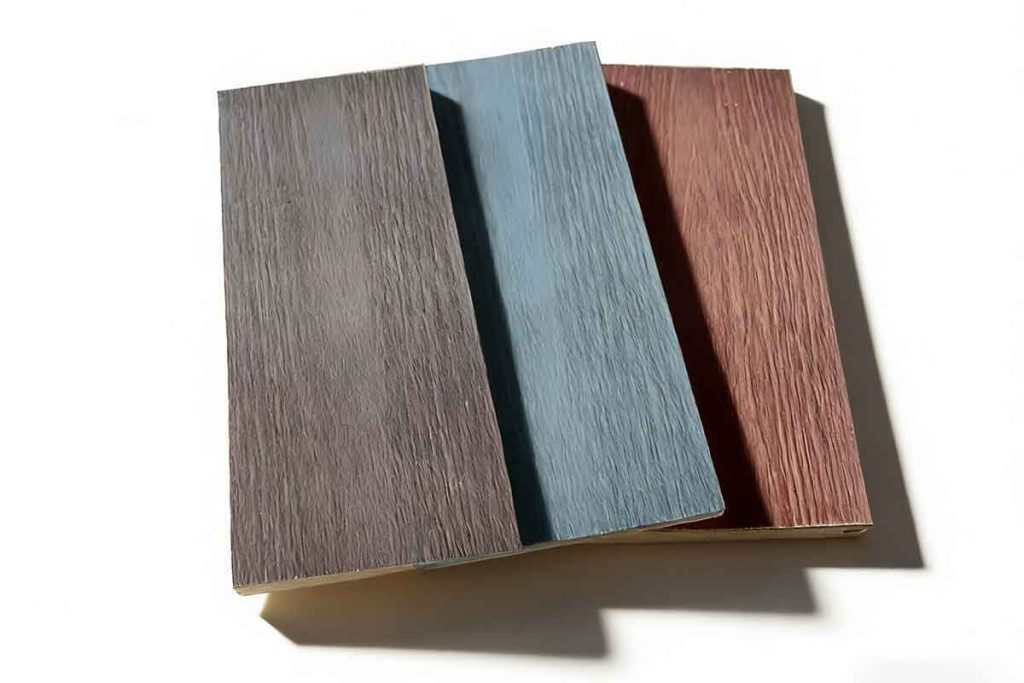
1. Core Reasons Breakdown (Ranked by Impact)
1. Cost and Price: The “fatal flaw” of solid co-extrusion
- Material cost doubles: A solid structure requires 100% wood-plastic core material, while a hollow structure only needs about 50%-60%. Therefore, the raw material cost is directly 40% higher for the solid structure.
- Added premium of co-extrusion process: Co-extrusion itself is a high-end process, with the outer high-molecular protective layers (such as ASA/PMMA) costing significantly more than standard PE. When combined with the solid structure, the final price can be 60%-100% higher than regular hollow co-extrusion, far exceeding most consumers’ budgets.
- Increased transportation and installation costs: Solid co-extrusion WPC is 2-3 times heavier than hollow WPC, leading to much higher logistics and installation costs, which further increases the total project cost and deters B2B engineering clients and DIY customers.
2. Practicality and Experience: Hollow structure is better suited for outdoor scenarios
| Dimension | Co-extrusion hollow WPC | Co-extrusion solid WPC | Market selection logic |
| Weight & Installation | Light, easy to handle, cut, DIY-friendly | Heavy, requires professional installation | 90% of terrace/garden projects are completed by regular homeowners or small teams, so they prefer hollow versions for ease of installation |
| Heat dissipation | Hollow design allows air circulation, keeping the surface cooler in summer | Solid structure retains heat, surface temperature higher, can burn feet | Summer comfort is a core demand in Europe and the US, hollow structures naturally have an advantage |
| Structural stability | Hollow design resists deformation, more suitable for large spans | Solid structure expands and contracts more due to temperature, more prone to warping, requires precise joist spacing | Hollow structures provide more reliable stability for outdoor environments with temperature fluctuations |
| Drainage and moisture resistance | Hollow design facilitates quick drainage, preventing water accumulation and mold | Solid structure has no drainage space, more likely to accumulate water and breed mold | Outdoor terraces need moisture resistance, and hollow structures solve this problem effectively |
Why is the hollow structure more suitable for outdoor use?
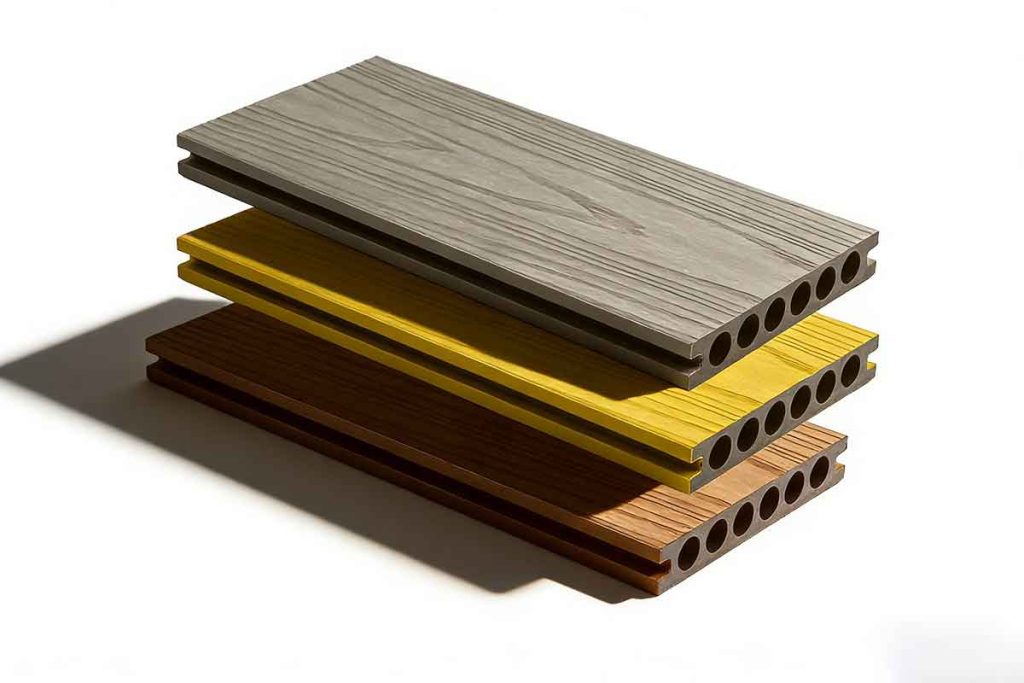
- Better heat dissipation: Hollow structures allow for better airflow, preventing excessive heat buildup on the surface, especially in high temperatures. Solid structures tend to accumulate heat, making the surface temperature too high, which can cause discomfort.
- Superior moisture resistance: Hollow designs allow water to drain quickly, preventing moisture buildup, while solid structures are more prone to water accumulation, increasing the risk of mold.
3. Market Demand: Most scenarios do not require the “excessive performance” of solid co-extrusion
- Mainstream scenarios (90%): Such as home terraces, gardens, balconies, where the load-bearing requirements are low and foot traffic is light. Hollow co-extrusion WPC’s strength is more than enough for these applications and even exceeds national standards. The “high load-bearing” feature of solid co-extrusion is considered over-engineered for these scenarios.
- Niche scenarios (10%): Only in high-traffic commercial areas (e.g., shopping malls, docks), heavy vehicle passageways, or extreme load scenarios (e.g., RV parks, garage entrances, forklift-accessed areas) would solid structures be necessary. These scenarios occupy a very small market share.
4. Production and Supply Chain: Higher technical difficulty + capacity limitations
- Co-extrusion process is more complex: Solid co-extrusion WPC requires dual-screw extrudes to precisely control the fusion of the core layer and co-extruded layer. The cooling and shaping process for solid cross-sections is much harder than for hollow, leading to lower yield rates. The technology and equipment required are more advanced, making it difficult for small and medium-sized factories to mass-produce.
- Supply chain concentration: Only a few leading manufacturers globally possess mature solid co-extrusion technology, and their production capacity is limited, further exacerbating the scarcity of these products in the market.
- Inventory and SKU pressures: Solid co-extrusion has fewer SKUs and slower turnover rates. Distributors and brands prefer not to stock such items, creating a vicious cycle of “low demand → no stock → harder to find.”
2. Suitable Scenarios for Solid Co-Extrusion WPC
Solid co-extrusion WPC is only suitable for high-demand, high-budget environments, such as:
- Commercial high-traffic areas: Shopping mall outdoor plazas, scenic area walkways, dock decks, etc.
- Heavy load-bearing scenarios: RV parks, garage entrances, forklift-accessed areas, etc.
- Extreme environments: High altitudes, strong UV exposure, coastal areas with high salt mist, where solid structures may offer slightly better anti-aging properties.
3. Conclusion: The Existence of Solid Co-Extrusion WPC and the Reasons Behind Its Market Scarcity
Solid co-extrusion WPC does exist and has its unique advantages, particularly in high-load, high-demand outdoor environments. However, due to its high cost, heavy weight, and complicated installation, it has not become the mainstream product. Hollow co-extrusion WPC offers better cost-efficiency, lighter weight, easier installation, and wider applicability, which makes it the dominant choice in the market.
For the vast majority of residential and commercial terrace users, hollow co-extrusion WPC offers the best value and practicality. Only in high-end customized scenarios does solid co-extrusion WPC have irreplaceable advantages.
If you’re looking for flooring solutions for high-demand, high-budget projects, solid co-extrusion WPC is a great choice. For the majority of everyday residential users, hollow co-extrusion WPC is a more suitable option offering great value for money.
Feel free to reach out to us if you have any questions or would like more information about our products!


